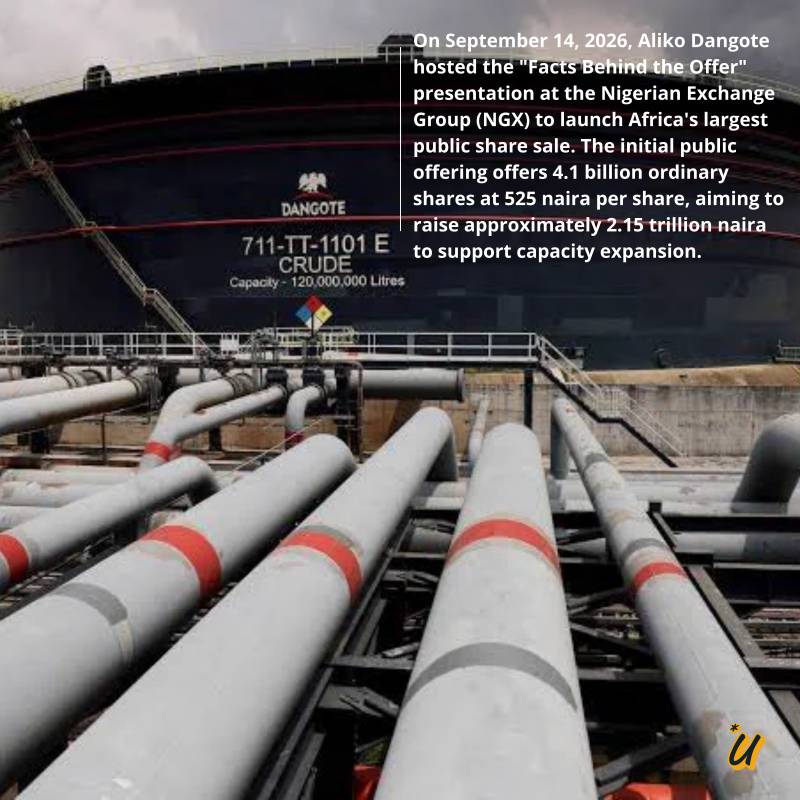
In the wild theatre of African capitalism, few names thunder louder than Aliko Dangote. The man is not just Africa’s richest; he is a living institution, a builder of empires, a symbol of self-made might, a walking blueprint of industrial vision. But even titans are not immune to the winds of disruption. And today, in Nigeria’s volatile fuel market, that wind is howling.
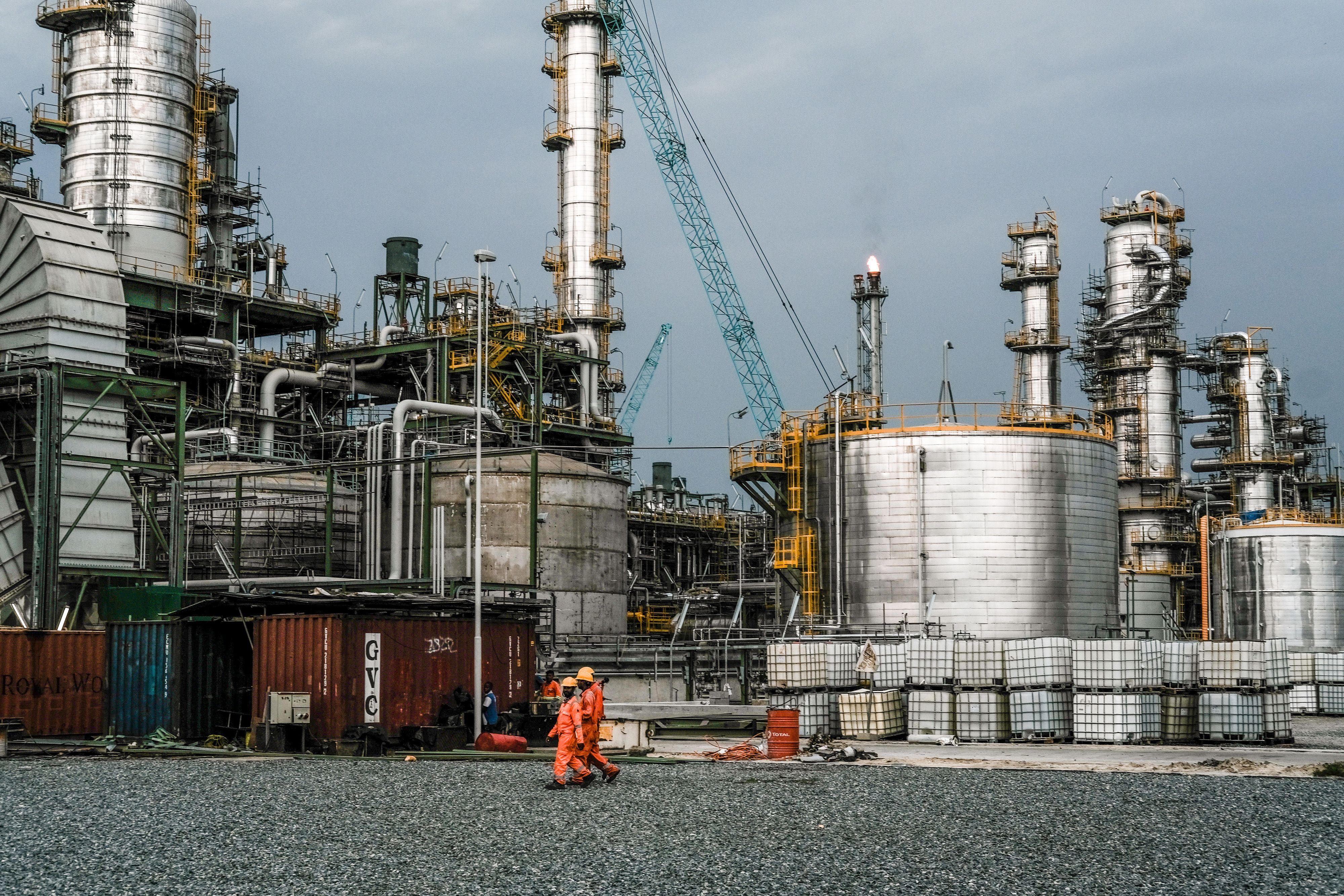
For years, Nigeria, Africa’s biggest oil producer, paradoxically depended on imported fuel. Its refineries lay comatose, riddled with decades of decay and political rot. Then came Dangote’s bold move: a $20 billion mega-refinery in Lagos, the largest single-train refinery in the world, capable of refining 650,000 barrels of crude oil a day. This wasn’t just business; it was nation-building. Or so it seemed.

Related article - Uphorial Podcast
When the refinery shipped its first batch of diesel in April 2024, the tone was triumphant. Government officials danced on airwaves, Dangote was hailed as the redeemer of a broken system, and citizens finally saw a glimmer of self-sufficiency in Nigeria’s energy sector. Fuel prices dropped, queues thinned, and for the first time in years, local production challenged foreign dominance.
But the honeymoon was short-lived. By July 2025, a quiet storm began to brew. Independent importers, sensing opportunity in the slashed import duties introduced by the Nigerian government to drive competition, began bringing in cheaper diesel from international markets. At first, the shift was subtle. Then, it exploded. Imported fuel began undercutting Dangote’s prices, sometimes by as much as ₦70 per litre. In a twist fit for a Shakespearean play, the very man who sought to free Nigeria from its dependency on fuel imports found himself facing the sharp edge of the same sword: competition.
But this is not a story about falling from grace. It’s about what happens when vision, politics, market forces, and ego collide. The Dangote Refinery, which was once projected to meet Nigeria’s domestic needs and even export refined products across West Africa, now finds itself adjusting prices to stay relevant. In late July, the refinery was forced to slash diesel prices from ₦1,200 to ₦940 per litre. A further reduction came days later, following pressure from both market forces and the government.
The narrative here isn’t as black and white as “Dangote vs the importers.” It is, at its core, a revelation of what happens when long-term strategy meets short-term economics. Dangote’s model is based on infrastructure-heavy investment, long-tail returns, and monopolizing supply lines, a tactic that works brilliantly in cement and sugar but is far more volatile in energy, where global prices and government policy are in constant flux. More importantly, the Nigerian fuel market is no longer a vacuum waiting to be filled; it’s a battlefield. Players range from state-backed oil traders to agile, nimble importers who can leverage price dips on global markets to their advantage. Dangote might have the muscle, but agility is not in his DNA, not yet.
Still, don’t count him out. Aliko Dangote is not merely a businessman; he is a master of long games. And his investments are not just about profit, but positioning. He understands that Nigeria’s fuel market is undergoing a brutal birth, from a subsidized, import-heavy system to a liberalized one. Chaos is part of the process. As a man who has outlasted recessions, currency devaluations, port crises, and red tape so thick it could suffocate ambition, Dangote knows how to wait out the storm. This moment, where the importers have the edge, might just be a flicker in the timeline. Eventually, the government will have to choose between strategic self-sufficiency and cheaper short-term imports. When that time comes, Dangote’s refinery, with its unmatched scale and logistics, might be the last one standing. But until then, the price war rages on. Nigeria watches. And the richest man in Africa recalibrates his empire, not from a throne, but from the trenches of the open market. Because in the end, even giants must learn to pivot.