The first tremor of this story hits not in a courtroom or pressroom, but in the home of a family praying for their loved one stranded halfway across the world. Imagine the hollow dread when a call comes, your brother, mother, or sister has been arrested in Jeddah, charged with drug trafficking. All because someone else dared to tag their name on a suitcase.
Three Nigerians, Mrs. Maryam Hussain Abdullahi, Mrs. Abdullahi Bahijja Aminu, and Mr. Abdulhamid Saddiq stitched faith and tradition into their journeys to Saudi Arabia. Their pilgrimage wasn’t a storyline; it was a spiritual covenant. But upon arrival, the unimaginable happened: they were stripped of freedom. The reason? Luggage containing illicit drugs had been checked in under their names, without their knowledge.
Related article - Uphorial Radio

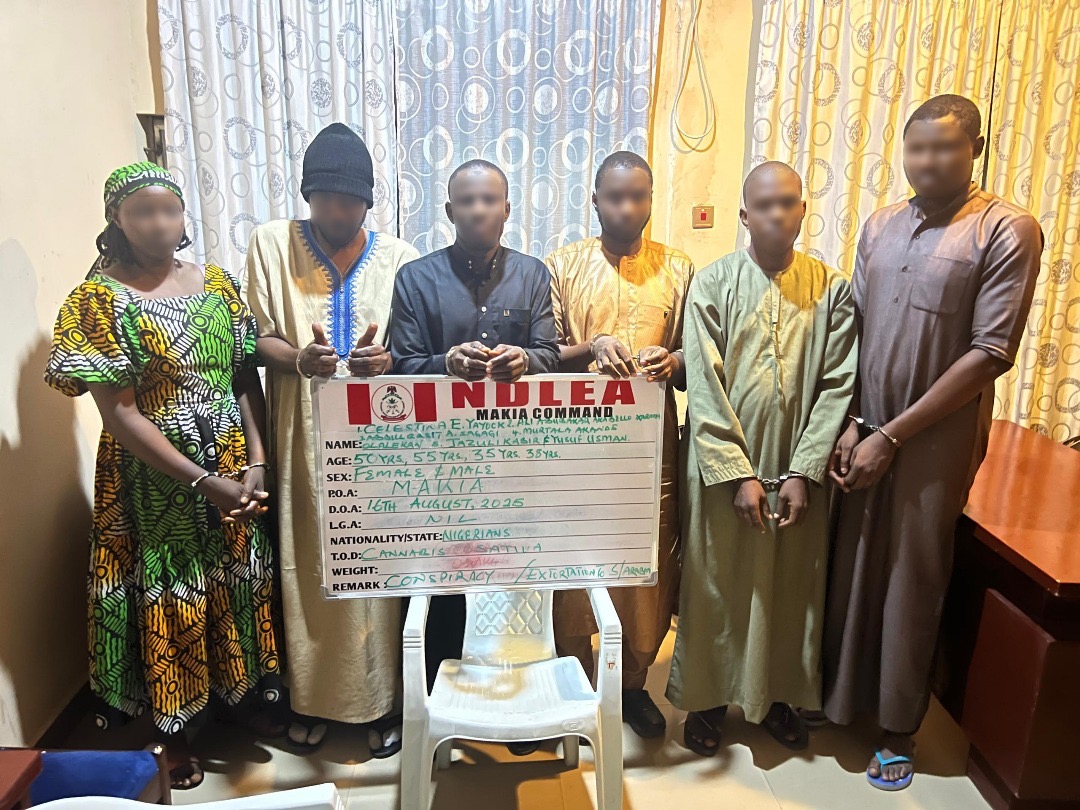
Enter Mohammed Ali Abubakar, also known as Bello Karama, a name that would shudder through Kano’s Mallam Aminu Kano International Airport (MAKIA). At age 55, the criminal mind had created a phantom parasitic network within airport logistics. Corrupt handling staff from SAHCO loaded seven bags, three filled with drugs, under innocent names, while he flew the same route via a different airline.
This isn’t just a bust. It’s a revelation: a betrayal of trust at the very junction between homeland and holiest land. NDLEA’s press conference in Abuja, with spokesperson Femi Babafemi and other officials, unveiled not just the ring of deceit, but the faces behind prison bars. Among them: Abubakar, Abdulbasit Adamu, Murtala Akande Olalekan, Celestina Emmanuel Yayock, Jazuli Kabir, and resigned, innocent souls caught in the crosshairs of ambition and greed.
But this article must travel deeper than facts. It must feel. Close your eyes. Picture Maryam in Jeddah, her heart heavy as security lines bloom cold. In the sterile detention center, hope frays. She doesn't call out the truth; she doesn’t need to. Her eyes, her trembling voice, those are the testimony. A realm away, in her home, her family stitches hope from waiting prayers. These pilgrims were not hidden statistics. They were souls carving a path to sacred connection. Then, abruptly, they were dismantled by a crime that wasn’t theirs. That choice, that suitcase, is where compassion must begin.
NDLEA Chairman, Brigadier General Mohamed Buba Marwa (rtd), stands as both voice and shield, promising Nigeria will not forsake her citizens. A delegation from Saudi Arabia’s General Directorate of Narcotics Control (GDNC) is expected to help clear names and free flights from guilt. MAKIA hasn't simply expelled the corrupt; it has ratified new safeguards, paper, and process to rebuild trust. Collaborating with the Ministry of Aviation, FAAN, Aviation Security, and the DSS, NDLEA acts not only on crime but on the architecture of justice.
The story, however, lives in what remains unspoken: the pilgrims’ unresolved grief, the families’ silent prayers, the quiet building of legal defenses, and the flicker of redemption. These three are not closing chapters; they are chapters unfolding in corridors of power, in airport terminals edged with scrutiny, and in hotel rooms where pilgrims clutch rosaries between interrogations. In the pulsing heart of this drama lies a breathless question: what happens when faith meets betrayal, when spiritual calling is met by criminal cunning? NDLEA Exposes Cartel That Framed Pilgrims is not a cautionary tale; it is a call to empathy, vigilance, and structural reform.
We must ask: How many more pilgrims, travelers, or migrants have been shadowed by crimes not their own? This event is not isolated. It is a window into vulnerabilities, of oversight, of loopholes, of trusting when we ought to question. When justice is meted out, and when the pilgrims return, let us not release them back into silence. Let their stories reinforce every checkpoint: check every bag, verify every handler, protect every name. In justice, may their prayers be answered. May their return be more than a homecoming, but a reckoning.