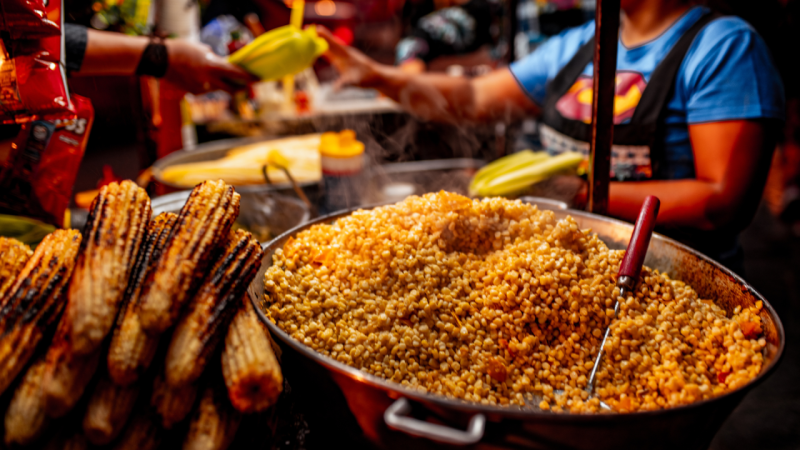
She walked into the market like she belonged there. Not just to buy, not just to taste, but to feel. The sound of sellers chanting prices, the heat rising off roasted corn, the occasional slap of wet fish hitting the scale—it was all part of a rhythm. A pulse that made Lagos what it is. In the heart of the chaos, a culinary orchestra was playing. And she was listening.
Lagos isn’t just a city. It’s an emotion. It’s traffic and tension, but it’s also aroma. It’s the thick, unforgettable scent of pepper soup wafting from a roadside shack at 11 pm. It’s the crunch of freshly fried akara dipped in pap on a rainy morning. It’s egusi that tastes like home and jollof that tastes like pride. Food in Lagos doesn’t just feed—it speaks. It tells you who you are. Who you were. And who you’re becoming.
Related article - Uphorial Sweatshirt
There was a time when eating out was a sign of indulgence, reserved for weekends or celebrations. Now, it’s an act of discovery. From smoky bukas hidden behind yellow buses to rooftop restaurants where plantain is paired with poetry, the food scene in Lagos is both ancient and newborn. Every corner of the city holds a secret—an old woman who’s been making the same stew for thirty years, a teenage boy selling grilled chicken that tastes like he inherited the recipe from heaven.
But this scene isn’t just about taste. It’s about memory. It’s about resilience. Food here is political. Spiritual. A form of protest. A form of healing. You’ll find a mechanic in Ojuelegba who eats eba every afternoon at the same spot because it reminds him of his mother. You’ll find a banker in Ikoyi who drives across town for beans and plantain because no restaurant in his neighborhood cooks it quite right. Lagosians chase flavor the way others chase dreams.
And dreams, in Lagos, often come wrapped in foil or poured into nylon. In this city, fine dining wears many faces. Sometimes it’s a spicy asun plate passed through the car window in traffic. Sometimes it’s boiled yam and sauce eaten with your hands in the back of a noisy canteen. What matters is not where it’s served—but how it makes you feel.
There’s also something poetic about the way Lagos eats. It’s impatient and loud. You taste the urgency. You taste the hustle. Meals here aren’t always perfect. Rice might be burnt. Stew might be too peppery. But the stories behind them make everything richer. A woman who fed ten children on one pot of soup. A boy who started a shawarma stand to pay his school fees. A cook who makes only one meal a day—but sells out before noon.
And then there’s the quiet shift. A new generation is finding new ways to preserve old flavors. Recipes are being recorded, plated with intention, shared with care. No longer just passed down orally but filmed, posted, remembered. There’s pride again. Not just in eating but in the culture of eating. In knowing the difference between ofada and jollof. Between amala and starch. Between something that fills your stomach and something that fills your soul.
Lagos is learning to honor its food the way it honors its music. With noise. With reverence. With a little bit of drama.
So when next you’re in the city, don’t ask what’s on the menu. Ask who made it. Ask what it reminds them of. Then take a bite. Close your eyes. Let the pepper hit. Let the story begin. Because in Lagos, food isn’t just what you eat. It’s who you are.