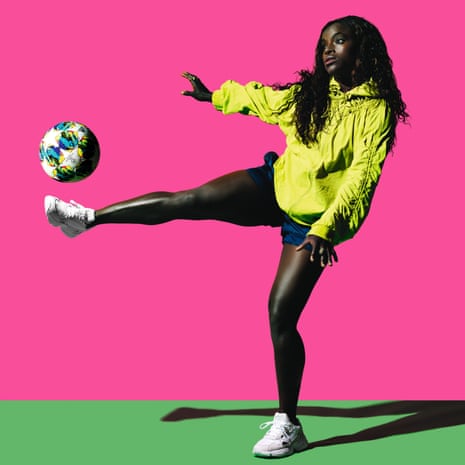
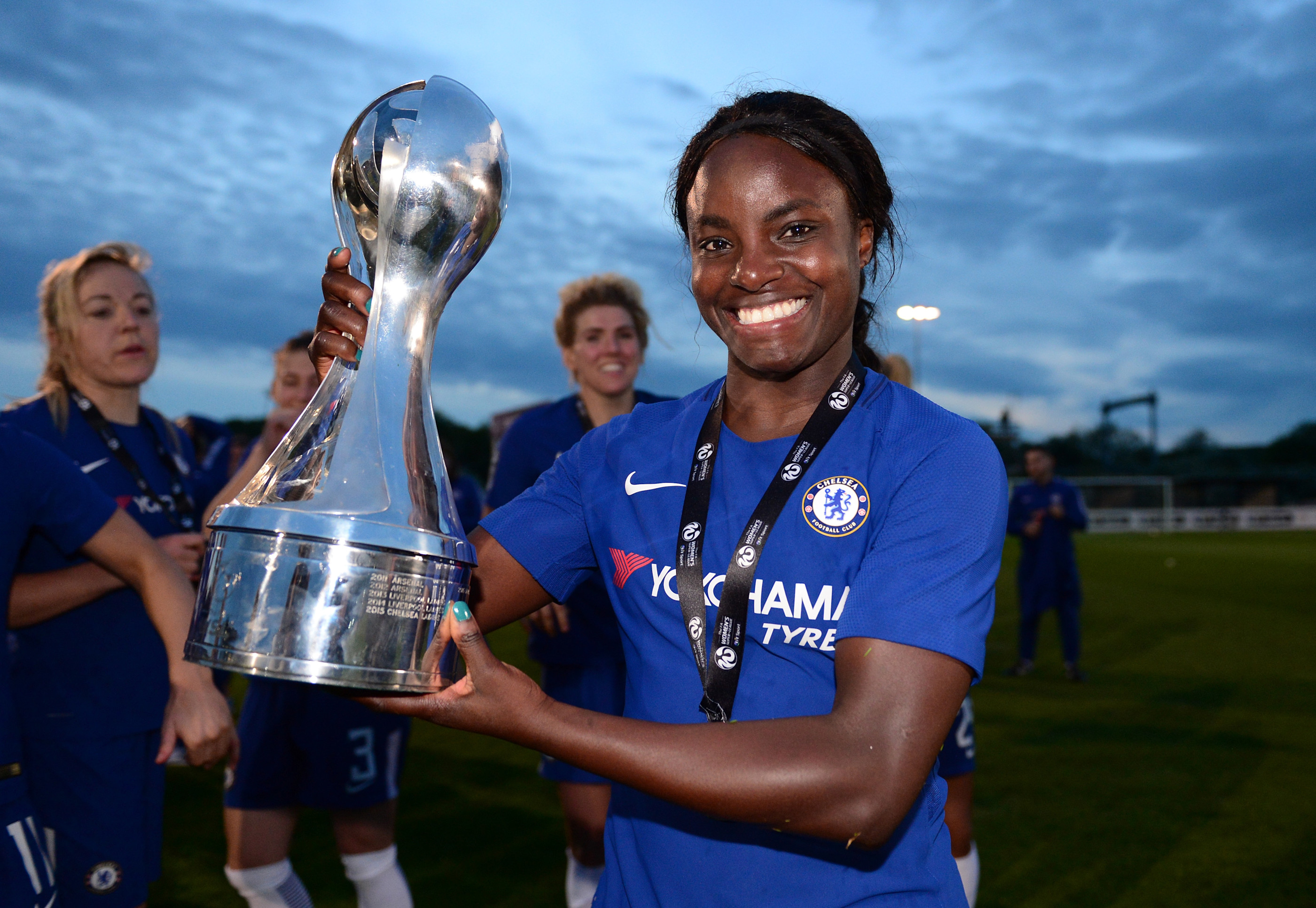
LONDON - The trajectory of Eniola Aluko’s career is a testament to the power of dual-lane success, a journey defined not by the choice between two passions, but by the relentless pursuit of both. As a former striker for England and Chelsea who simultaneously mastered the rigors of corporate law, Aluko has spent her life navigating environments that were never designed for her. In a compelling sit-down on the Afropolitan Podcast, she reflected on a life lived at the intersection of professional sports, international law, and cultural advocacy. Her story, moving from a Birmingham estate to the executive suites of global football, serves as a masterclass in transformational framing, redefining how one individual can challenge the status quo from within.
The conversation navigated the commercial frontiers of women’s football, a field Aluko is actively reshaping. She rejects the traditional narrative that treats the women’s game as an exercise in Corporate Social Responsibility, arguing instead that it is an "investable asset" waiting for the right kind of capital. Her own financial commitment to Mercury 13, a multi-club ownership group, is a strategic move intended to prove that the sport’s viability is not merely a matter of belief, but a reality of market potential. By putting her own resources into the infrastructure of women's sports, she is doing more than advocating; she is providing the liquidity required to ensure the game’s longevity.
This commitment to systemic change has come at a significant personal and financial cost. Aluko has become a standard-bearer for accountability in sports, an uncomfortable role that required her to endure the immense strain of legal actions against the Football Association (FA) following a landmark cultural review, as well as a high-profile case against Joey Barton. These battles were not fought for personal gain, but for the fundamental principle of a safer, more transparent sporting environment. She spoke with emotional precision about the toll of holding entrenched power structures to account, illustrating that the path to integrity is often paved with professional risk. Her willingness to stand as a lightning rod for criticism underscores a core belief: that progress in sports culture is impossible without the bravery to face the consequences of truth-telling.
Related article - Uphorial Shopify
The discussion also touched upon the complexities of identity within the diaspora, particularly for a Black woman navigating the distinct cultural architectures of the United Kingdom and the United States. Aluko, who has lived and worked in both nations, observed a subtle but distinct difference in the ceiling of ambition. She reflected on the UK’s occasionally restrictive social landscape compared to the broader, if different, challenges of the US. Amidst these transitions, she finds grounding in the global ascent of African culture. The widespread influence of Afrobeats and the rising pride in her heritage provide a necessary, sustaining tether. It is a cultural understanding that influences her worldview; she recognizes that her success is not an isolated achievement but part of a larger, vibrant movement of African influence reclaiming its space on the global stage.

Her professional transition into sports leadership—serving as a sporting director at Aston Villa and Angel City FC—offered a unique vantage point on the business of the game. She drew parallels between the intense "results-based" culture she experienced at Chelsea during the Roman Abramovich era and the needs of the modern game. Looking toward the future, Aluko expressed a keen interest in the potential for sports infrastructure across the African continent. She was particularly pointed in her analysis of Nigeria, noting the logistical challenges—including the ticket distribution complexities of the 2026 World Cup—that currently impede the continent from fully capitalizing on its immense talent pool. For Aluko, the path forward in Nigeria is clear: it requires a fundamental commitment to better facilities and more robust, professionalized management.
The interview reached a contemplative close as Aluko spoke of her name, Eniola. In Yoruba, the name signifies a person of "dignity and wealth," and for Aluko, these two concepts are not merely financial or social metrics. Rather, they represent a code of conduct. To her, dignity is the refusal to compromise one’s principles, even when the pressure to stay silent is overwhelming, and wealth is the richness of a life led with clarity and purpose. Her ongoing efforts, whether in the boardroom, on the pitch, or in the courtroom, are attempts to reconcile these two ideals.
Eni Aluko’s career is a blueprint for the multi-hyphenate era. By skillfully balancing the roles of athlete, lawyer, executive, and activist, she has effectively dismantled the idea that an individual must stay in their "lane." She represents a new guard of sports leadership—one that understands that business savvy is useless without social impact, and that true power lies in the ability to advocate for those who come next. As she continues to move between London, Los Angeles, and Lagos, her journey remains a poignant reminder that while she is an individual of unique accomplishment, her mission is universal. She is walking with an integrity that acknowledges the past, challenges the failures of the present, and is deliberately building the infrastructure for a more equitable future for women and the African diaspora in sports.