In a recent HENI Talk, Jo Baring, Director of the Ingram Collection of Modern British & Contemporary Art and a former Director of Christie’s UK, guided us through the impactful world of Elisabeth Frink, one of the 20th century’s most influential British sculptors. Frink’s artistic trajectory gained profound momentum when she established her home in Dorset in 1976, where the tranquil countryside became a wellspring of inspiration, shaping some of her most celebrated works. Before settling in Dorset, Frink had already garnered acclaim, notably for her iconic "Horse and Rider" series and a lectern commissioned for the newly built Coventry Cathedral, signaling her unique eye and talent in the sculptural landscape.
Frink's enduring fascination with animals permeated her entire career, beginning with early successes such as "Bird," acquired by the Tate in 1952 when she was only in her early twenties. Her approach to animal sculpture was less about precise anatomical rendering and more about capturing the "essence" or "spirit" of the animal, focusing on the emotions they evoked in her rather than their exact appearance in real life. This highly personal connection to her subjects was evident in her flamingo sculptures; initially inspired by shimmering reflections in a French lake, these two-meter-tall works found a new dimension when sited in her Dorset home lake, once again recreating that captivating visual effect.
Frink championed the idea that sculptures should be appreciated both indoors and outdoors, believing that an outdoor setting imbues them with "an additional spatial element and meaning". She meticulously explored how light interacted with the bronze textures and experimented with varying plinth heights to enhance this external experience. Her animal figures, radiating dignity and presence, reflected Frink’s deep respect for the animal kingdom and her conviction that humans and other species should be treated as equals, highlighting a special relationship between them. This philosophy was epitomized in her "Horse and Rider" pieces, where the deliberate absence of traditional riding equipment like reins symbolized a timeless, egalitarian bond between human and horse.
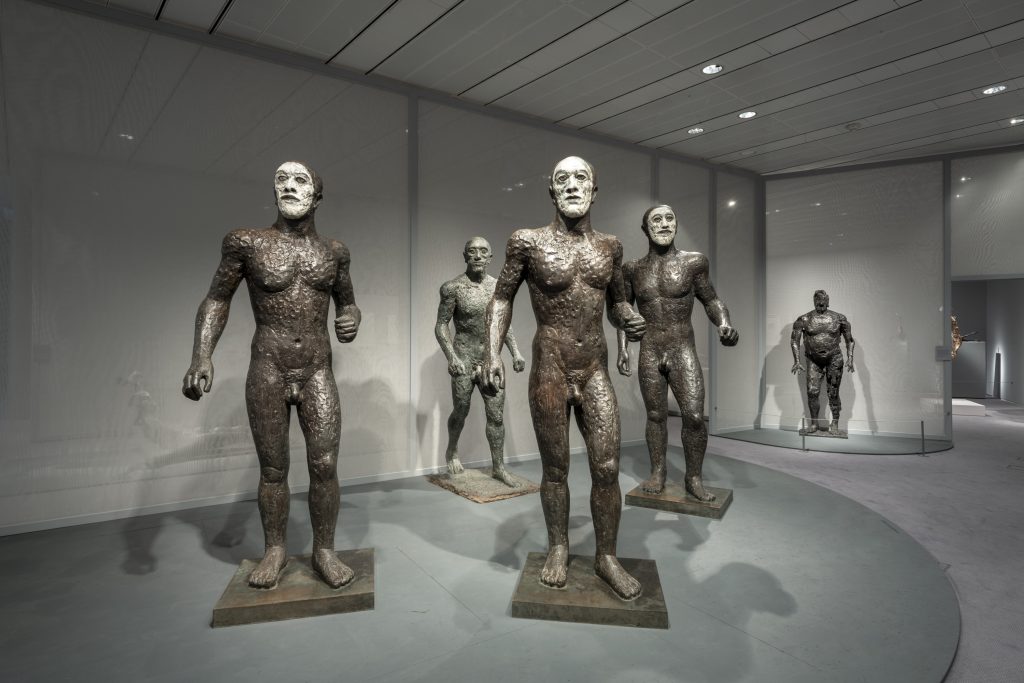
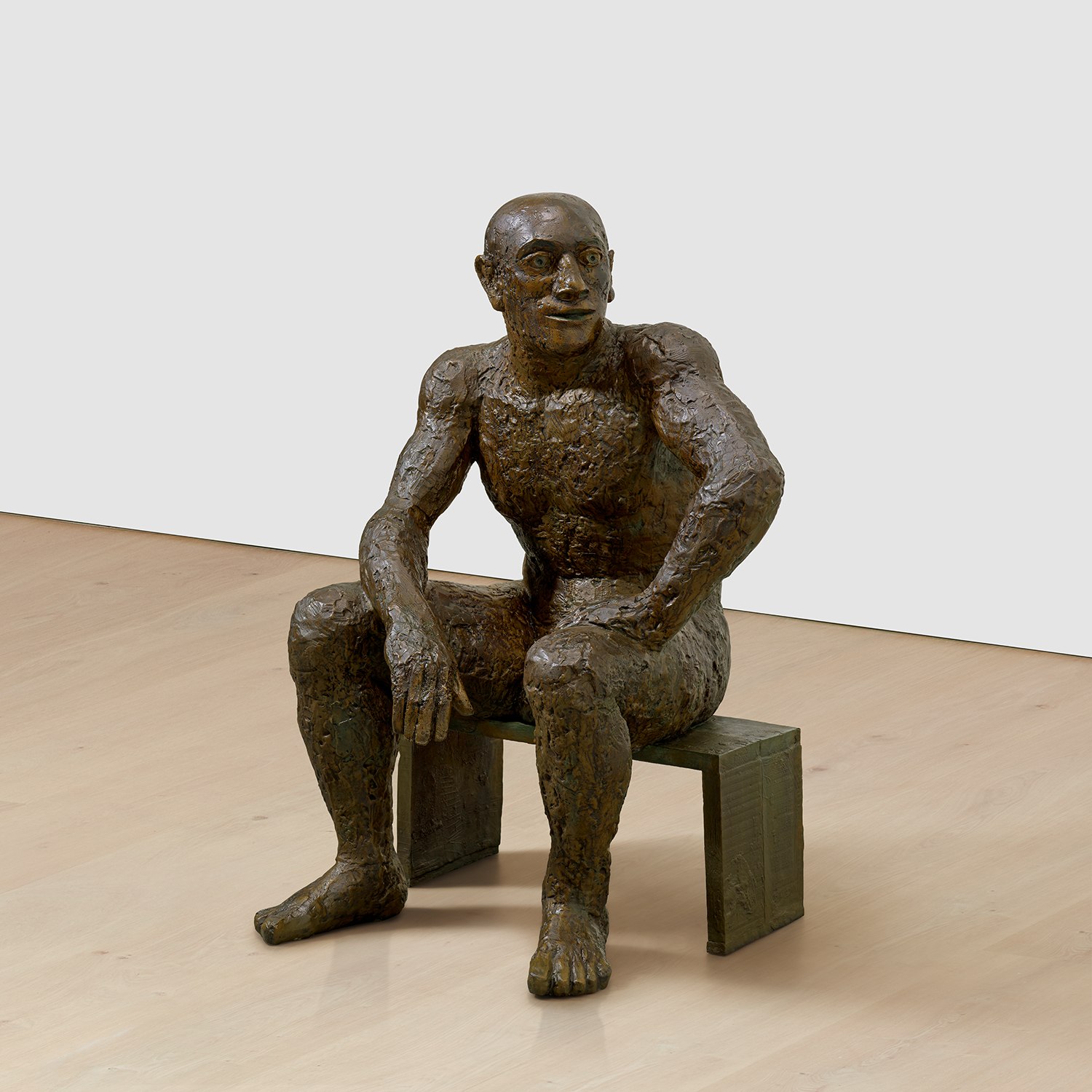
However, Frink's depictions of the human form, particularly the male figure, embarked on a distinctly different and often more complex path. Her background, growing up near an airbase in Suffolk during the Second World War and stemming from an army family, deeply informed her interest in what she termed the "duality of masculinity": the intricate interplay between physical strength and vulnerability, and how hubris could inevitably lead to downfall. These themes were powerfully articulated in sculptures like "Seated Man II," created in 1986, and further elaborated in her "Riace Warriors" series. Inspired by ancient Greek bronzes discovered off Italy's Calabria coast in 1972, Frink reimagined these classical figures to create a profound dialogue between our ancient past and the contemporary human experience. What particularly saddened Frink was the enduring human capacity for aggression and violence, noting that thousands of years after the original bronzes, humanity continued to engage in warfare.

Related article - Uphorial Radio
Elisabeth Frink: Iconic Works
Frink's engagement with contemporary politics was overtly expressed in her unsettling bronze "Goggle heads". These works were ignited by the Ben Barka scandal, specifically a newspaper image Frink saw of General Oufkir, a Moroccan official linked to the affair. The resulting sculptures presented a "thuggish, brutish image of a man". The sunglasses in these pieces held profound symbolic weight; while eyes in her work typically conveyed "huge resonance and meaning," here, the "unseeing" eyes signified a disturbing lack of connection and humanity. This stance aligned with her unwavering support for human rights and her active collaboration with Amnesty International in campaigns against injustice and inequality across the globe. Her "Tribute heads" further underscored this commitment, serving not as specific portraits but as "universal archetypes" honoring the human capacity for endurance and survival in the face of adversity.
In contrast to her extensive focus on male figures, Frink sculpted the female form only twice in her career. Her "Walking Madonna," created in 1981, stands as a particularly powerful reinterpretation of this traditional subject. Unlike conventional artistic depictions of a youthful mother with a child or a grief-stricken Pietà, Frink’s Madonna is an older woman. While grief is visibly etched on her face, her posture and gait exude dignity, strength, and hope. She is depicted "literally putting her best foot forward," symbolizing resilience and forward momentum.
Towards the end of her life, following a cancer diagnosis in 1991, Frink found herself increasingly drawn to symbols of renewal and rebirth. A friend sent her a book on the "Green Man"—a mythological figure often depicted with a face surrounded by foliage, representing nature's eternal cycle—a symbol that deeply resonated with her. This resonance culminated in her final commission: the "Risen Christ" for Liverpool Cathedral. Despite not being religious as an adult, having had a Catholic upbringing, Frink demonstrated a profound understanding of and respect for Christian traditions in her commissions for churches and cathedrals. Her robust ethical and moral views, emphasizing respect for all people and cultures, were a cornerstone of her work. It is particularly poignant to note that she completed this final commission while undergoing cancer treatment.
Dorset remained central to Frink's artistic maturity, acting as a place where her childhood imagination seemed to coalesce into her mature vision. Her enduring legacy in Dorset is tangible, not only through the works gifted to the Dorset Museum and Art Gallery by her late son, Lin Jammet, but also through "The Dorset Martyrs". This powerful, evocative public sculpture is one of her most important and well-known, intrinsically linked to both Dorset's history and Frink's unique personal narrative. As global conflicts persist and environmental concerns intensify, Frink's powerful and evocative body of work, so clearly articulated by Jo Baring in the HENI Talk, continues to resonate, asserting its eerily prescient and ever-more important relevance in our contemporary world.