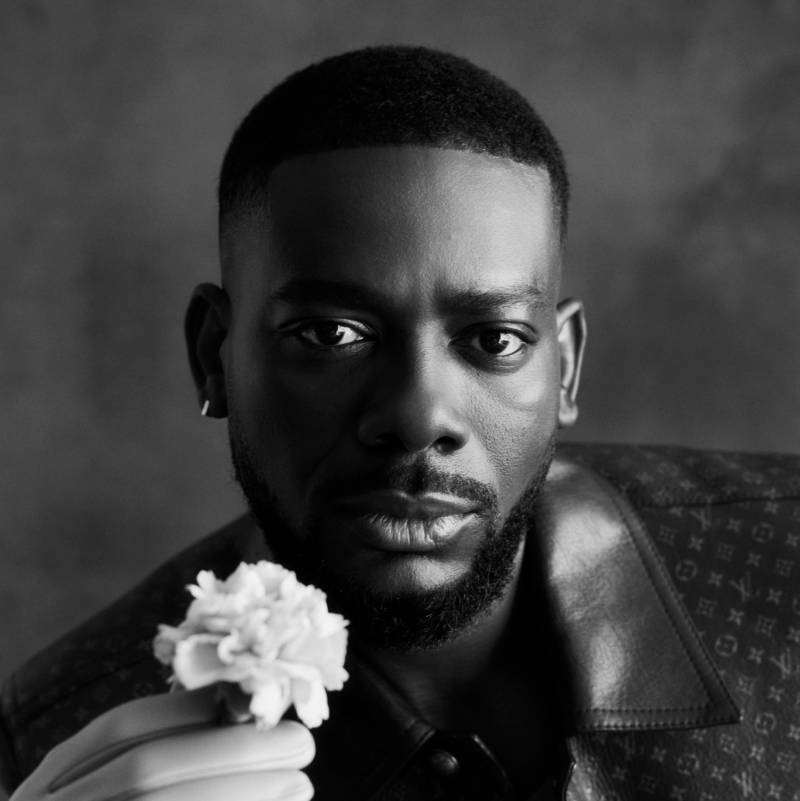
LAFIAJI - In the evolving landscape of contemporary African society, the conversation around what it means to be a man has rarely been as candid or as necessary as it is today. In a recent, deeply reflective episode of MENtality with Ebuka, host Ebuka Obi-Uchendu and co-host Banky W sat down with rapper and cultural commentator Vector Tha Viper to dissect the intricate intersection of African heritage, traditional values, and the shifting paradigms of modern masculinity. Set against the backdrop of Nigeria’s fast-paced urban evolution, the dialogue served as a rare space for intellectual vulnerability, stripping away the performative layers of manhood to ask a fundamental question: how do we honor our foundations without allowing them to become our limitations?
The conversation began by confronting the cultural script handed to many African men from childhood. Drawing on their respective Yoruba and Igbo backgrounds, the guests explored how these rich, storied cultures have historically dictated the "provider" and "leader" mandates that anchor masculine identity. For generations, this script has been clear and often rigid, prioritizing strength, fiscal provision, and stoicism as the primary pillars of worth. However, Vector Tha Viper challenged the audience to view masculinity not as a static destination or a singular definition, but as a complex, non-linear journey. By framing manhood as an evolving concept, the guests argued that the traditional expectations of provision and authority must be reconciled with the realities of an era where success is increasingly defined by individual purpose rather than just societal milestones.

Related article - Uphorial Shopify

A significant portion of the discourse focused on the delicate balance between generational wisdom and the necessity for growth. Within African culture, the veneration of elders is a cornerstone of societal stability, yet the guests acknowledged the friction that arises when tradition demands silence in the face of outdated ideas. Reflecting on the concept of the "wisdom of the child and the elder," the panel explored how modern men can challenge authority with grace and respect. The consensus was clear: respecting one’s roots does not necessitate the blind adoption of every ancestral norm. Instead, the "wisdom" lies in the ability to discern which values to carry forward and which must be interrogated or evolved to suit the advancement of society.
Perhaps no topic in the episode resonated more deeply than the "provider burden"—the heavy, often silent societal weight placed on men to sustain not just their nuclear families, but a wide circle of extended relatives. This expectation is a cultural survival mechanism, a testament to the communal nature of African life, yet the guests spoke openly about the toll it takes on personal mental health and individual fulfillment. Navigating these familial obligations while striving for personal happiness is one of the most significant challenges for the modern Nigerian man. The discussion highlighted a shift toward a more transparent, communicative approach to these burdens, suggesting that a man’s strength is no longer measured solely by his ability to carry these weights alone, but by his capacity to seek balance and manage expectations without losing himself in the process.
The conversation further expanded into the nuances of gender dynamics, moving beyond the binary debates of "tradition versus modernity" to address equity and partnership. Addressing the intersection of feminism and masculine responsibility, the guests engaged with the concept of equity over equality, emphasizing that a modern, secure man should be the greatest advocate for a woman’s agency. By acknowledging women’s strength, intuition, and capacity for leadership, the panelists posited that the traditional African household—once viewed as hierarchical—can be transformed into a partnership of equals. In this new framing, respecting a partner's path to self-actualization is not an abdication of masculine leadership but the ultimate expression of it.
Ultimately, the episode of MENtality with Ebuka was anchored by the shared conviction that culture must remain a living, breathing entity. The speakers argued passionately that culture should serve as a foundation—a source of pride and identity—rather than a prison. To "honor" one's heritage in 2026 is to engage with it, adapt it, and ensure that it serves the needs of the current generation rather than anchoring it to the past. Through personal anecdotes of their own upbringings and the evolution of their values, Ebuka, Banky W, and Vector provided a blueprint for a new kind of African manhood: one defined by honesty, the courage to communicate, and the wisdom to know that true strength is found in the ability to change. As the conversation concluded, it left listeners with a powerful takeaway: the responsibility of the modern man is to carry the best of the past into a future that is intentionally, and authentically, his own.