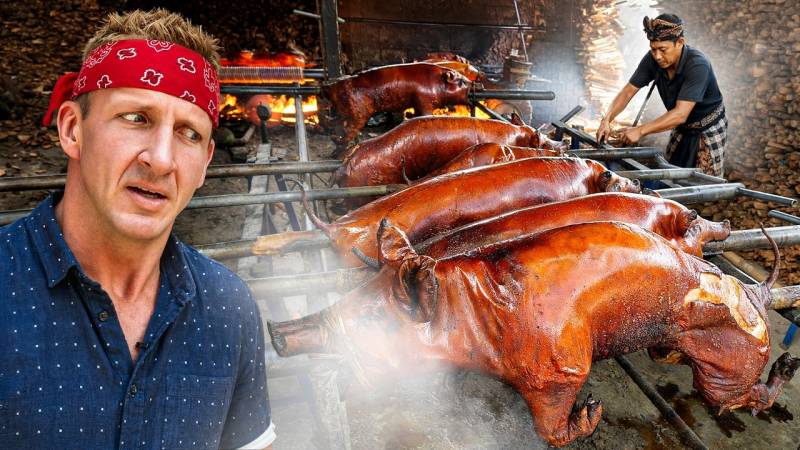
The channel Best Ever Food Review Show undertook a focused culinary investigation in New York City, aiming to distinguish between Jewish food and strictly kosher food and determine if higher costs equate to a better spiritual or dining experience. The mission spanned from tasting the historically affordable and often "dreaded" gefilte fish to sampling nearly $500 of specialty kosher American Wagyu steaks.
The journey began by establishing the core principle of kosher, which originates from the Bible and the Torah, meaning food preparation must follow a very specific way from beginning to end. All fruits and vegetables are inherently kosher. For fish, the requirement is having both fins and scales, while animals must chew their cud and have split hooves; bugs are prohibited. A strict rule dictates that blood represents life, meaning that even a tiny blood spot detected in an egg yolk makes the egg non-kosher and necessitates it being discarded. Historically, "kosher style food" referred to traditionally Jewish dishes that are no longer fully certified kosher.
The first dish tested by the Best Ever Food Review Show was gefilte fish, a ground white fish formed into a roll. This food, sometimes called "fishy cake" by parents to encourage children to eat it, is described as bland, gray, and slightly off-putting, even by some Jewish people. It is a classic start to a Shabbat dinner, the traditional Jewish meal observed on Friday night to welcome the Sabbath. Growing up, for many Jewish children, it is a "dreaded part of the meal" until they "eventually come to love it". The preparation involves filleting and grinding strictly kosher fish, which is then mixed with ingredients like eggs, onions, sugar, and white pepper into a "smooth sticky paste". After shaping, the fish rolls are boiled in a broth made from carrots, onions, sugar, and fish skin. The finished dish is served cold, topped with a carrot slice and a fiery beetroot horseradish paste. The host described the quality tested as "very good," noting its "loamy texture," and a surprising amount of sweetness. The cost for this classic dish was $2.75.
Related article - Uphorial Shopify

Moving up the price point, the Best Ever Food Review Show sampled what is arguably the "most iconic" American Jewish contribution: the bagel and lox. Bagels originated in Eastern Europe and were brought over by Jewish immigrants from Krakow, Poland. The bagel's firm, crusty outside and chewy interior are achieved because the dough is traditionally boiled first and then baked. The bagel serves as the "vessel" for its soul—lox (smoked salmon) and cream cheese. Fish and dairy have always been "partners in Jewish cuisine for thousands of years" because Jewish dietary law prohibits consuming meat and dairy products together. This rule, drawn from the biblical instruction not to cook a calf in its mother's milk, means a six-hour wait is required after eating meat before consuming dairy. The classic, non-toasted New York bagel and lox, topped with capers, onions, and tomato, was declared by the host as the best bagel he had ever had, praising its richness, creaminess, and the bread's chewiness.
The search for the most expensive kosher food culminated in kosher American Wagyu steaks, costing nearly $500 for two, served at a restaurant called Meat. The restaurant aims to "rewrite what kosher food can be". This specific meat is designated as "Lubavitch Wagyu," signifying a higher spiritual standard where the person slaughtering the animal must "believe in it" and understand the spiritual philosophy, not just the mechanics. Jewish law dictates that the meat used must come from before the 13th rib, based on the biblical story of Jacob being injured on his thigh (the ginhan). Historically, this rule meant hundreds of pounds of beef were sold or thrown away, confirming that following the commandments takes precedence over wastefulness. The Wagyu is aged for 45 days, rubbed with porchini mushroom spices, and cooked in an imported Jasper oven to achieve a "beautiful sear". The finished product, served with a rich Italian gravy, was described by the host as "truly delicious".
The spiritual dimension of the meal was paramount, as the restaurant owner explained that for diners to feel the spiritual elevation, they "have to believe in it". Making a blessing before eating stops the meal from being just a physical experience. Judaism is defined as an ethno religion—both a religion and an ethnicity—with a story stretching back thousands of years to ancient Israel. The community includes an "insane range" of practices, from ultra-Orthodox Hasidic Jews known for their deep devotion and strict traditions (like one mother who had 15 children), to modern Orthodox and conservative Jews who blend faith with modern life. The commitment to keeping kosher varies widely; though adherence is near 100% among practicing Jews, overall, less than half of Jewish people eat strictly kosher.
Despite the deliciousness of the $500 steak, the host of Best Ever Food Review Show ultimately concluded that the classic bagel and lox offered the most "bang for the buck". The journey confirmed that while the most expensive meal was physically delightful, it did not provide the spiritual experience he had hoped for. The commonality, or shared root, that binds the community remains regardless of the outward range of practices.