The architecture of championship prizefighting, spatial ring generalship, and relentless inside pressure reaches a masterly, illuminating peak in Darius Fulghum’s commanding unanimous decision victory over Diego Pacheco to capture the WBC Silver and WBO International titles. Unpacking a tactical collision between classic long-range boxing geometry and suffocating close-quarters attrition, the twelve-round battle reveals how disciplined physicality and defensive poise dismantle a taller, rangier opponent’s sharpest weapons. In an exceptionally detailed sports feature report and ringside analysis, boxing chroniclers examine a career-defining contest shaped by early orbital damage, relentless mid-fight jab neutralization, late-round defensive composure under fire, and a decisive championship coronation.
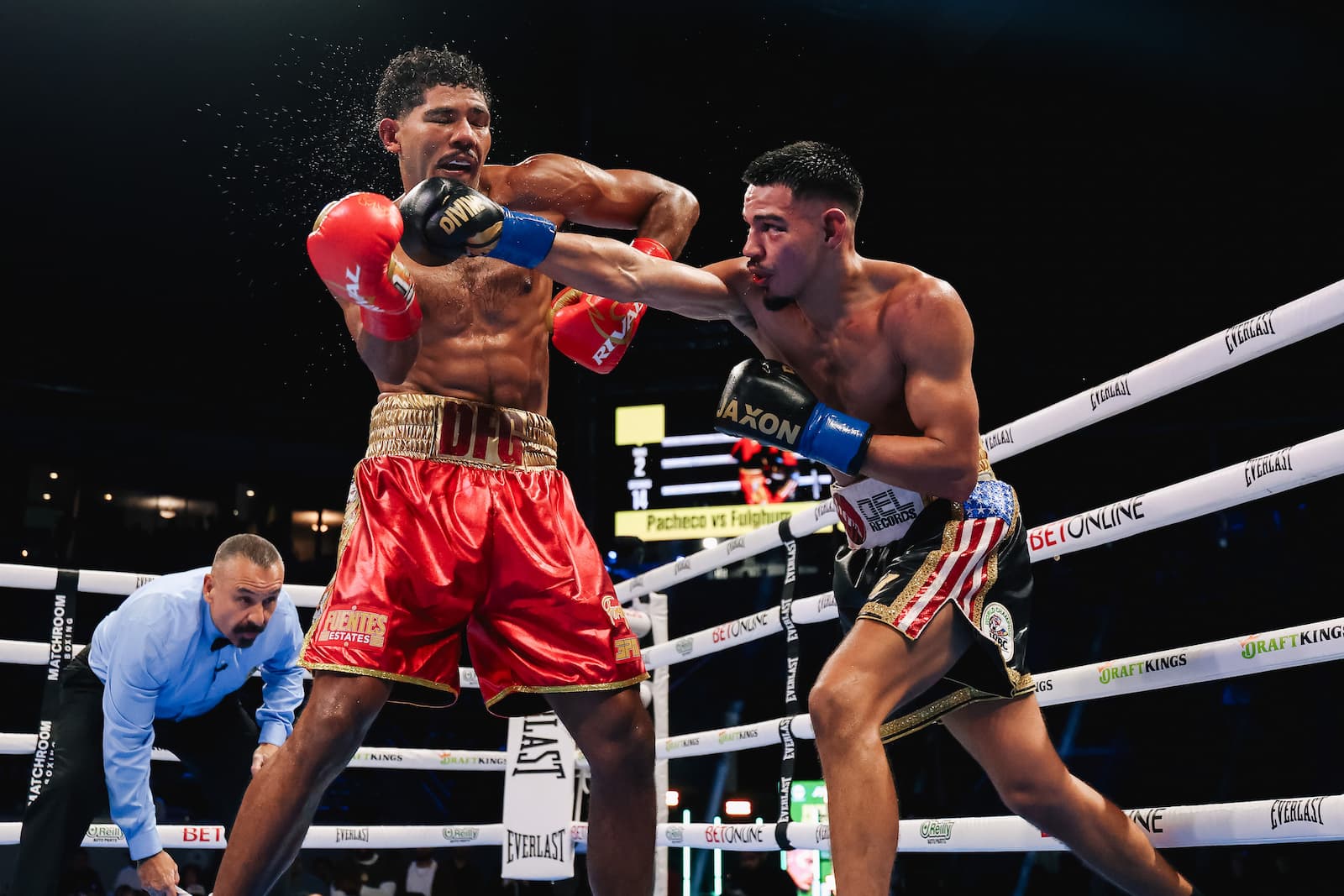
At the tactical foundation of the bout lay an immediate clash of competing ring architectures: Pacheco’s natural reach advantage pitted directly against Fulghum’s commitment to operating inside the pocket. From the opening bell, Pacheco attempted to establish spatial distance and dictate tempo from the outside, yet Fulghum systematically closed the gap with purposeful footwork and head movement. Once inside Pacheco’s extended levers, Fulghum unleashed compact, heavy combinations that punctuated the early rounds—most notably carving open a dangerous cut beneath Pacheco’s eye. Through emotional precision, watching a challenger step fearlessly into the firing line of a taller technician and immediately alter the physical reality of the fight exposes the unforgiving truth of championship boxing, proving that reach on paper means nothing once an inside fighter claims ownership of the center of the ring.
Related article - Uphorial Shopify

Central to Fulghum’s sustained command throughout the middle rounds was his refusal to grant Pacheco a single moment of breathing room to reset his rhythm. Rather than allowing the bout to settle into a comfortable long-range fencing match, Fulghum applied intelligent, suffocating physical pressure—crowding Pacheco’s lead hand, smothering his extension, and neutralizing the jab that typically anchors his offense. Every time Pacheco tried to measure distance, Fulghum forced exchanges at close quarters, compounding the early facial damage into pronounced swelling beneath both of Pacheco’s eyes and steadily tilting the scorecards in his favor.
Through a deep structural understanding of championship pacing, the closing stretch tested whether Fulghum could maintain his discipline as fatigue mounted and urgency forced Pacheco into desperate measures. Sensing the titles slipping away, Pacheco dug deep in the late rounds, uncorking heavy, attention-grabbing power shots capable of shifting momentum in a heartbeat. Yet Fulghum met that late surge not with reckless brawling, but with razor-sharp defensive movement, tight guard positioning, and controlled, sustained aggression—slipping the heaviest incoming fire while answering back with clean, authoritative counters until the final bell sounded.

Strategic storytelling frames the judges' unanimous decision verdict as far more than a routine championship win; it represents the arrival of a fully realized contender on the world stage. By capturing both the WBC Silver and WBO International belts through a blueprint of tactical discipline, physical resilience, and ring intelligence, Fulghum turned a high-stakes stylistic test into the defining signature performance of his career.
Through transformational framing, this chronicle of Darius Fulghum’s triumph transcends standard post-fight scorecards. It stands as an enduring athletic chronicle, proving that when fearless inside pressure, clinical jab neutralization, defensive poise under late-round fire, and unyielding championship grit align, a prizefighter rises beyond mere contender status—forging an immortal declaration of mastery, toughness, and title-winning authority.