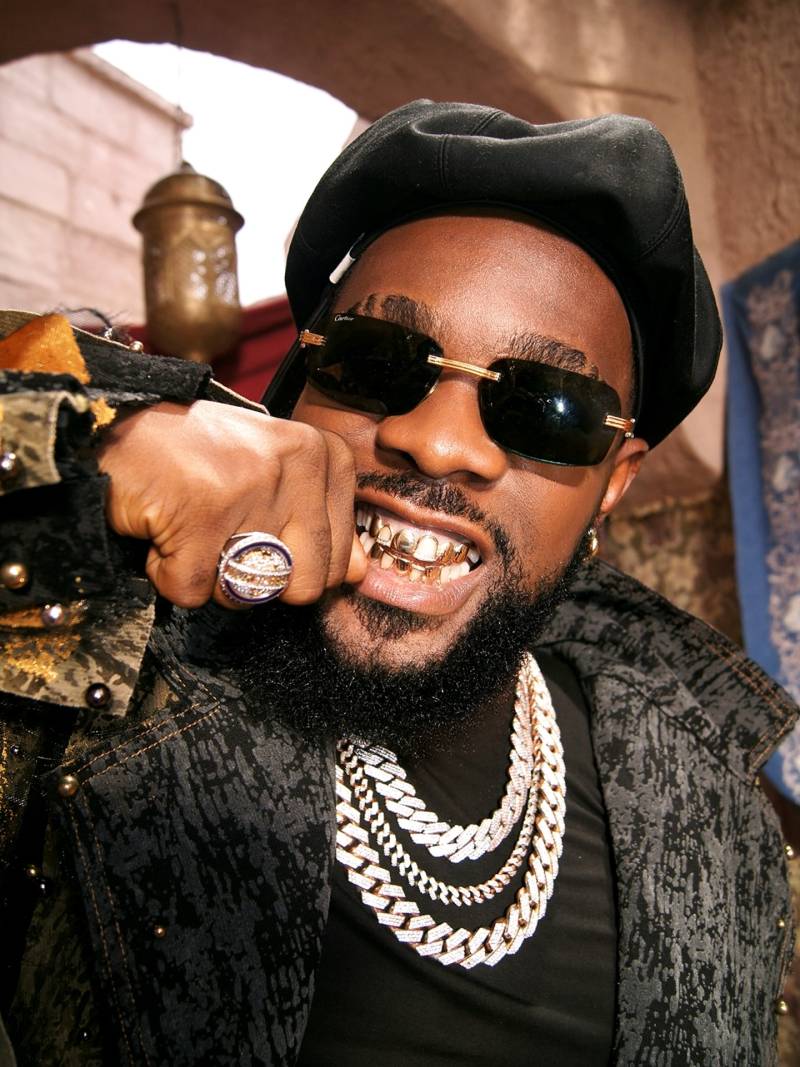
There’s a certain gravity to Davido’s story that defies the gloss of Afrobeats fame. It’s easy to look at the sold-out arenas, the Billboard placements, and the Instagram opulence and think you know him. But that would be a disservice to the journey, a shallow take on a man who turned personal legacy and heartbreak into sound, and sound into an empire.
David Adedeji Adeleke—known to the world as Davido—was born with a silver spoon, but the music didn’t come easily. It almost didn’t come at all. Raised in the wealth of the Adeleke dynasty, his initial rebellion wasn’t against poverty or hardship but against expectation. His father, a billionaire businessman, wanted the boy to chase boardrooms. Davido wanted beats, drums, choruses. So he ran to Atlanta, Georgia—not just to study, but to find himself. There, in the dimly lit studios and dorm rooms echoing with ambition, he started experimenting with sounds. That rebellion gave birth to Omo Baba Olowo in 2012, a debut that, while rough-edged, screamed promise.

Davido - Five Albums, A Lifetime on Tour

Related article - Uphorial Podcast

But Davido didn’t become a global name overnight. He hustled—not for survival, but for relevance. That’s a different kind of hunger. It’s the kind where you want your sound to matter, not just in Lagos nightclubs, but in Johannesburg streets, in London flats, in New York rooftops. By the time A Good Time dropped in 2019, he had already found his rhythm. The album didn’t just confirm his talent—it announced it. “Fall” and “If” weren’t just chart-toppers; they were soundtracks to African love stories everywhere. He made joy sound expensive.
Yet, it was A Better Time in 2020 that truly globalized his reach. In the thick of the pandemic, while the world paused, Davido created. The album became a symbol of resilience and celebration amid global uncertainty. Collaborations with Nicki Minaj, Lil Baby, and Chris Brown signaled a shift—not just in his sound, but in how the world received African music. Afrobeats was no longer emerging. It had arrived. And Davido was sitting on his throne with a champagne bottle and an open heart.
But fame doesn't shield you from grief. When Davido lost his son in 2022, the world watched a man, not a superstar, crumble. He disappeared. No tweets, no posts, no appearances. Just silence. And in that silence, many thought he might not return. But he did—and not just with music, but with Timeless, his 2023 album that sounded like healing, like memory, like grace. Songs like “Unavailable” and “Feel” weren’t just dancefloor anthems; they were diary entries. You could hear the pain between the beats, the strength between the notes. It was his most mature work yet—not because of the sound engineering, but because of the soul. Then came 2024, and the announcement of his fifth studio album and the global Timeless Tour—not just a tour, but a pilgrimage. From Paris to Toronto, London to Lagos, Davido has been selling out shows, redefining what it means to export African music. He isn’t just performing; he’s archiving. Every stage, every set, is a chapter. Every lyric, a breadcrumb back to his roots.
Davido isn’t just a musician. He’s a storyteller. A legacy builder. He went from being known as the “rich kid who sings” to the artist who made being African sound like a privilege. His sound is the convergence of Yoruba proverbs and trap influences, of Lagos chaos and Atlanta polish. And in every beat, there’s a reminder that greatness isn’t always born from struggle—it’s born from knowing who you are, and refusing to be anything else. Now with five albums in his arsenal and a tour that’s crossing continents, Davido isn’t chasing moments. He’s curating them. And as fans chant his name from Vienna to Abuja, one thing is clear: this isn’t just a career—it’s a chronicle. A timeless one.