There are moments in life when time seems to stretch, when one heartbeat feels like an eternity. Watching Cirque du Soleil’s KOOZA and its infamous Wheel of Death is one of those moments. It is not merely an act. It is not just acrobatics. It is an invitation to witness the thin line between control and chaos, between discipline and disaster, between living and falling. And within that dance, something inside us shifts.
Cirque du Soleil has always been about more than performance. It is the embodiment of imagination colliding with human daring. Yet the Wheel of Death, one of its crown jewels in KOOZA, is different. Two giant rotating wheels connected by a long, spine-chilling arm. Performers run, leap, skip, and balance atop them as though they are defying the laws of nature itself. One misstep is not just failure—it is gravity waiting with open arms.
But here’s the deeper truth: this performance is not just about danger. It is about mastery. Imagine the life of the acrobat—years of training, bruises endured, balance learned in silence, fear conquered in private, long before applause ever meets their ears. To step onto the Wheel of Death is not recklessness; it is trust. Trust in the body, in discipline, in repetition, in the rhythm of risk itself. Each spin, each leap is a message to the audience: you can live fully only when you step into what terrifies you.

Related article - Uphorial Podcast
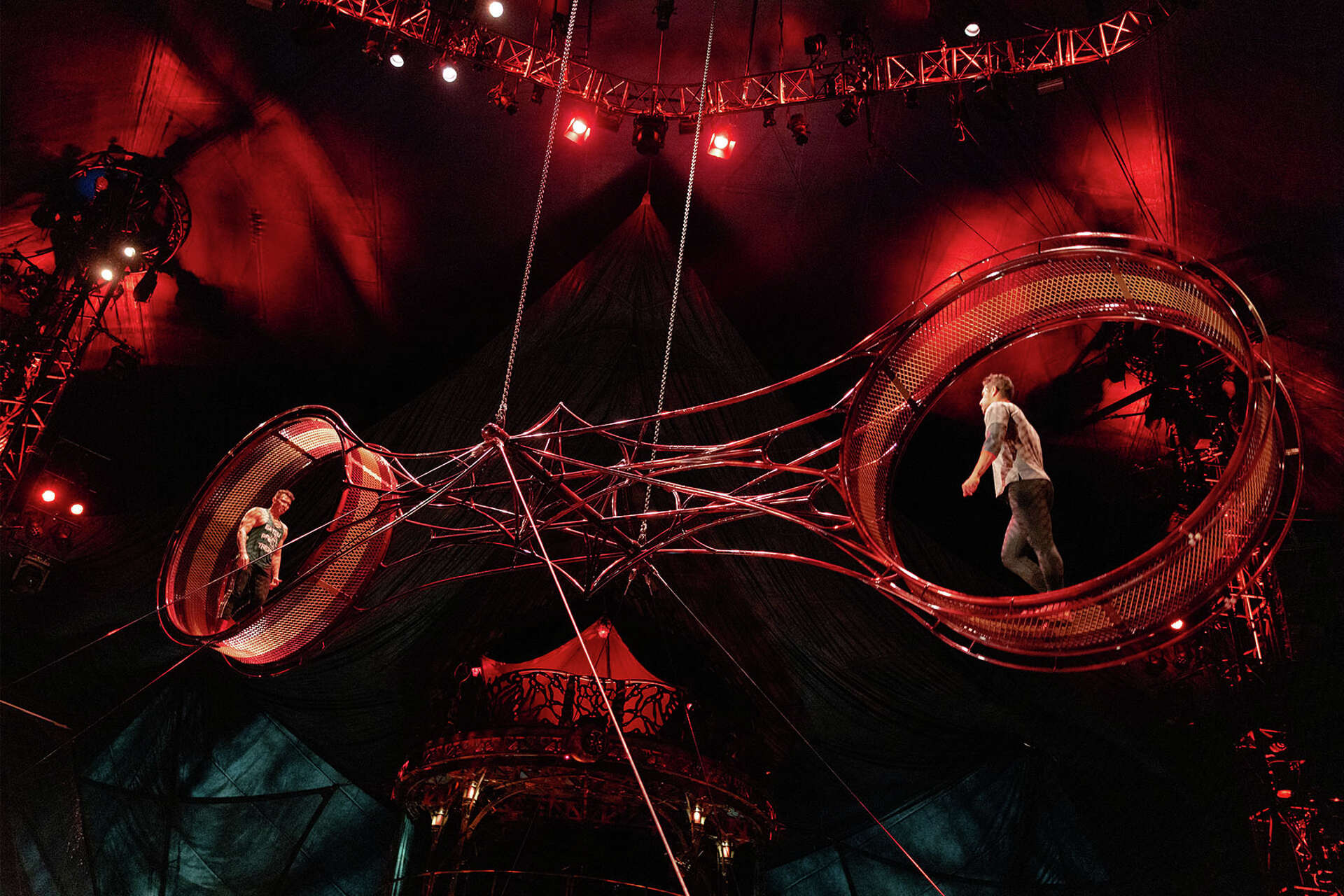
Watching it, you can feel your palms sweat even though you’re safely seated. The performers are your mirror—reminding you of the invisible wheels we all walk. The jobs we cling to. The relationships we balance. The dreams we risk chasing. The danger isn’t just theirs; it’s ours. And that’s why the Wheel of Death grips us. It awakens something primal. The hunger to go further. The fear of falling. The reminder that being alive is itself a dangerous art. Cirque du Soleil has never shied away from spectacle. Yet KOOZA, with its blend of slapstick humor, breathtaking aerial stunts, and heart-stopping acts, feels raw in its simplicity. It strips the circus down to its origins—human against physics, performer against impossibility. And when you see the wheel spin, when you hear the gasp of the crowd, you understand: this is not a performance staged for entertainment; this is ritual. A confrontation between man and mortality.
The acrobat does not just run on the wheel—he converses with it. The wheel pushes back, threatening to throw him into the abyss, but with every step, he asserts control. That push and pull is what makes the audience lean forward, unable to look away. And within that moment, you feel your inner wheels turning. Where have you hesitated? Where have you let fear stop your steps? The show whispers the lesson most of us forget—fear will never leave, but you can learn to move with it. This is why KOOZA endures, why the Wheel of Death remains iconic. It is not simply about “how” they do it. It is about why. To remind us that the most breathtaking acts of life are not when we stay safe on the ground, but when we climb onto our spinning wheels and dare to run. And so, if you ever find yourself watching it—whether live beneath the tent or through a screen—don’t just applaud the acrobats. Listen to the unspoken story. Because what they’re showing you is not a trick. It’s a philosophy. Life itself, in motion.