NEW YORK – The air inside the New York New Jersey Stadium on the night of June 13, 2026, was heavy with the palpable anticipation of a crowd that knew it was witnessing a turning point in modern football. For the thousands of yellow-clad supporters who had traveled across continents, this Group C opener was meant to be a coronation for Brazil, a five-time champion embarking on a quest to reclaim a throne left vacant since 2002. Instead, they found themselves locked in a tactical crucible against an industrious, fearless Morocco side that arrived in New Jersey not to participate in the spectacle, but to dictate its terms.
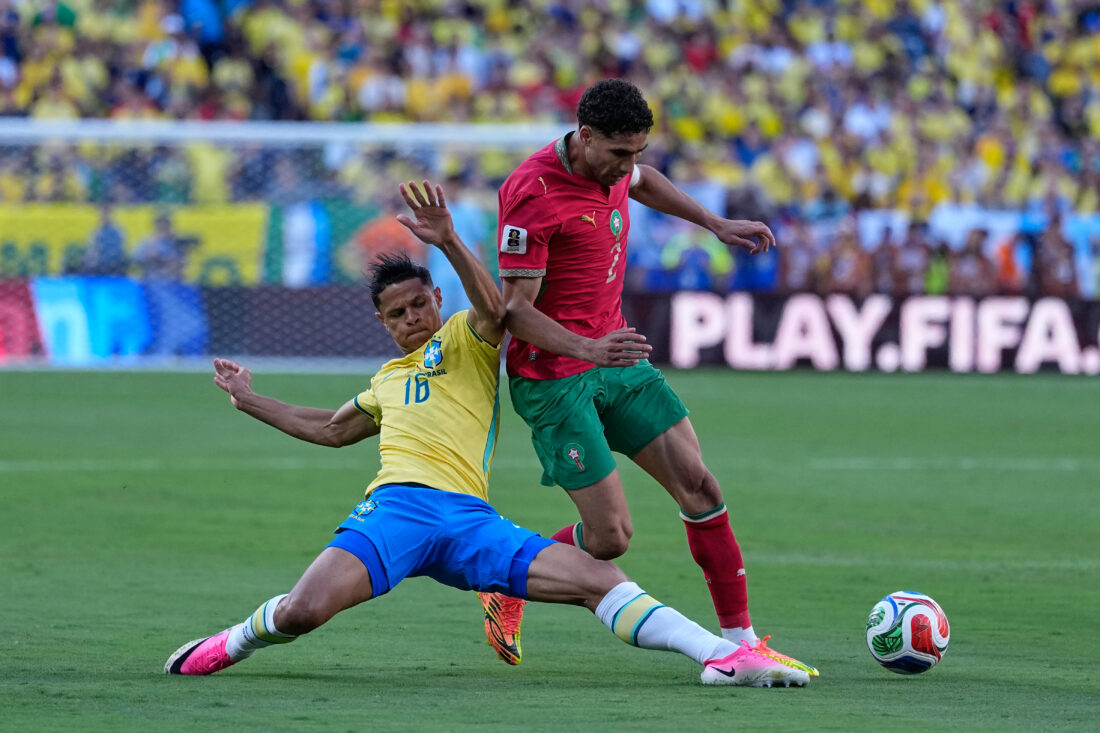
From the opening whistle, the narrative of the match defied the traditional hierarchies of the game. Morocco, emboldened by their historic semifinal success four years prior and riding the momentum of their continental championship, took the fight to the Seleção. They moved with a fluidity and synchronicity that left the Brazilian midfield, anchored by Casemiro, Bruno Guimarães, and Lucas Paquetá, looking strangely porous. The defensive gaps were clear, and the North Africans were surgical in their exploitation.
Related article - Uphorial Shopify

The breakthrough arrived in the 21st minute, a moment of exquisite technical execution that quieted the partisan crowd. Following a midfield turnover, Brahim Díaz threaded a sublime pass through the heart of Brazil’s vaunted center-back pairing of Gabriel and Marquinhos. Ismael Saibari, recognizing the space and timing his run to perfection, collected the ball and dinked it with cool, calculated precision over an oncoming Alisson Becker. It was a goal born of intelligence and poise, a statement that Morocco’s rise was not a statistical anomaly but a permanent shift in the global footballing landscape.Brazil, stung by the deficit, found themselves in unfamiliar territory. The team that usually thrives on the exuberance of individual brilliance looked rattled, struggling to bypass Morocco’s aggressive high press. Yet, brilliance is the hallmark of the Brazilian identity, and even in their moments of greatest struggle, the Seleção possess difference-makers capable of bending the arc of a match. In the 32nd minute, that burden fell upon the shoulders of Vinícius Júnior.
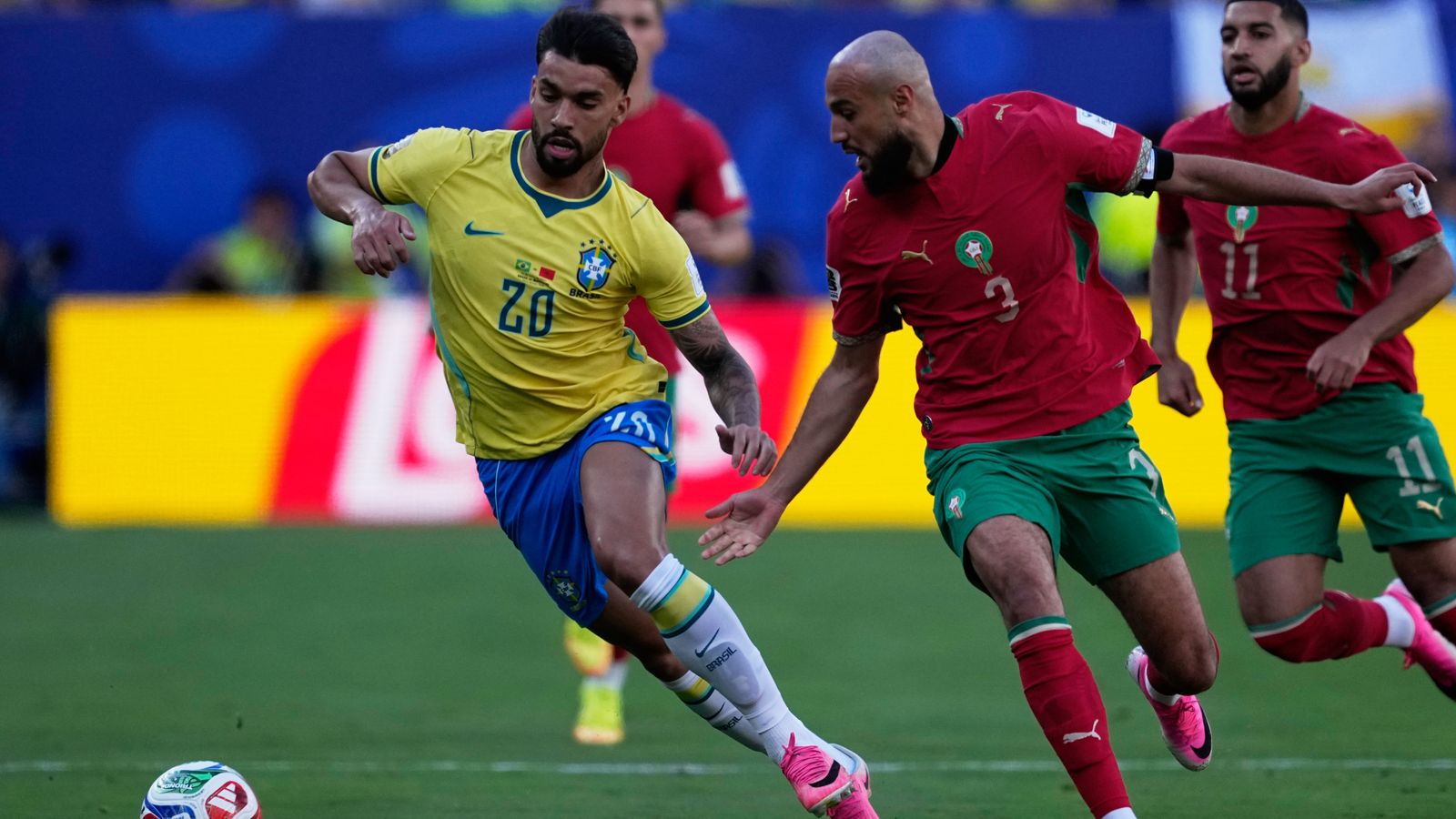
The winger, often the focal point of the nation’s hopes, received a pass from Guimarães on the left flank. With the composure that defines his artistry, he cut inside, navigating the tight spaces of the Moroccan defensive block before shaping a magnificent, curling strike into the top corner. It was a goal of pure individual defiance, restoring parity against the run of play and providing the oxygen Brazil so desperately needed. For Vinícius, it was a moment of personal redemption, though the joy was tempered by the realization that this Brazilian side, under the guidance of Carlo Ancelotti, had far more to solve than a single scoreline could fix.As the halftime whistle blew, the tactical landscape shifted. Ancelotti, evidently dissatisfied with the lack of control in the center of the pitch, made sweeping changes, withdrawing Casemiro and Roger Ibañez in an effort to stabilize the team. The second half became a grinding chess match—a battle of nerves and attrition. Morocco, having expended significant energy in their first-half blitz, gradually conceded more possession, while Brazil struggled to find the final pass that would break the impasse.
The tension in the final twenty minutes reached a fever pitch. In the 84th minute, Yassine Bounou, the Moroccan goalkeeper whose command of the area was nothing short of heroic, preserved the draw with a desperate, lunging clearance to deny Raphinha. At the other end, Brazil’s survival hung by a thread. In the deep reaches of stoppage time, Alisson Becker was forced into a desperate, sprawling double save, first neutralizing a long-range effort from Neil El Aynaoui and then reacting with superhuman reflexes to deny Ayoube Amaimouni’s follow-up.When the final whistle finally echoed through the stadium, it brought not the catharsis of a victory for either side, but a profound sense of equilibrium. The 1-1 draw felt both like a missed opportunity for a Brazilian team still finding its identity and a moral victory for a Moroccan side that proved they belong at the pinnacle of the sport. For the thousands in the stands, the result was a reminder that in the expanded, unpredictable landscape of the 2026 World Cup, history counts for little when the ball is rolling. Brazil remains a team of immense individual talent, but after a night in New Jersey, the world knows that the gap between the traditional giants and the emerging titans has all but vanished. Both teams emerged from the fire of the group opener not necessarily satisfied, but perhaps better prepared for the long, arduous road to the final.