LOS ANGELES — The weight of a global legacy often rests on the shoulders of those least expecting it, and for Jaafar Jackson, the transition from musician to the face of a cinematic epic has been a journey defined by familial duty and unprecedented artistic rigor. As the production of the highly anticipated biopic Michael nears its culmination, the actor has provided a detailed look into a preparation process that spanned years, aimed not just at mimicry, but at a total psychological and physical inhabitation of his uncle, Michael Jackson. In a landscape where biopics are often scrutinized for their superficiality, Jackson’s approach suggests a commitment to finding the human being behind the "King of Pop," a feat that required him to essentially set up a private conservatory within the very walls where the Jackson family history was written.
The path to this role was far from linear. Despite the obvious physical resemblance and shared genetic vocal traits, Jaafar Jackson was initially uninterested in the world of professional acting, preferring to focus on his own burgeoning music career. It was veteran producer Graham King, the man behind the success of Bohemian Rhapsody, who saw the potential for a performance that transcended mere imitation. King spent months convincing Jaafar that he was the only individual capable of carrying the emotional and technical weight of the narrative. Once the decision was made, the preparation became an all-consuming enterprise. Jaafar spent over two years in intensive development, working daily with acclaimed acting coach Angela Gibbs and renowned choreographers Rich and Tone Talauega. To ensure the most authentic environment possible, he established a dedicated training camp at the Hayvenhurst estate in Encino, the historic family home where his uncle had once rehearsed some of the most famous routines in music history.
A cornerstone of Jaafar’s preparation was a deep dive into the "human side" of a figure often obscured by the blinding light of fame. Rather than relying solely on public interviews or concert footage, the actor was granted access to private journals, personal writings, and intimate affirmations that Michael Jackson had penned throughout his life. By studying these documents, Jaafar sought to understand the internal motivations, the specific anxieties, and the complex family dynamics that fueled his uncle’s relentless drive for perfection. This research allowed him to build a psychological foundation for the character, ensuring that the performance would be rooted in a genuine understanding of Michael’s mindset rather than a collection of surface-level traits. This focus on the "human" allowed Jaafar to navigate the difficult transition from a nephew’s perspective to that of a dramatic performer tasked with portraying a multifaceted and often misunderstood life.

Related article - Uphorial Shopify
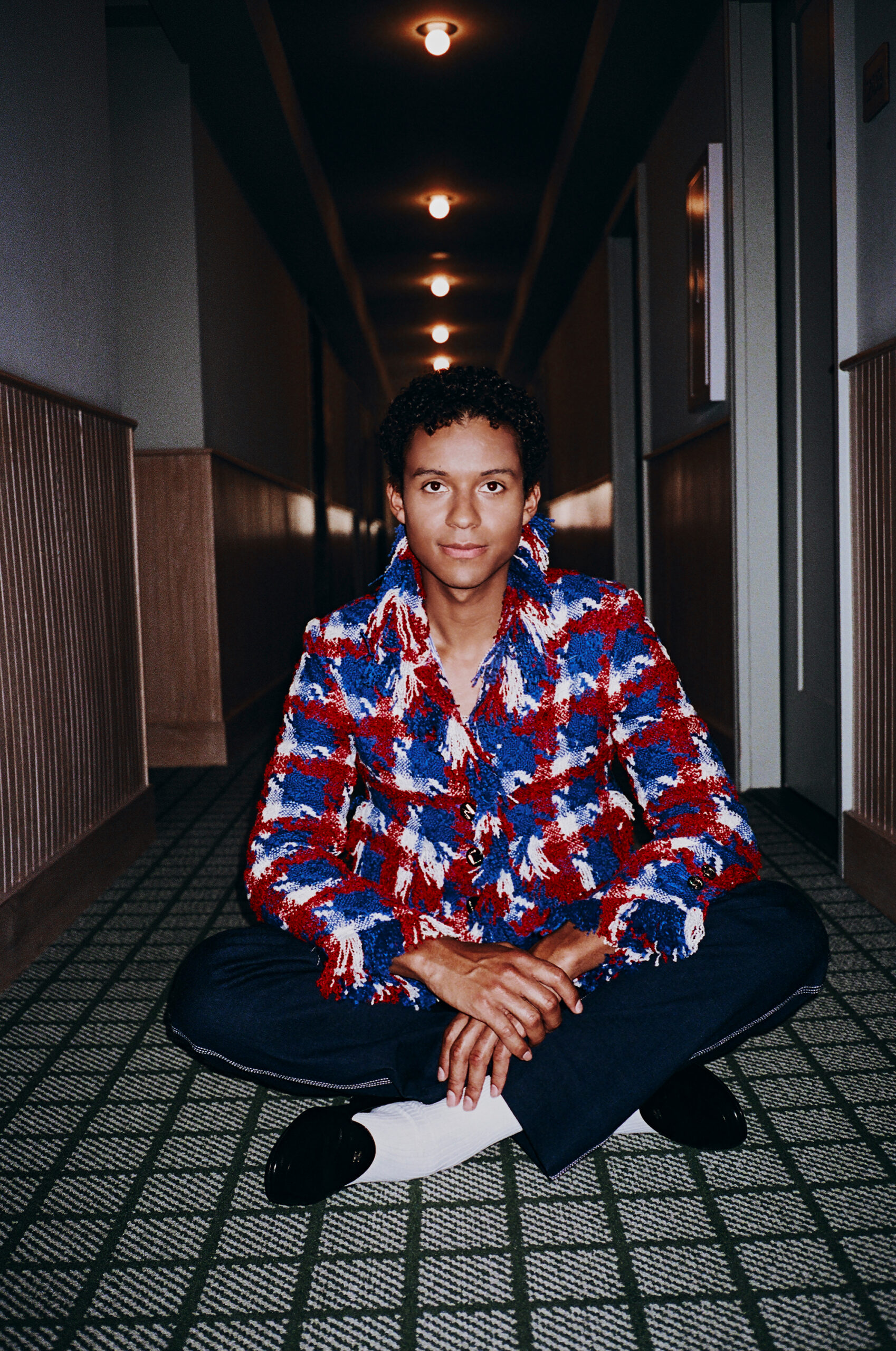

The physical demands of the role were perhaps the most grueling aspect of the two-year journey. Embodying a dancer of Michael Jackson’s caliber required more than just learning steps; it required a fundamental restructuring of the body’s movement patterns. Jaafar underwent a 20-day intensive "boot camp" designed to push his cardiovascular limits and physical flexibility to their breaking point. Following this, he spent nearly a year mastering individual iconic performances, such as the historic 1983 rendition of "Billie Jean." This involved hundreds of hours spent perfecting a unique dance vocabulary that included the precise tilt of a hat, the snap of a wrist, and the fluid, gravity-defying mechanics of the moonwalk and signature spins. The goal was to reach a level of muscle memory where these movements no longer felt like a rehearsed routine, but rather a natural expression of the body’s energy.

This internalization of the character extended into the realm of mannerisms and wardrobe. Jaafar spent countless hours watching candid, behind-the-scenes footage—moments where Michael was not "on" for the cameras—to capture the subtle nuances of his speech, his posture, and his idiosyncratic hand gestures. He describes a process of "osmosis," where these traits slowly became a natural extension of his own personality on set. Furthermore, he developed a profound respect for the role of costume in the performance. To Michael Jackson, his stage wear was not merely clothing but "armor." Jaafar learned how the weight of the loafers, the fit of the military jackets, and the specific texture of the iconic glove functioned as tools to channel a specific type of performance energy. He discovered that the wardrobe fundamentally changed the visual flow of his movements, dictating the way he occupied space and the way light caught his silhouette during high-intensity sequences.
As the film moves toward its 2025 release, the industry and the public are left to wonder if such a deep, multi-year immersion can successfully humanize a figure of Michael Jackson’s mythic proportions. For Jaafar, the project has clearly become more than a career move; it is a meticulous exploration of his own heritage through the lens of a professional actor. By combining the rigorous technical training of a world-class dancer with the psychological depth provided by personal family archives, Jaafar Jackson has positioned himself to offer a portrait that is both technically flawless and emotionally resonant. The Hayvenhurst "training camp" served as a bridge between the past and the present, allowing the next generation of the family to honor a legacy by truly understanding the man who created it. The resulting performance is expected to be a landmark in the biopic genre, standing as a testament to the idea that some roles require more than just talent—they require a total transformation of the self. As Jaafar Jackson steps into the light as the "King of Pop," he does so having navigated the complex intersection of family history and cinematic artistry, ensuring that the spirit of Michael Jackson is captured not just in the moonwalk, but in the quiet, reflective moments that defined a life.