The afternoon sky above Dhaka’s bustling Uttara district shimmered like any other July 21, until tragedy pierced its calm. At exactly 1:06 p.m., an F‑7 BGI Bangladesh Air Force training jet, a Chinese-built relic of the MiG‑21 line, lifted off from Kurmitola base, piloted by Flight Lieutenant Toukir Islam Sagar on what should have been a routine sortie. But fate had different plans.
Minutes later, catastrophe struck the Milestone School and College campus. The jet, stricken by a critical technical malfunction, spiraled toward a congregation of children and educators. In a split-second act of valor, Islam attempted to steer away from densely populated zones, yet the aircraft demolished the two-story building, triggering a devastating fire that claimed 19 lives, including his own, and injured more than a hundred people, many of them young students.

Related article - Uphorial Podcast
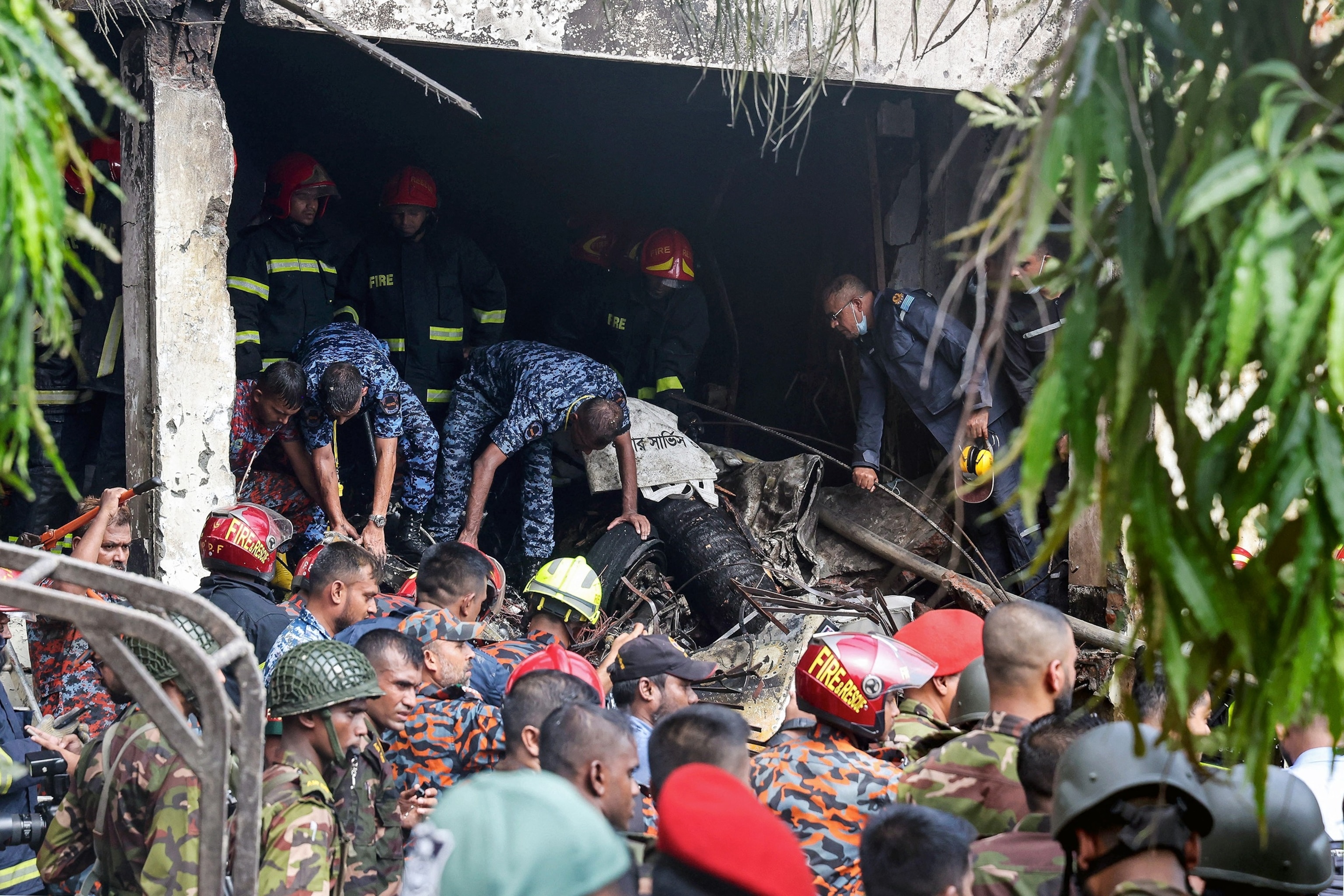
This isn't just another aviation tragedy; it's a story of human courage woven into national mourning. Dhaka, a metropolis of 20 million, knows grief, but nothing prepared it for this. Panic erupted: ambulances, volunteer rescuers, parents frantically rushing amidst flames and smoke. One father ran, cradling his daughter. A teacher recalled, “I heard an explosion. When I looked back, I only saw fire and smoke”. That image, chaos made physical-is-one-is-one—will haunt this community for years.
The story doesn’t end with the crash; it begins there. Flight Lieutenant Islam Sagar’s final moments call to mind the novice pilot facing catastrophe with discipline and resolve. As the Air Force described, ejection wasn’t an option at such low altitude, so he chose sacrifice. He was initially rescued alive, airlifted to hospital, but succumbed at around 4:20 p.m. In death, he became a symbol of duty and heroism. This accident lays bare deeper questions: the risks of aging military hardware, pilot training under pressure, and the proximity of military operations to civilian spaces. The F‑7 BGI fleet is over a decade old, its legacy tied to Cold War design. Bangladesh’s government, reeling from this calamity, swiftly declared a national day of mourning and ordered a high‑level inquiry. Interim leader Muhammad Yunus expressed “deep sorrow” and vowed “all kinds of assistance” to victims.
Yet communities already feel the cost. Schools will rebuild, but scars run deep. Parents of survivors cluster in hospital corridors, watching for signs of recovery. Burn victims, children and adults alike- face long, painful recoveries. Local medical staff, overwhelmed, rely on triage by motorcycle rickshaw before ambulances arrive. This incident also resonates within South Asia’s uneasy aviation history. Just last month, an Air India flight crashed into a medical hostel in India, raising fresh alarm over mechanical checks, urban flight paths, and crew protocols. Dhaka’s tragedy amplifies a shared regional reckoning, civilian safety in the shadow of military urgency.
At the heart of this story is Flight Lieutenant Sagar’s sacrifice. In his silence after takeoff, in his refusal to eject, he gave others a chance. He didn’t just pilot a plane, he steered fate itself, albeit briefly. His final act forces Bangladesh to confront a dangerous question: how to balance national defense training with the sanctity of civilian life. In the coming weeks, the air force’s investigation must unearth truths: Was this failure predictable? Did flight protocols compromise safety? How can such tragedies be prevented? Families will demand answers. The nation will seek solace. And amid mourning, one quiet story shines: a young man’s decision to steer into danger so others would live. Flight Lieutenant Toukir Islam Sagar isn’t just another statistic. He is a testament to responsibility under duress, to sacrifice in a world that rarely demands it. Dhaka bows its head today, but in remembering him, the city summons its strength to rebuild, and ensures that one afternoon’s tragedy becomes a lasting lesson.