The architecture of haute horlogerie, acoustic physics, and lapidary artistry reaches a masterly, illuminating peak in a comprehensive breakdown of Audemars Piguet's manufacturing philosophy. Chronicling the transformation of raw precious metals and natural minerals into mechanical masterpieces, the narrative captures the dialogue between industrial micromechanics and traditional hand craftsmanship. In an exceptionally detailed horological feature report and technical analysis, watchmaking chroniclers examine a manufacturing process defined by sub-micron machining tolerances, artisanal deburring, hand-beveled anglage, acoustic resonance engineering, and high-precision stone dial fabrication.
At the foundational stage of micro-engineering, the creation of modern timepiece components opens with advanced precision machining. Specialized multi-axis CNC units shape raw alloy plates, bridges, and wheels into complex three-dimensional forms. Following initial extraction, each component undergoes rigorous verification through automated coordinate measuring machines to validate structural tolerances down to single-micron thresholds. Through emotional precision, observing hyper-dense metals sculpted with microscopic exactitude underscores the staggering discipline required to construct a mechanical movement, ensuring that every gear teeth interaction maintains total mathematical traceability throughout its operational life.

Related article - Uphorial Shopify

Following initial machining operations, the component creation sequence transitions into meticulous physical cleaning and deburring. Skilled artisans systematically examine each finished part under high-power magnification, manually clearing away microscopic burrs, stray metal shavings, and cutting fluid residues. Because even an invisible particle of metallic dust can lodge within delicate gear trains or escape into the escapement, this rigorous cleaning phase serves as an indispensable safeguard. Through intelligent curation of movement assembly protocols, the process demonstrates how microscopic cleanliness dictates the overall mechanical integrity and power reserve efficiency of a high-complication caliber.
Through a deep cultural understanding of traditional Haute Horlogerie traditions, the movement enters the hand-finishing stage, centered around the demanding art of anglage (chamfering). Working entirely by hand, master polishers use specialized steel files, wooden pegs, and abrasive pastes to bevel the sharp edges of bridges and plates at precise 45-degree angles. This pain-staking manual labor transforms raw metal edges into flawless, light-reflecting mirror surfaces and sharp interior angles that no automated machine can replicate. This dedication to decorative detail elevates functional internal components into breathtaking works of mechanical art, honoring centuries of Swiss hand-finishing heritage.
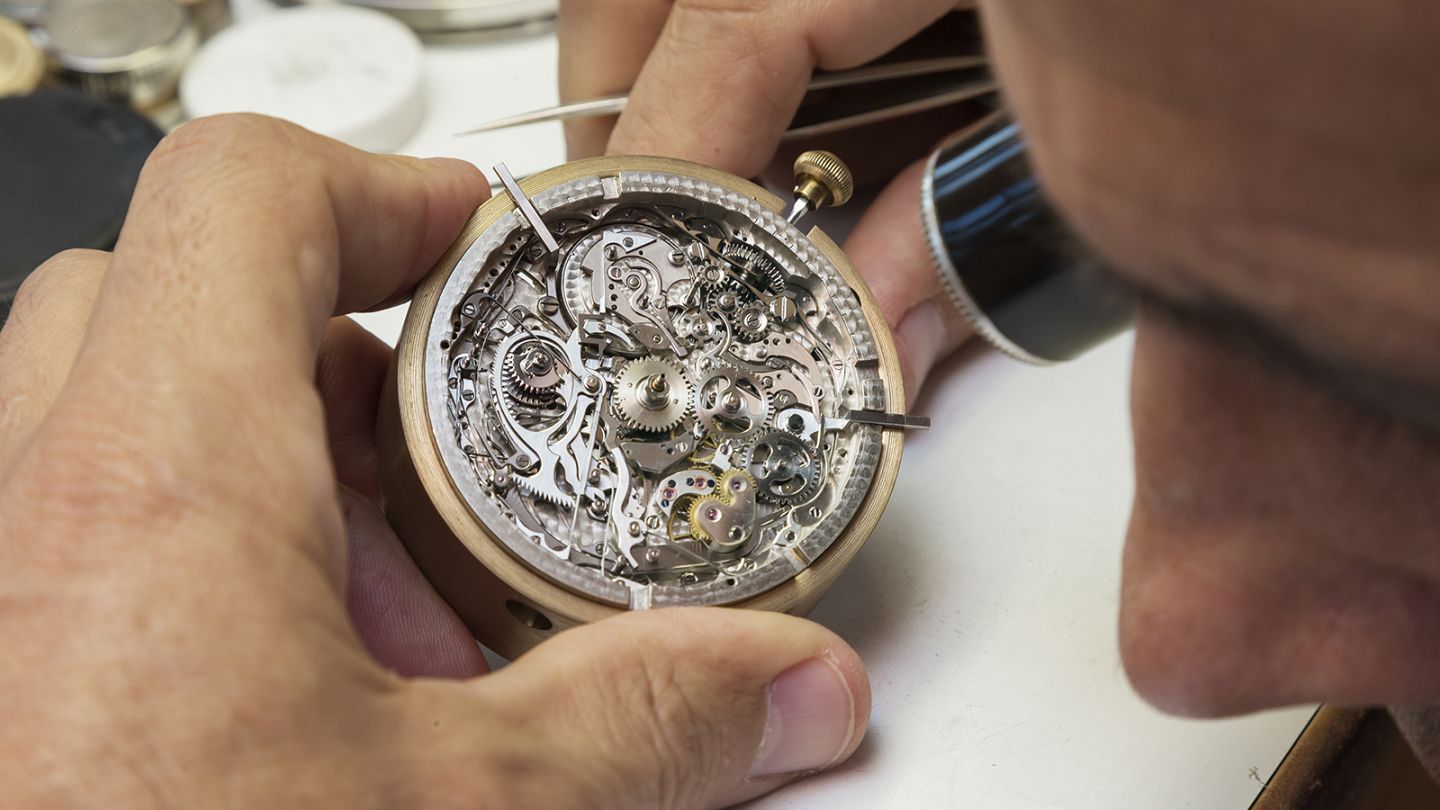
Strategic storytelling expands the technical narrative into the realm of advanced acoustic engineering, focusing on the chiming mechanisms within the Code 11.59 collection. Horological acousticians meticulously calibrate the interaction between tiny internal hammers, gongs, and mechanical rakes to tune the watch's minute repeater functions. The analysis highlights how case materials directly influence sound propagation, detailing how precious metal densities—such as 18-karat white gold—are engineered alongside internal resonance chambers to amplify, sustain, and warm the acoustic tone of the temporal chime.
The manufacturing showcase reaches a visual crescendo with an exploration of stone dial craftsmanship, focusing on the delicate handling of natural obsidian. Lapidary artisans carefully core and slice raw volcanic glass into paper-thin, extraordinarily fragile discs destined to become custom watch faces. Because natural obsidian features unique mineral veining and extreme structural brittleness, slicing, polishing, and drilling these mineral wafers demands absolute physical control. The resulting dials ensure that no two timepieces are visually identical, pairing nature's organic history with mechanical precision.
Through transformational framing, this deep dive into high watchmaking transcends standard behind-the-scenes manufacturing overviews. It stands as an enduring horological chronicle, proving that while modern watchmakers deploy cutting-edge computer-aided machinery and acoustic physics, it is ultimately the human element—the artisan's eye, steady hand, and years of honed instinct—that breathes soul into haute horlogerie, turning measuring instruments into timeless monuments of human ingenuity.