NASA – The cosmic horizon has long been a source of both existential wonder and rigorous scientific inquiry, but a recent masterclass in celestial mechanics has brought the complexities of the universe into sharper focus for the general public. In a comprehensive session with Dr. Jackie Faherty, an astronomer at the American Museum of Natural History, the veil of mystery surrounding the cosmos was pulled back to address some of the most persistent questions about the origins, structure, and future of everything we see. From the microscopic magnetic storms of the Sun to the unfathomable reaches of an infinite, flat universe, Dr. Faherty’s insights highlight a period of unprecedented clarity in the field of astronomy as 2026 continues to push the boundaries of what we can observe and understand.
The narrative of the cosmos begins with its birth, approximately 13.8 billion years ago. Addressing a common misconception, Dr. Faherty clarified that the Big Bang should not be envisioned as a traditional explosion originating from a single point within a pre-existing void. Instead, it was the beginning of the expansion of space itself—a rapid stretching of the fabric of the universe that continues to this day. This expansion leads to the current prevailing scientific observation that we inhabit a flat universe that is likely infinite in its extent. Within this vast expanse, the largest observable structures are not solitary objects but massive filaments of galaxies, such as the Sloan Great Wall. these colossal webs are held together by the invisible scaffolding of dark matter, a substance that remains one of the great frontiers of modern physics.
Our own home in the cosmos, the Milky Way, is a classic spiral galaxy defined by its elegant arms and a violent heart. At its exact center lies Sagittarius A*, a supermassive black hole that acts as a gravitational anchor. However, even the combined mass of the Milky Way’s billions of stars and its central black hole is insufficient to explain how the galaxy holds its shape. This is where the "dark" components of the universe’s mass budget become critical. Dark matter and dark energy together account for a staggering 95% of everything in the universe. While dark matter provides the gravitational stability required to keep galaxies from flying apart, dark energy acts as a mysterious counterforce, driving the ever-accelerating expansion of the universe and pushing distant galaxies away from us at increasing speeds.
Related article - Uphorial Shopify
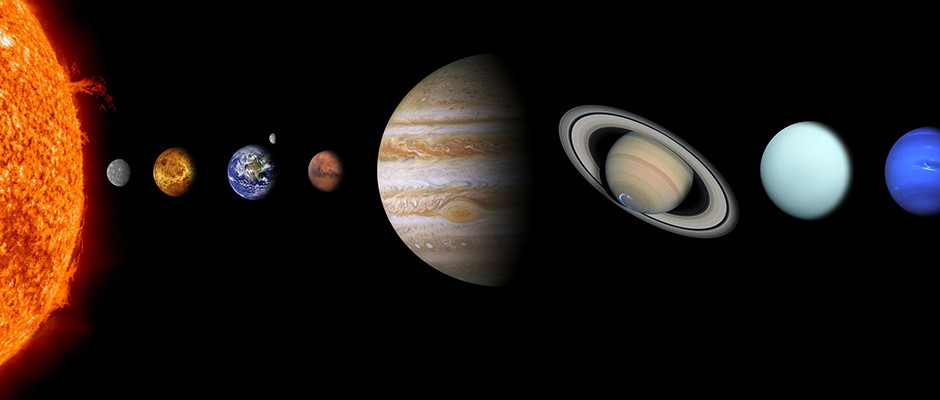
At a more granular level, stars remain the fundamental building blocks of galactic structure. Dr. Faherty explored the dramatic life cycles of these celestial furnaces, particularly the high-stakes events that occur when stars merge. The outcome of such a collision is determined entirely by the mass of the participating bodies; high-mass mergers are capable of producing the most energetic events in the known universe, including blinding gamma-ray bursts and the ripples in spacetime known as gravitational waves. These events are the primary way astronomers can study the most extreme environments in physics, providing data that could never be replicated in a laboratory on Earth.

Closer to home, the session addressed the terrestrial anxieties often associated with our own star, the Sun. Dr. Faherty explained that sunspots—darker patches on the solar surface—are actually cooler, magnetically active regions that serve as the birthplaces of solar flares and coronal mass ejections. While these solar phenomena are powerful enough to disrupt satellite communications and cause localized technological issues, the astronomer was quick to debunk the popular myth that a solar storm would "destroy the internet." While 2026’s infrastructure remains sensitive to space weather, the resilience of modern global networks is far greater than the catastrophic scenarios often portrayed in popular media.
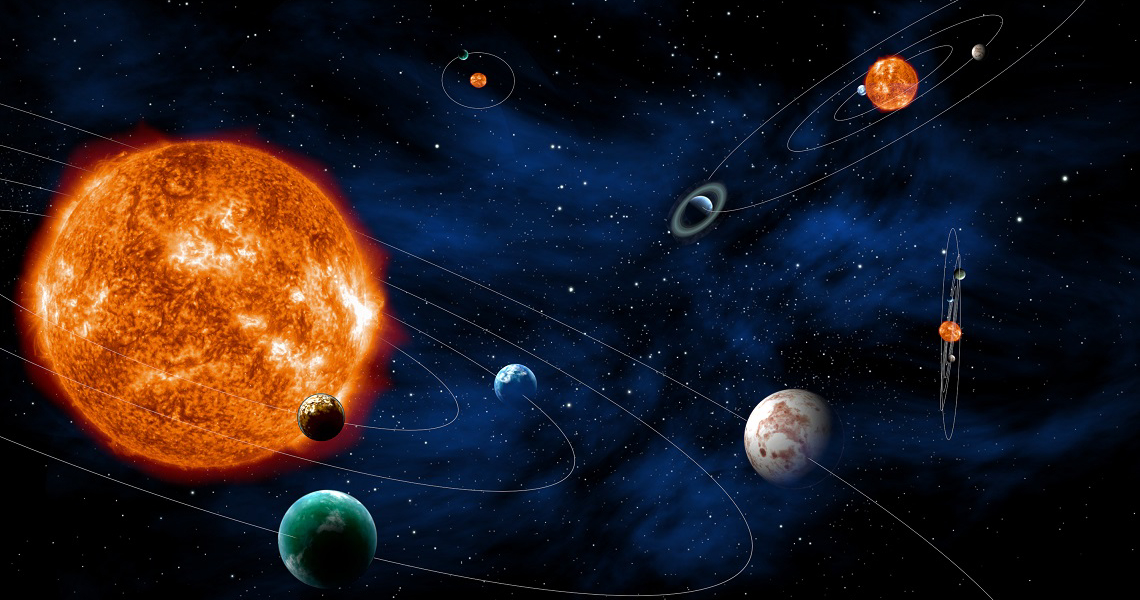
The discussion also touched on the shifting definitions within our local solar neighborhood, most notably the status of Pluto. Dr. Faherty detailed the reasons behind its reclassification as a dwarf planet, noting that while Pluto is a complex world, it fails the "dominance" test required for planetary status because it has not cleared its orbital neighborhood of other debris. This nuanced understanding of what constitutes a planet has also led to the discovery of rogue planets—lonely, nomadic worlds that wander through the cosmos without a host star to orbit. These silent travelers remind us that the space between stars is far from empty; it is a graveyard and a nursery for objects that don't fit into our traditional solar models.
Finally, the session addressed the simple yet profound question of why the night sky is dark, a problem known as Olbers’ Paradox. If the universe is infinite and filled with stars, every point in the sky should technically be occupied by a star's light. The darkness we see is a result of the finite speed of light and the age of the universe; light from the most distant objects simply hasn't had enough time to reach us yet. Furthermore, the limits of human vision mean that even under the most perfect, pitch-black conditions, the naked eye can only distinguish about 9,000 to 10,000 individual stars. As Dr. Faherty concluded, our view of the night sky is a beautiful but limited snapshot of a reality far more vast and complex than our biology allows us to perceive. Through the lens of modern astronomy, however, we are slowly beginning to bridge that gap, turning the "unknown" into a map of our origins and our destiny among the stars.