Understanding the vast complexities of our 14-billion-year-old cosmos requires a shift in perspective, as explained by Jackie Faherty of the American Museum of Natural History during a recent "Tech Support" session with WIRED. The age of the universe is primarily determined by observing the cosmic microwave background radiation, which represents the signal of the Big Bang and displays tiny temperature fluctuations from approximately 13.8 billion years ago. Amidst public curiosity regarding alien life, Faherty clarified that the object 3I/Atlas is merely an interstellar comet rather than a spacecraft, joining others like ‘Oumuamua and Borisov that originated from the material of distant solar systems. Current scientific thinking suggests we reside in an infinite, "flat" universe where light rays travel in parallel forever, though the possibility of a multiverse—where other universes might have had their own Big Bangs—remains a serious subject of inquiry.
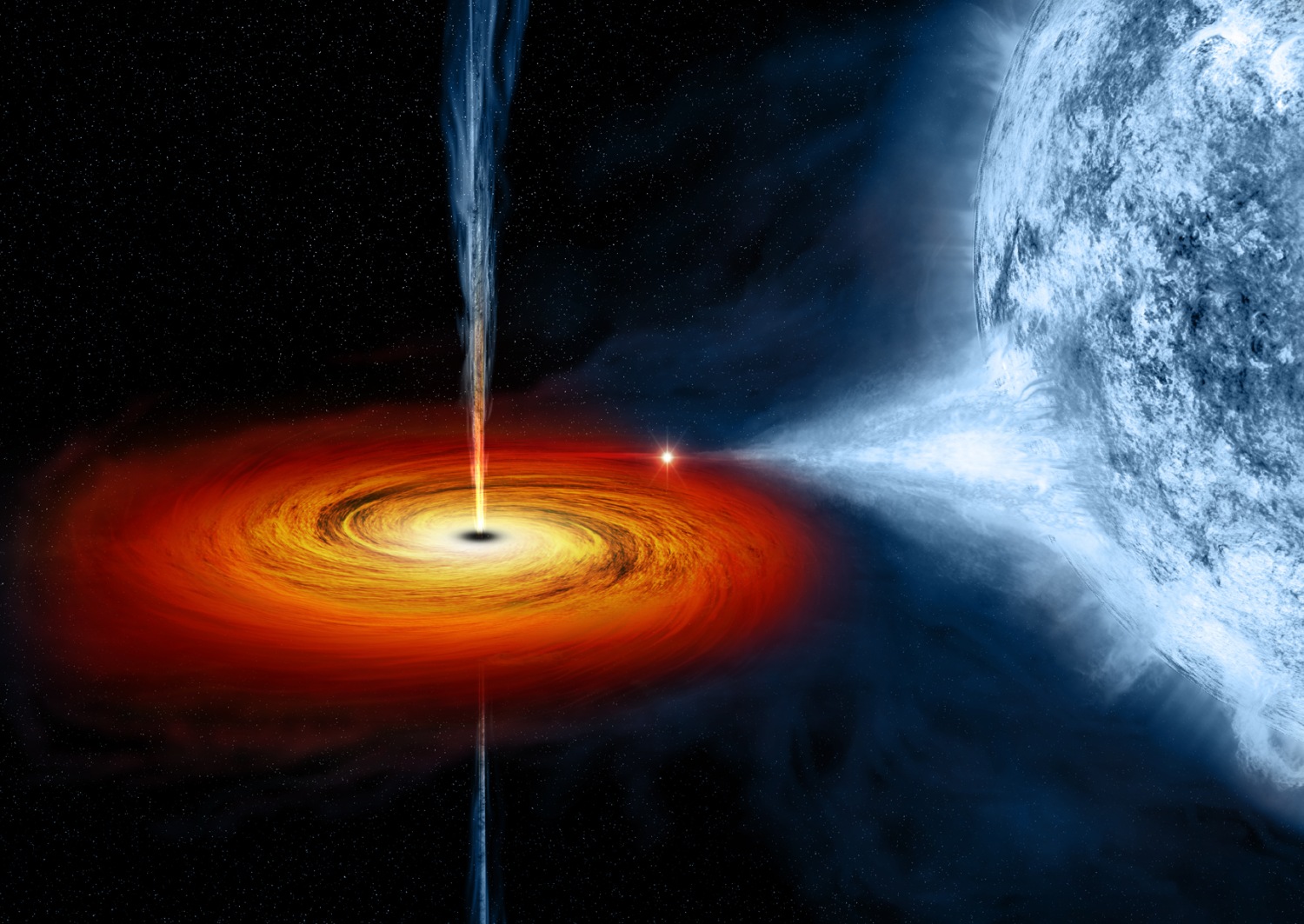
Within our own galaxy, the supermassive black hole Sagittarius A* sits at the center of a spiral structure that is roughly 150,000 to 200,000 light years across. Addressing cinematic depictions of space, Faherty noted that the phenomenon of spaghettification—the stretching of an object by extreme gravity—only becomes a factor near the center of a supermassive black hole, as seen in the movie Interstellar.

Related article - Uphorial Shopify
The architecture of the universe is defined by stars forming first as massive hydrogen objects that later clumped into galaxies, eventually linking together to create massive structures like the Sloan Great Wall, stretching a billion light years across. These cosmic webs are shaped by dark matter and dark energy, which together constitute approximately 95% of the universe's mass budget, driving an expansion that is currently accelerating. This acceleration leads to three potential fates for existence: the Big Freeze, where entropy dissipates; the Big Rip, where matter is decimated by expansive forces; or the Big Crunch, where gravity collapses everything back into a singularity. Closer to home, Faherty corrected common misconceptions about our solar system, explaining that asteroid belts are mostly empty space where huge gaps exist between rocks, rather than the dense obstacles often seen in films. Furthermore, the demotion of Pluto to dwarf planet status was based on its failure to "dominate" its orbital area, unlike major planets such as Jupiter.
Looking out at the stars is essentially an act of looking back in time; an observer a million light years away viewing Earth would see an ice age rather than modern civilization. The Sun, while a constant source of light, is a magnetically active star prone to "burps" known as coronal mass ejections that can damage satellite infrastructure or disrupt the electrical grid through geomagnetic storms. Beyond established orbits, astronomers have identified rogue planets that wander the cosmos without a host star, potentially as common as stars themselves. Ultimately, there is no single "center" of the universe; rather, we are all part of a uniform structure that is expanding like the surface of a balloon. Despite the billions of stars in existence, only about 9,000 to 10,000 are visible to the naked eye under ideal conditions, leading Faherty to urge the preservation of our dark night skies against the growing threat of light pollution.