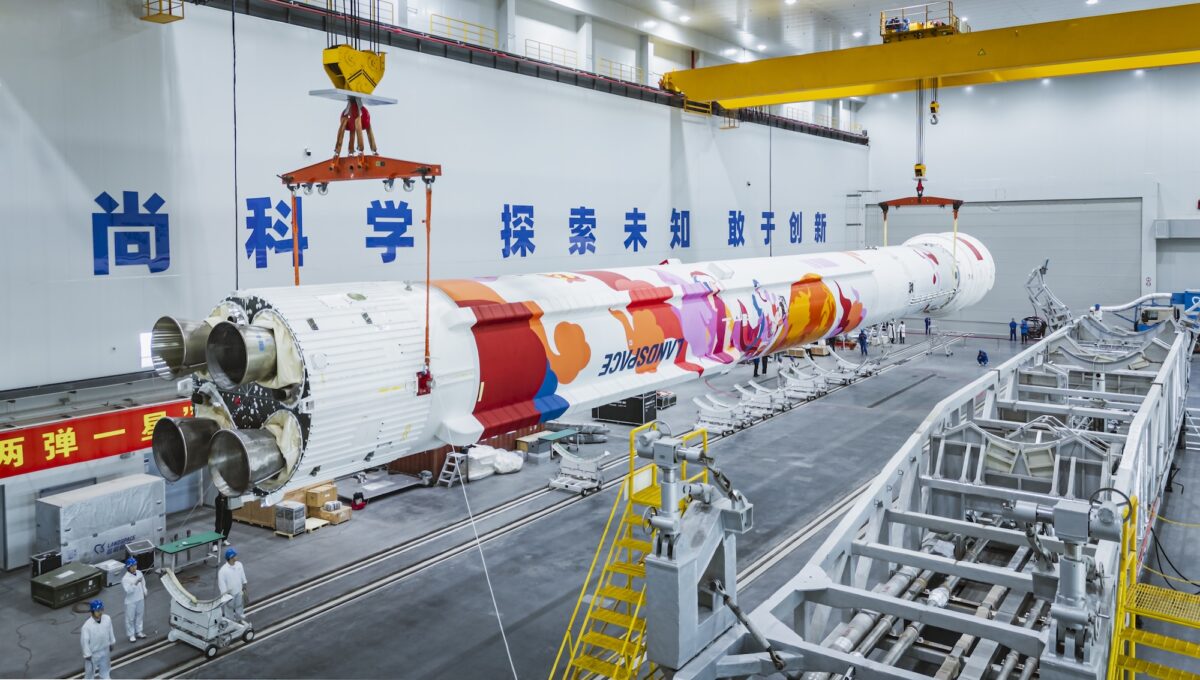
Artist Jacky Tsai has fundamentally altered the landscape of contemporary art by merging ancient Chinese mythology with the frontier of aerospace technology through the creation of the world's first art-painted rocket, a milestone documented by NOWNESS. Tsai’s artistic philosophy is rooted in the conviction that creators must possess the bravery to cross into diverse fields and explore new dimensions, a path he initially began by utilizing traditional crafts such as lacquerware and blue and white porcelain to express contemporary and future-looking themes. This latest project is not a standalone event but rather the culmination of a narrative he has been weaving for years; the recurring motifs of satellites appearing in his previous works were intentional clues that found their ultimate "sublimation" during the rocket’s launch. He firmly believes that this specific artwork will now remain in space permanently, traveling indefinitely in the direction of the moon.
The scale of Tsai’s ambition has evolved significantly from his early days in the studio to the creation of massive public installations, including work on a 150,000-ton cruise ship where he observed that human presence felt as small as a "sesame seed" in comparison to the magnitude of the vessel. While his previous collaborations, such as with the Orient Express, brought his dreams closer to reality, the rocket launch represents a unique pinnacle because it carries the weight of Chinese cultural tradition into the cosmos. His immediate decision to feature the "Chang'e Flying to the Moon" story was driven by the desire to share a grand, household legend with the universe, allowing astronauts to witness human culture and art in a way never before possible.

Related article - Uphorial Shopify
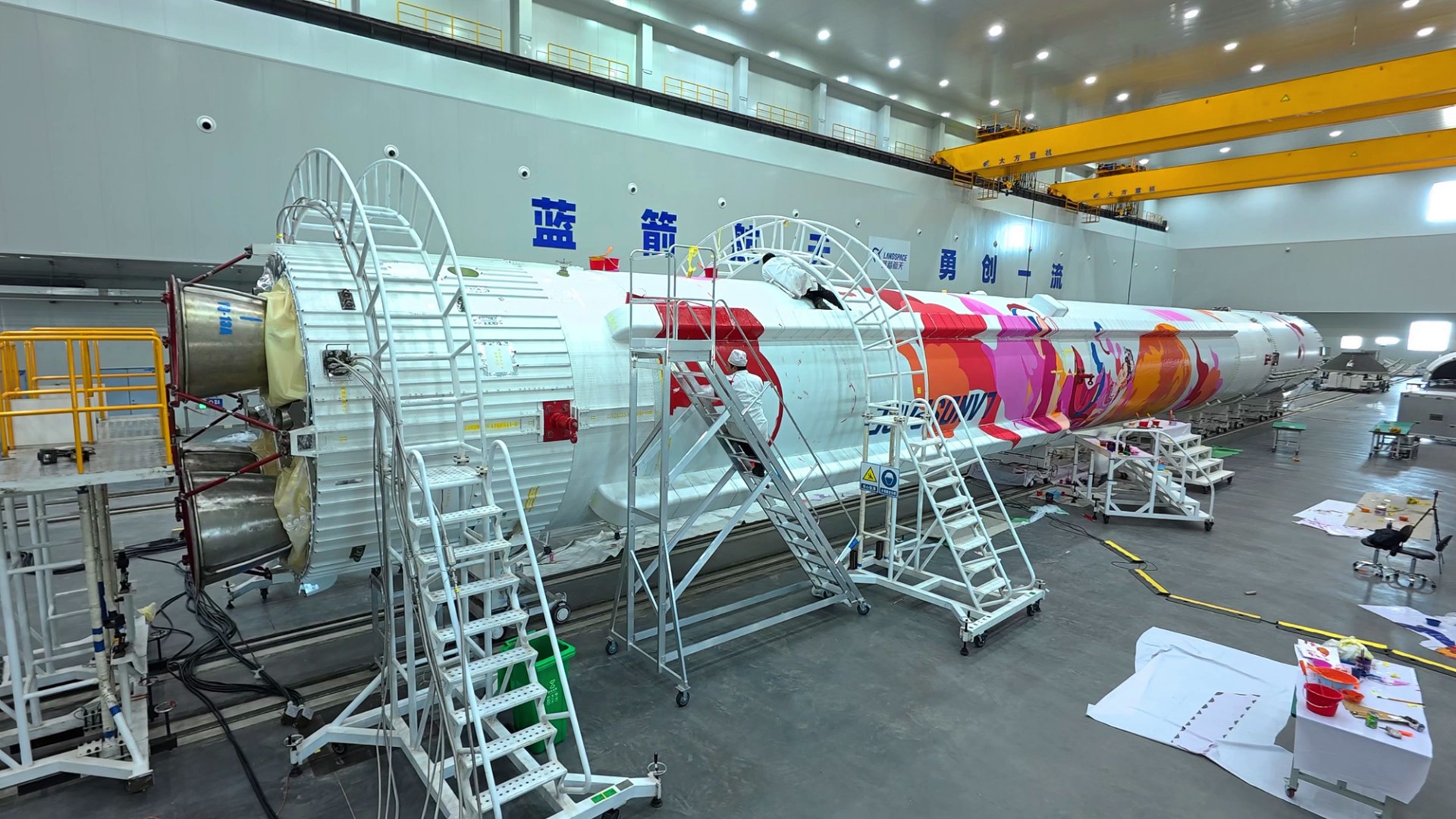
By projecting this myth into the stars, Tsai has effectively bridged the gap between ancient storytelling and modern reality, shifting the legend of Chang'e from a dimension of time into one of physical space. This endeavor signifies a courageous leap beyond the limitations of traditional painting, sculpture, or even Earth-based public art, as it literally transcends the boundaries of the planet itself. As the final countdown concluded and the rocket ascended, a story that had existed for thousands of years was successfully transformed into a tangible, extraterrestrial legacy.
The documentation by NOWNESS captures this transition as a profound moment where art ceases to be a stationary object and becomes a moving vessel of cultural identity. This perspective emphasizes that the true value of the work lies in its permanence within the vacuum of space, serving as a beacon of human creativity for any who might look toward the moon. By integrating these diverse elements, Tsai has moved his practice from the confines of a workshop into the infinite expanse of the universe.
Launching a legend into the stars is much like casting a message in a bottle into an infinite celestial ocean; the significance lies not just in the vessel itself, but in the enduring hope that the story within will travel across the vastness of time and space to reach an audience yet unknown.