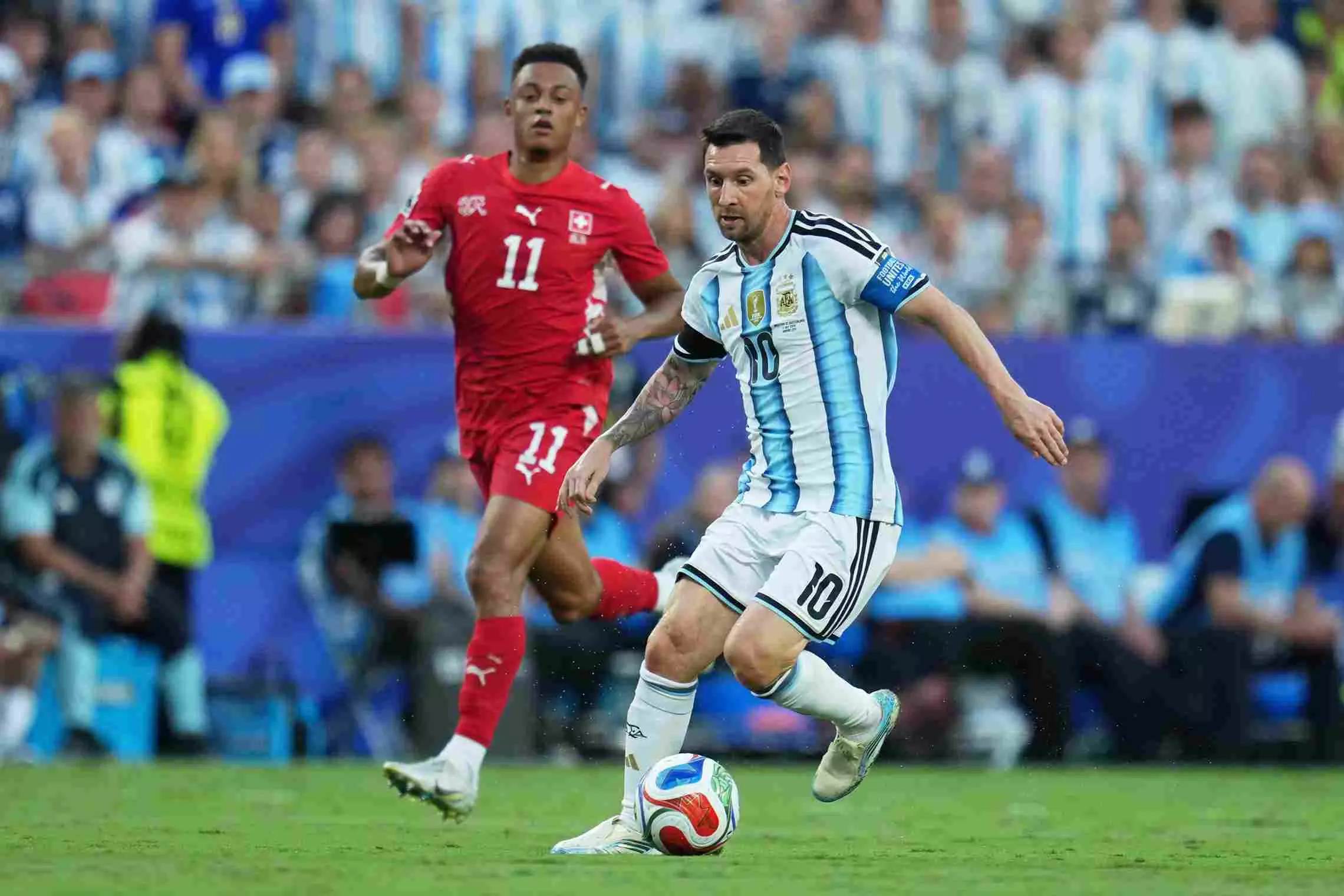
KANSAS - The Kansas City Stadium became the crucible for a modern footballing odyssey this past weekend, as Argentina and Switzerland locked horns in a quarter-final match that redefined the limits of endurance, tactical tension, and the volatile nature of tournament football. For Argentina, the 2026 FIFA World Cup™ is more than just a competition; it is a continued pursuit of a singular, historic greatness that has defined a generation. For Switzerland, this was an opportunity to dismantle the hierarchy of the sport and cement their place as a titan-slayer. What unfolded over the grueling minutes was a narrative of momentum, technological intervention, and the thin, unforgiving margins that separate those who advance and those who must bid farewell to their dreams.
The opening act was defined by the clinical efficiency that has become the hallmark of the Argentine squad. Barely had the stadium settled into the rhythm of the match when Alexis Mac Allister rose to meet a perfectly delivered corner kick from Lionel Messi. It was a moment of crystalline precision—a header that found its mark with an inevitability that seemed to suggest Argentina’s path to the semi-finals was already written. The goal ignited a fervor among the thousands of Argentine fans in the stands, a sea of blue and white that seemed to believe that as long as Messi held the thread, the tapestry of the game would remain in their favor. Yet, in the theater of the World Cup, early leads are often as dangerous as they are comforting; they force the opponent to shed their hesitation and embrace the desperation of the underdog.
Switzerland, unbowed by the early setback, began to orchestrate a response rooted in structural discipline and unyielding grit. As the match progressed, the Swiss side dismantled the Argentine rhythm, finding the spaces that had previously been locked down. The equalizer arrived through Rodriguez, a goal that was not merely a conversion but a declaration of intent. It leveled the score and, more importantly, it forced the defending champions into a psychological arena they had hoped to avoid: a tight, grinding, deadlocked battle against a side that had nothing left to lose. The tension in the stadium thickened, moving from the light-hearted anticipation of the early minutes to the heavy, pressurized atmosphere of a game where a single mistake would be magnified into a tournament-ending tragedy.
Related article - Uphorial Shopify

The turning point—and the moment that will likely be debated in the archives of the 2026 tournament—arrived in the form of a contentious VAR intervention. Breel Embolo, Switzerland's dynamic attacking force, found himself at the center of the storm after a challenge in the box. The initial ambiguity of the moment was stripped away by the cold, dispassionate gaze of the video officials, leading to a second yellow card for simulation and a red card that forced the Swiss to play the remainder of the contest a man down. The decision rippled through the stadium, a lightning rod for the conflicting emotions of the crowd. For Switzerland, it was a perceived injustice that threatened to steal their momentum; for Argentina, it was an invitation to dominate a wounded opponent, a task that proved far more difficult than the numbers on the pitch suggested.
The final chapter of the match was a masterclass in the persistence required to compete at the absolute pinnacle of sport. Even with the man advantage, Argentina found themselves thwarted time and again by the Swiss goalkeeper, who appeared to be in a state of flow, repelling wave after wave of attacks from Messi and his colleagues. The game remained locked in a stalemate that felt like a test of wills. It was not until the dying moments of the tension that the deadlock was finally shattered. Lautaro Martinez, finding himself in the right place at the precise moment of chaos, capitalized on a saved rebound to fire the ball home. It was the decisive blow, the goal that finally released the pent-up tension of the afternoon and ensured that the Argentine pursuit of greatness would continue.

As the final whistle blew, the outcome was etched into history: Argentina had secured their spot in the semi-finals, keeping their tournament ambitions alive and their eyes fixed firmly on the horizon. The walk off the pitch for the Argentine players was one of relief and professional validation; for the Swiss, it was a departure marked by the heartbreak of what might have been. The match in Kansas City was a profound reminder of the multifaceted nature of football—a game that rewards both the transcendent skill of a legend like Messi and the raw, opportunistic instinct of a goal-scorer like Martinez.
As the focus of the tournament now shifts toward Atlanta, the resonance of the Kansas City encounter lingers. It was a match that forced Argentina to confront their own limitations and prove their capacity for resilience under pressure. They have cleared the quarter-final hurdle, but they have also been reminded that at this level, no path to the final is paved with ease. They move forward with the weight of expectation on their shoulders, carrying with them the memories of the Kansas City heat, the drama of the VAR, and the sheer, exhausting joy of a victory earned in the final moments of a fight for survival. The pursuit of greatness remains, and the journey toward the ultimate trophy now accelerates into its most critical and uncompromising stage.