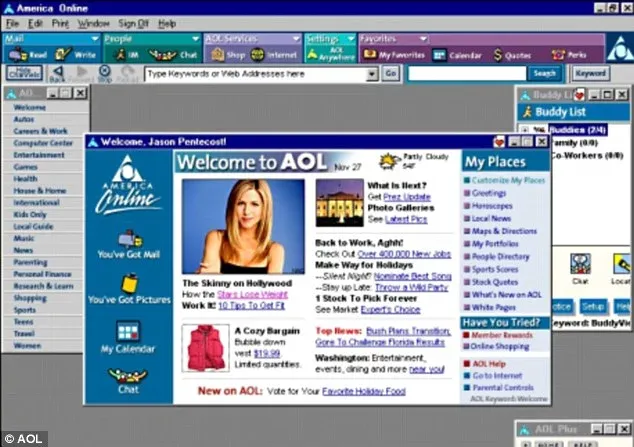
There’s a sound that still lives in the bones of anyone who first went online in the 1990s, a mechanical, hopeful chorus of beeps and whistles as a modem negotiated its way onto the internet. That ritual is coming to an end: AOL has announced it will discontinue its dial-up internet service on September 30, 2025, retiring the AOL Dialer and the AOL Shield browser after more than three decades of service.
This is more than a corporate product change; it’s the last audible echo of an era when getting online felt like stepping through a doorway into a new country. AOL was a pioneer in that country. It taught millions how to write an email, join a chatroom, and sign off with “You’ve got mail.” Once a behemoth with tens of millions of subscribers, AOL’s dominance defined how many people first experienced the web, and its exit from dial-up is a marker of how rapidly the landscape has transformed.
Related article - Uphorial Podcast
What surprises some younger readers is that dial-up persisted this long at all. As recently as 2023, estimates put the number of Americans still reliant on dial-up at a few hundred thousand, small in percentage but enormous in human terms: elderly users, low-income households, and rural communities who either lack broadband options or prefer the simplicity of what they have. Shutting down dial-up isn’t just a technical migration; for those users, it’s a forced choice between learning new systems, paying for alternatives, or losing basic connectivity.
There’s also a business reason: the math stopped working. Maintaining legacy networks, CDNs, and dialer software for shrinking user bases becomes unsustainably costly. AOL’s move mirrors countless decisions in tech history when platforms sunset products that once defined them. Yet, unlike most product retirements, this one comes with a soundtrack and an emotional ledger of nostalgia. People don’t just lose a service; they lose rituals and tiny daily comforts: the way a chatroom felt alive at midnight, the pixelated excitement of an early online game, or even the ritual of pressing the “connect” button while a steaming cup of coffee cooled beside you. So, what do we think about it? First: progress is messy. Faster, ubiquitous broadband and mobile data have changed expectations for what “online” should be: always on, instantaneous, and rich with media. That’s wonderful for innovation, but progress often leaves people behind. The digital divide is not a relic of 1990s headlines; it’s alive and present every time a company shuts down a service people still depend on.
Second, cultural memory matters. AOL’s dial-up exit is a clarion call for better digital stewardship, archiving interfaces, preserving oral histories of early online communities, and supporting the users who must migrate.
Third: there’s an opportunity at the end of an era. Tech companies, museums, and libraries can collaborate to preserve the artifacts and stories of the dial-up age so its lessons, not just its aesthetics, inform how we build inclusive networks today. The modem’s wail may fade, but the lessons of AOL’s rise and slow retreat are clear: technologies shape communities as much as they solve problems. Saying goodbye to dial-up doesn’t just rewrite a product page; it asks us to remember what connection once meant, and to ensure the next chapter of connectivity is for everyone.