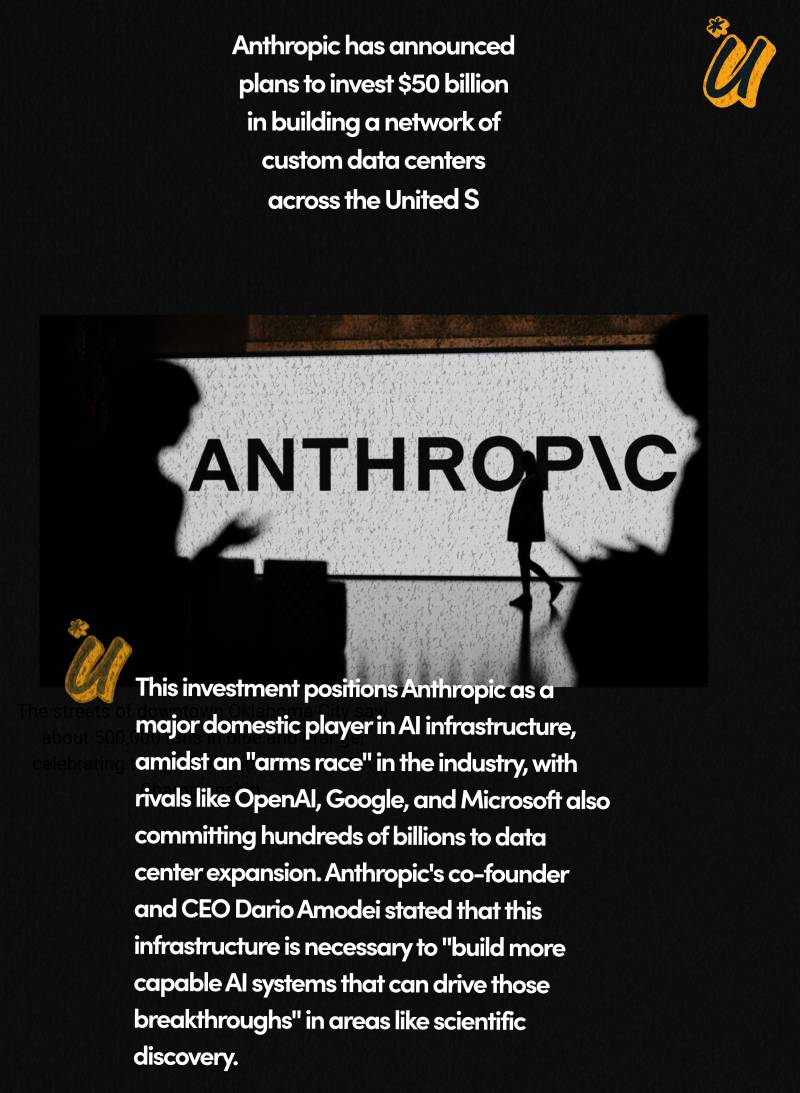
Anthropic staggering $50 billion plan to build custom data centers in locations including Texas and New York has put the sheer, unprecedented cost of the Artificial Intelligence boom into sharp focus, a development thoroughly analyzed on "BLOOMBERG TECH" with Ed Ludlow and Caroline Hyde. This latest pledge for infrastructure to support AI is considered "enormous". While Anthropic, valued at $83 billion, has a good track record with business, it is an unprofitable company making a massive capital expenditure. Caroline Hyde noted that the AI bubble hopes are "still being questioned by the data".
Anthropic is clearly adopting the necessary scale to build what it wants, possibly seeking to demonstrate a more fiscally responsible approach than some rivals by doing it "on an order of magnitude". Crucially, the company has not revealed the "total gigawatt figure for the footprint in the United States". Furthermore, Anthropic is "heavily reliant on the hyper scale partners" such as Amazon, AWS, and Google to provide the compute they need.
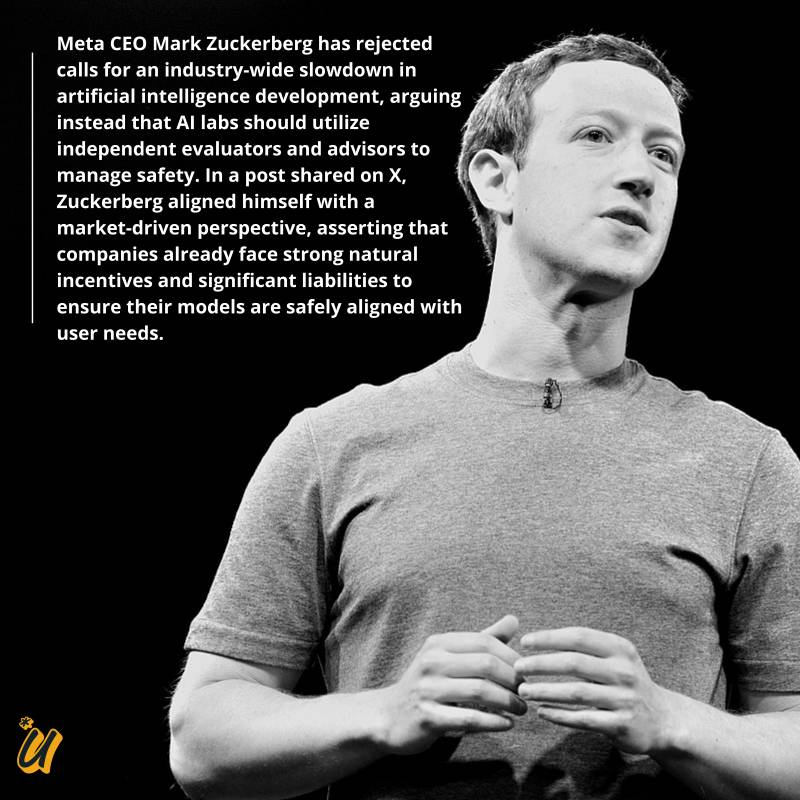
The urgency of this spending spree is under continuous scrutiny by investors, who are "rightfully saying help me understand the pace of the spending" and "how to think of these returns flowing through". Mark Zuckerberg, for instance, has stated that moving forward with AI is a matter "for the company". However, Ed Ludlow and Caroline Hyde noted that early evidence of returns is visible, with hyper-scalers seeing growth. Meta, for example, is seeing that AI is "enabling better add effectiveness".
The AI buildup buoyed the chip sector, with the S&P Philadelphia Semiconductor Index up 1.2%. AMD was the "starkest example," with its stock almost up 10%. The massive gain was primarily driven by the company’s forecast of 80% growth over the next three to five years in the AI Data Center category. This forecast helped alleviate investor concerns about whether AMD could accelerate growth and close the gap on competitors like NVIDIA. However, the valuation is still questioned, with some suggesting AMD may be pricing in an "enormous data center boom that will come to light". The market is now looking ahead to see "how is NVIDIA talking about the future" and whether they can maintain their competitive positioning and revenue trajectory, with top-line growth overall projected around 56% or 57%.
The massive capital expenditure is not limited to Anthropic. Meta is continuing its own focus, announcing an $800 million data center in Wisconsin. Meta’s ambition to build its own infrastructure is rooted in Mark Zuckerberg’s regret over missing the mobile phone era and being reliant on companies like Apple and Google to distribute his products. Building their own data centers allows Meta to "control their own destiny with the AI infrastructure". Meta is building several data centers, including one in Louisiana that could be as large as five gigawatts. However, analysts believe the most urgent pressure on Meta is not the data centers, which are years away, but delivering a "world-class model" on par with OpenAI and Google in the next six months.
The physical demands of the AI boom are also pushing utility infrastructure to its limits. The demand for electricity is huge, leading to plans to build nuclear plants, though these will not be ready for a decade. In the near term, the market is expected to see more gas power. There is also a push to reopen nuclear plants that closed earlier in the century because tech companies are now willing to spend money to operate them, with the first one potentially coming online in Michigan in early 2026.
The massive spending is driving an industry-wide debate on sustainability, as analyzed on "BLOOMBERG TECH." Kimberly Forrest of Bokeh Capital Partners believes that human beings will "innovate ourselves out of that" brute force method of training large language models. The key question going into 2026 is whether these large capital expenditure numbers are "one time in nature or are we about to get on a CAPEX treadmill akin to the telecoms of the 1990s".
Other tech news covered by "BLOOMBERG TECH" includes Waymo opening freeway access in markets like San Francisco and Phoenix, making them competitive against traditional ride-hailing services by being the first to offer a "fully driveless experience". Wearables company WHOOP is considering a potential IPO in the next two years, seeking to solidify its position in personalized health, potentially through continuous glucose monitoring and predictive health features. Additionally, autonomous battlefield vehicles from Forterra closed a funding round that raised its valuation to more than a billion dollars. The autonomous systems use AI and sensors to enable vehicles to conduct complex missions, such as mine clearing and resupply, with multiple vehicles coordinating together. Finally, Cisco is being eyed by investors for signs of gains amid AI investments, though some remain wary whether the company will reach its dot-com peak.