A remarkable discovery has captivated scientists and enthusiasts alike—an ancient parasitic fungus eerily similar to the fictional Cordyceps from The Last of Us universe has been found preserved in a 50-million-year-old piece of amber. This fossilized scene offers the clearest prehistoric evidence yet of fungi that may have once thrived during the time of the dinosaurs, showcasing nature’s intricate web of predator, prey, and parasitic relationships. Unearthed from the Hukawng Valley in northern Myanmar, this piece of amber contains a snapshot frozen in time: a tiny parasitic fungus attacking a springtail, an ancient insect-like creature that still exists today. What makes this fossil groundbreaking isn’t just the preservation quality—it’s the striking resemblance the fungus has to the infamous Ophiocordyceps genus, the real-world inspiration behind the parasitic horror in The Last of Us video game and TV franchise.
‘Last of Us’ Ancient Fungus from Dinosaur Era

Read Also: Moon Landing Declassified
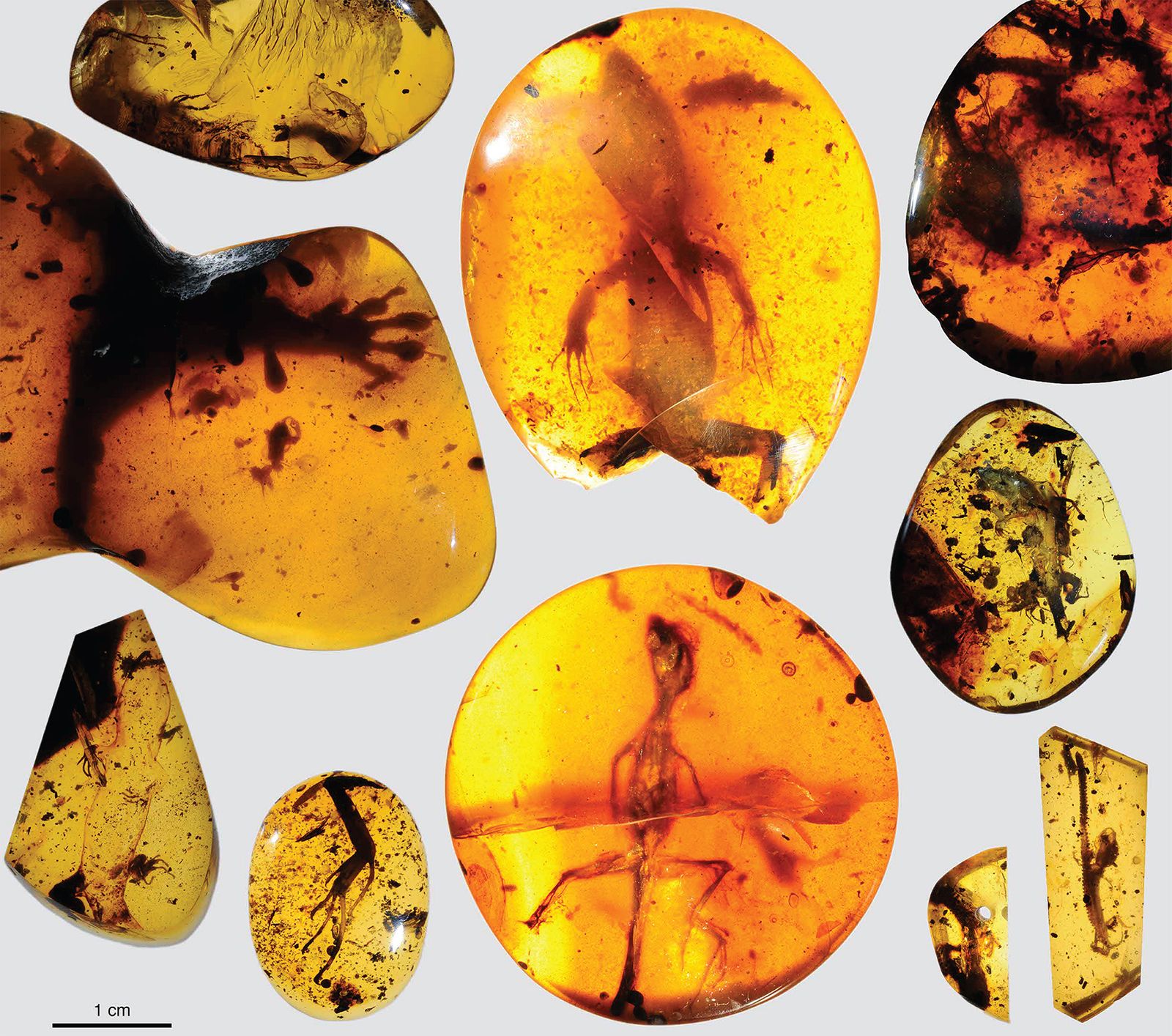
Unlike fungi that feed off decaying matter, this one is parasitic, living off its host while ultimately killing it. This specimen, found by a team of international paleomycologists, shows the fungus in action: fungal hyphae wrapped around the springtail’s body, suggesting an advanced evolutionary strategy for infection and spore dispersion. While it doesn't control its host’s behavior to the cinematic extent seen in pop culture, it does prove that parasitic fungi have long been a part of Earth’s ecosystems.
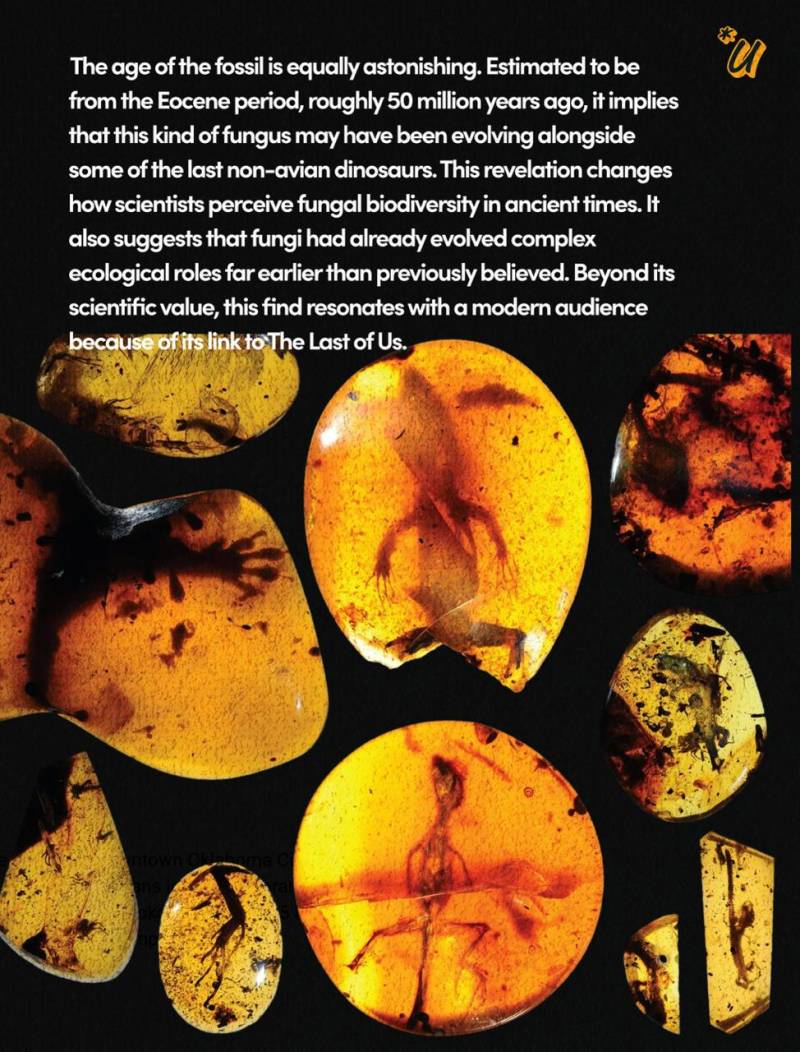
The age of the fossil is equally astonishing. Estimated to be from the Eocene period, roughly 50 million years ago, it implies that this kind of fungus may have been evolving alongside some of the last non-avian dinosaurs. This revelation changes how scientists perceive fungal biodiversity in ancient times. It also suggests that fungi had already evolved complex ecological roles far earlier than previously believed. Beyond its scientific value, this find resonates with a modern audience because of its link to The Last of Us. The HBO series has sparked widespread curiosity about real-life zombie fungi. Though the show exaggerates certain elements for dramatic effect, its roots in science are now even more compelling, thanks to this discovery. It proves that nature’s potential for horror and wonder often outpaces human imagination.
What’s more, the implications stretch into current environmental and biological research. Understanding how ancient fungi interacted with other species could help modern scientists predict fungal behavior in today’s changing climate. It also opens up questions about the resilience and adaptability of fungi, organisms known to survive in the harshest environments on Earth. This isn’t the first time Amber has given scientists a microscopic window into prehistory. However, this fossil is among the few to highlight the dark and fascinating world of fungal parasitism. It underscores how amber, beyond preserving insects and leaves, can also capture dynamic ecological interactions in exquisite detail. These glimpses help researchers reconstruct ancient ecosystems with far greater accuracy.
The discovery fuels excitement for further exploration. As mining and ethical excavation of amber continue in fossil-rich regions like Myanmar, scientists hope more finds will shed light on how fungi evolved to become the diverse kingdom we know today, one that includes both life-saving antibiotics and potentially lethal pathogens. In a world where science fiction increasingly mirrors real-world biology, this amber fossil reminds us that truth can be just as strange—and often stranger—than fiction. The prehistoric world was not just one of towering beasts and giant ferns; it also teemed with microscopic dramas, deadly parasitism, and evolutionary innovation—elements that, as it turns out, haven’t changed all that much over the millennia.