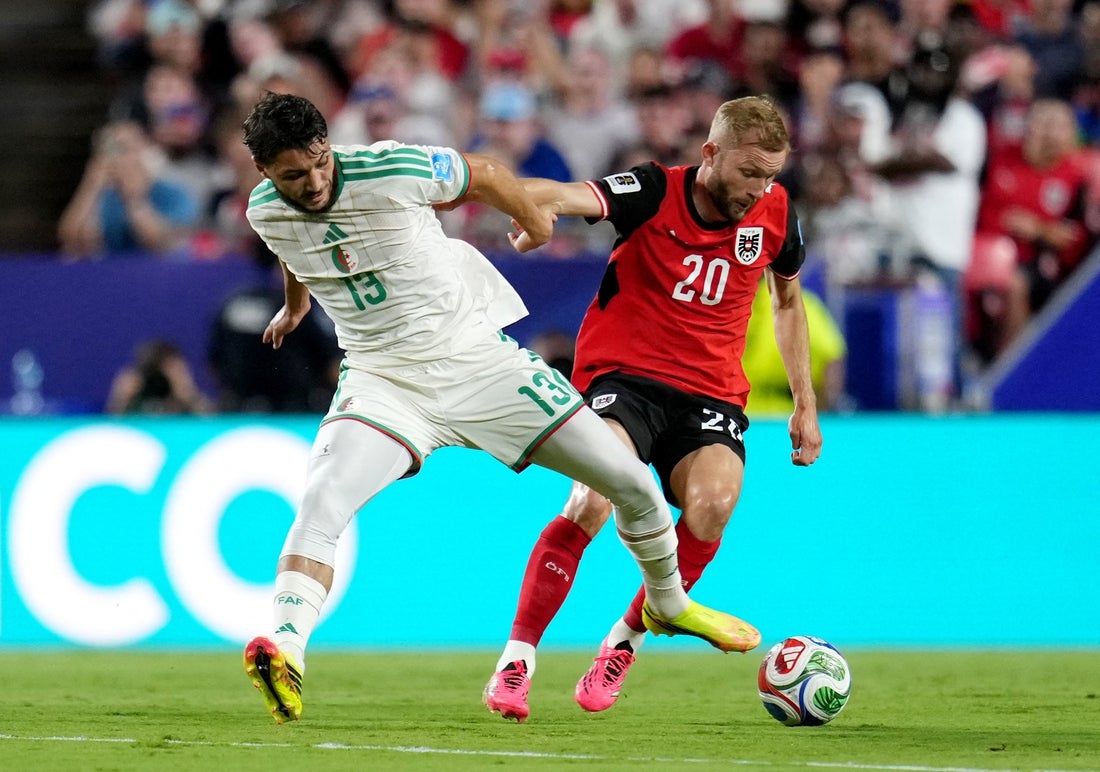
The Kansas City Stadium was transformed into a cauldron of nerves and history on that Saturday night, as Algeria and Austria engaged in a Group J finale that will be whispered about for generations. It was a contest that transcended the standard metrics of a football match, evolving instead into a high-stakes psychological drama where the traditional pursuit of victory was complicated by the intricate math of tournament progression. For eighty minutes, the air in Missouri felt heavy with the unspoken knowledge that both nations were walking a tightrope; a draw was the golden ticket to the Round of 32, a reality that rendered the standard aggression of the World Cup both dangerous and obsolete.
The opening exchanges were defined by an eerie, disciplined caution. Both sides, acutely aware that an opening goal could collapse their fragile path to the knockout stages, played with a restraint that felt almost unnatural on the sport's grandest stage. Austria, anchored by the tactical vision of their defensive core, eventually punctured the silence. When Marko Arnautović latched onto a piercing long ball in the 28th minute, the clinical finish felt like a rupture in the game’s carefully maintained equilibrium. It forced Algeria out of their shell, and in doing so, ignited a dormant fury.
Related article - Uphorial Shopify

Algeria’s response was a masterclass in resilience and individual flair. As the halftime whistle approached, Rafik Belghali emerged as the protagonist of a sequence that defied logic. Following a chaotic moment where the ball caromed off the corner flag, Mahrez demonstrated his characteristic predatory instinct, feeding Belghali, who proceeded to dance through the Austrian defense. His finish, hammered into the roof of the net, was more than an equalizer; it was an emotional tether, pulling Algeria back from the brink of frustration and leveling the score as the teams headed to the locker rooms.The second half began as a chess match played at a sprinter’s pace. Austria struck first when Marcel Sabitzer buried a precise cut-back, a laser-guided strike that once again threatened to leave the Algerians in the cold. Yet, this Algerian side possessed a gravitational pull toward drama that could not be suppressed. Houssem Aouar, orchestrating play from the left, dismantled the Austrian defensive structure with a single, elegant movement, setting the stage for captain Riyad Mahrez to sweep home a finish that seemed to signal the end of the deadlock. For a spell, the tension eased into a tenuous, mutual acceptance, with both teams appearing to retreat into a safety-first posture.

Then came the stoppage-time delirium—the kind of narrative twist that defines the very essence of the World Cup. In the 93rd minute, Mahrez, perhaps sensing that a captain’s duty is to seize the moment regardless of the broader calculations, struck again. His low, clinical finish sent the Algerian bench into an eruption of ecstasy and effectively pushed Austria to the precipice of elimination. It was a moment of supreme individual quality that seemed to finalize the story, relegating Austria to the role of heartbreak victims.
But the final act belonged to the substitute. Ralf Rangnick’s desperate gamble, throwing 6’7” striker Saša Kalajdžić into the fray with mere seconds remaining, yielded a reward that felt orchestrated by fate itself. With virtually the final touch of the game, Kalajdzic soared above the chaos of the penalty area to power home a header that defied the physics of the desperate scramble. The goal was a thunderclap that echoed far beyond the Kansas City confines, snatching qualification from the jaws of despair and cementing the 3-3 scoreline. As the final whistle pierced the night, the scoreboard told a story of a draw, but the atmosphere reflected something far more profound: a shared survival. Iran was left to wonder "what if," while Algeria and Austria were left to marvel at a night of football where the drama was so intense, so irrational, and so perfectly balanced that it demanded its own place in the archives of the game.