Kara and Nate, popular YouTube adventurers, recently embarked on an extraordinary four-day journey to Katmai National Park, Alaska, immersing themselves directly into the habitat of North America's largest population of brown bears. Far from a distant observation, their unique experience involved sleeping in tents and "basically living with these bears," getting "up close and personal" with an estimated over 2,200 brown bears. This remarkable adventure began with a swift and scenic 45-minute float plane flight from Kodiak to Katmai, revealing a dramatic landscape transformation from lush, green mountains to "huge, jagged, glacier-filled, snow-capped mountains". Katmai, a park spanning over 4 million acres, boasts no roads and is only accessible by float plane or boat, underscoring its profound isolation. While originally established in 1912 due to one of the biggest volcanic eruptions of all time, the park now primarily draws visitors eager to witness its renowned bear population.
Crucial to the safety and success of this immersive trip were the guides, a husband-and-wife duo who dedicate three months each summer to living in Katmai, accumulating over 10,000 hours of experience with brown bears. Their expertise immediately fostered a sense of trust, with Kara noting, "I've known Scott for just a few hours now and I trust him with my life". Camp security included an electric fence that was "always on," and the perimeter was regularly sprayed with Simple Green, a high-ammonia content substance that bears tend to avoid. While bear spray was readily available, the guides indicated it was rarely, if ever, needed, explaining that Katmai's bears are "different". They are "not hunted" and have been "conditioned years and years and years, multiple generations of not being afraid of humans". This unique conditioning allows for an unexpected sense of calm and safety, even with massive predators nearby, as the bears treat humans almost like "just another animal out here that they know is not a threat," or "basically a tree".
Related article - Uphorial Radio

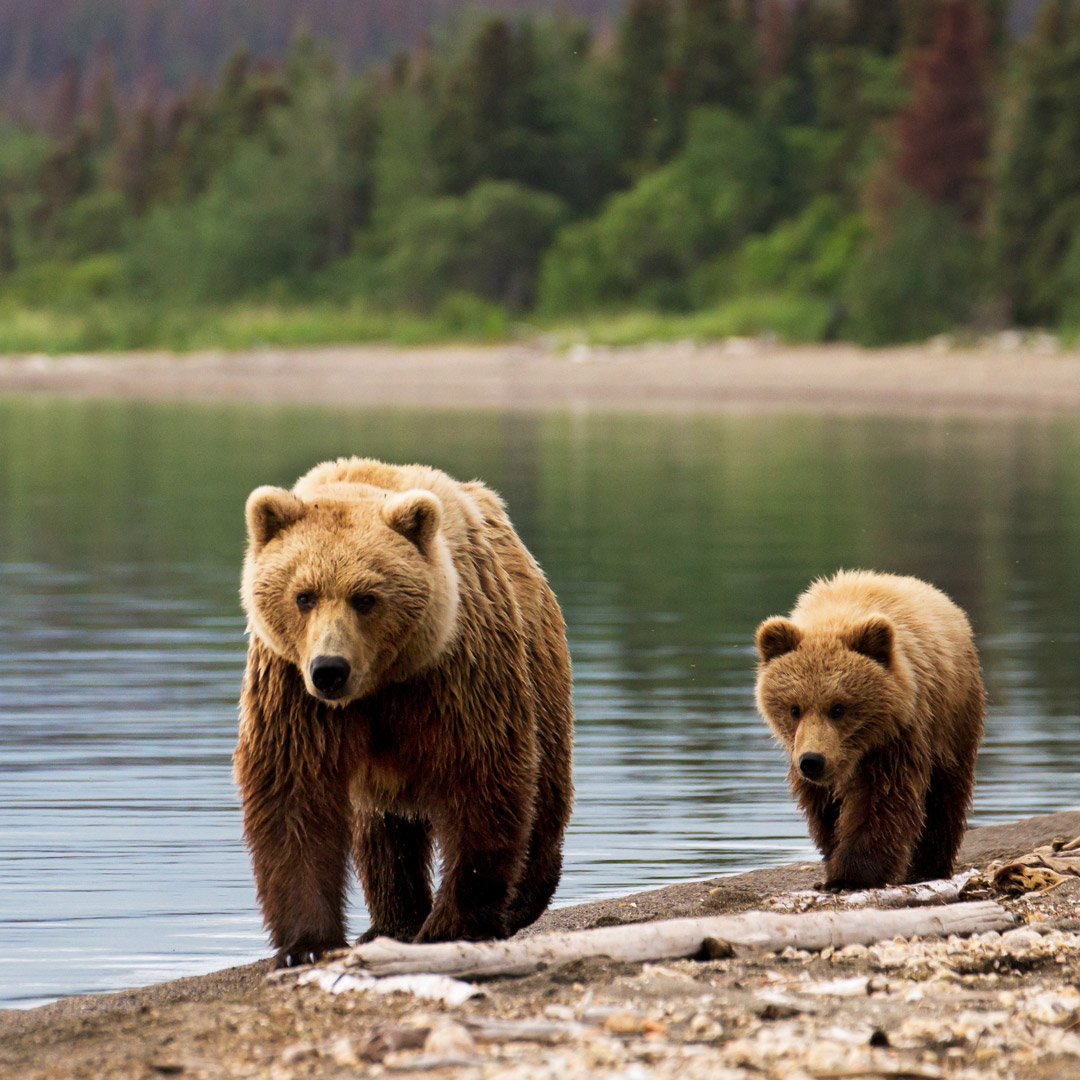
Observations of the bears' daily lives offered profound insights into their behavior and diet. A common inquiry about the distinction between brown bears and grizzlies was clarified: brown bears have access to salmon, while grizzlies typically do not for about 100 to 150 miles inland. All bears encountered on this trip were brown bears, which are considered part of the broader grizzly species. Specific spots on the beach served as a "dinner buffet" for the bears as the tide receded, with bears like Shelly, a mother of three cubs named Peanut, Wall-E, and Cash, demonstrating adeptness at fishing for flounder in tidal pools. Prior to the salmon runs, a significant food source for the bears is the shorter grass, specifically "goose tongue and sedge grasses," which are rich in nutrients and help them accumulate weight. This dietary habit led to many bears being affectionately referred to as "Katmai cows".
Encounters often featured dramatic moments, such as a male bear approaching Shelly's cubs, prompting the mother to swiftly intervene and scare him away. The ability to identify individual bears by their distinct features and personalities, initially doubted, became clear by the trip's end. Bears like Jolie, Ariel (named spontaneously by the group after her fishing prowess), and Crabby Apple, each with their own unique traits and histories, became familiar faces. Ariel, for instance, was estimated to be 6.5 to 7 years old and bore a scar from a boar during mating. The presence of a film crew, shooting for the BBC and Nat Geo, further illustrated the bears' comfort, as they would walk "straight up to them," a testament to their long-term conditioning. The most impactful moments involved a mother and her cubs approaching within 10 feet, or even closer, fostering a profound connection rather than fear, with Kara remarking, "I really wasn't even scared".
Life at the remote camp, while basic, was surprisingly comfortable and well-supported. Participants slept in individual tents with surprisingly thick air mattresses, and a communal hangout tent provided a gathering space. Meals were primarily freeze-dried, prepared by the camp chef, Kelton. Unexpected amenities included Starlink internet and a robust solar power setup for charging devices. Personal hygiene involved the use of full-body wipes in lieu of traditional showers.
A critical aspect of the guide's philosophy concerned firearms. Scott explained that they choose not to carry guns, citing documented cases in other regions where firearms escalated grizzly bear attacks, sometimes leading to accidental shootings of companions. Instead, their approach relies on "methodical observation," understanding the specific bears of Katmai, and using bear spray to create a deterrent "wall". He emphasized that the most effective protection is "what's between your ears" – knowledge and experience – noting that in all his time at Katmai, he had "never even grabbed" the bear spray.
By the end of the four days, what began as a quest to "see as many bears as possible" evolved into a much deeper experience of "getting to know the same mom and her three cubs". The initial adrenaline gave way to a "calm" and "chill" atmosphere. The feeling of being "within 15 ft of a massive 700lb brown bear and didn't feel any fear" was described as "completely wild," a testament to the guides' ability to set a safe and respectful tone. This immersive journey, as shared by Kara and Nate, underscored the unpredictable yet profoundly rewarding nature of wildlife encounters, leaving a lasting impression of gratitude and connection. For those inspired to seek a similar experience, resources such as alaskarcamps.com, scottstone.com, or focus.com were recommended.