The advent of the home humanoid robot, Neo, is poised to reshape domestic life, and The Wall Street Journal sat down with 1x Technologies CEO Bernt Borick to dissect the bold vision behind the machine. For Borick, whose fascination with humanoids began around age 11, Neo is a step toward realizing positive science fiction, like Rosie the robot creating more family time, and enabling a future marked by an "abundance of labor across society".
Borick defended the human-like form of Neo to Joanna Stern of The Wall Street Journal, explaining that the world’s existing infrastructure is built for people, and society is changing "incredibly slowly". He prefers building architecture centered on thquality of life, allowing machines to fit into our environment. He also notes that the human form is a "pretty good solution to everything", which allows Neo to achieve a necessary economy of scale, similar to how a computer, despite being complicated, became the simplest and cheapest typewriter due to its mass production. Borick argues that Neo, like all previous tools, is designed to make humans more productive, helping us "move up in the value chain".
Related article - Uphorial Shopify
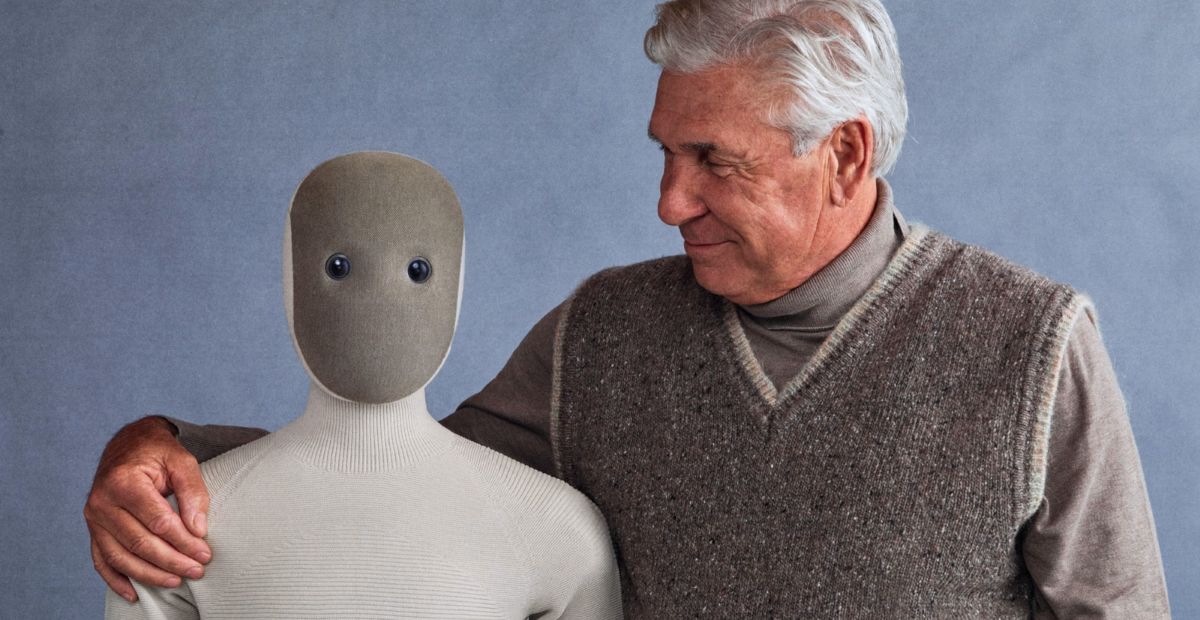
The machine itself is built for capability and safety. Neo weighs 66 pounds and stands about 5’6”. This weight was deliberately set below the 70-ish pound threshold identified by scientific data as the point where a falling, soft, human-sized object might cause serious injury. To move, 1x developed powerful, light motors that pull on tendons, loosely inspired by muscles, allowing Neo to be lightweight and low energy. Joanna Stern questioned why Neo always wears a sweater; Borick explained that this is for aesthetics and safety, making the robot "visually pleasing" and ensuring it is "completely soft underneath" with nowhere to pinch fingers. Borick aims to place Neo at the very edge of the "uncanny valley," making it human enough to relate to its body language without being "creepy".
When Stern spoke to Neo, the voice she heard belonged to a remote human operator, highlighting that while the ultimate goal is full autonomy, the initial experience will be "kind of bumpy". The early adopter program for Neo, set for customer delivery in 2026, requires a 20,000 upfront fee and 499 per month subscription. Customers must agree to a social contract: "If we don't have your data, we can't make the product better".
Privacy, particularly regarding the need for teleoperation (where humans in VR headsets guide the robot), was a key concern addressed by Borick. He stressed that 1x ensures privacy is on the user's terms. The teleoperator cannot see the user (who can be blurred out), cannot connect to the robot unless the user approves, and cannot access user-defined no-go zones in the home. Furthermore, 1x does not hold the decryption key for training data; if they need to review footage, they must send a request to the customer, putting the user in complete control of their data. Borick framed this arrangement as the "big sister principle," where the robot helps in exchange for data, rather than the "big brother" concept of monitoring.
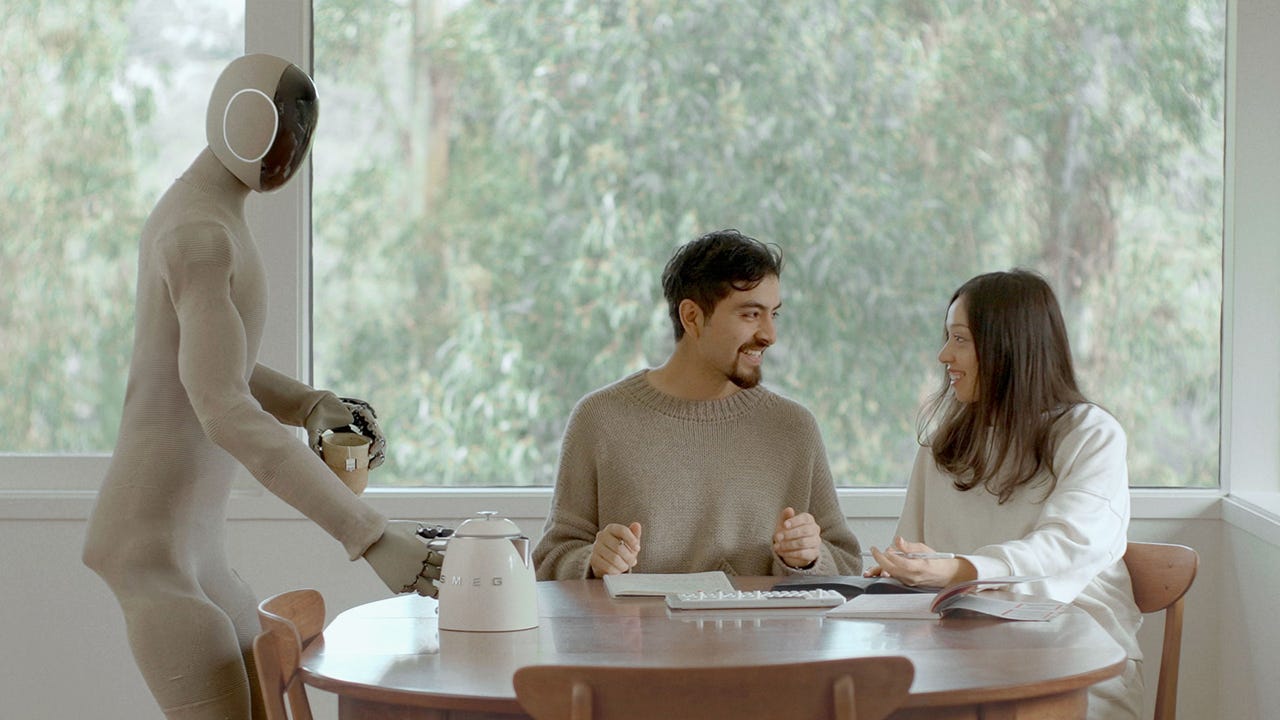
In terms of capabilities, Borick shared his personal experience with Neo, noting that it saves him about half an hour per day. Neo is "very good at vacuuming" because it can move furniture, unlike a Roomba. Borick demonstrated that Neo can autonomously answer the door and handle parts of the laundry. Stern asked about unloading the dishwasher; Borick explained that on a good day it can, provided the items are easy to retrieve. Critically, Neo is trained to fail safely; instead of dropping a glass, it should recognize the high-risk situation and fail by stating "I shouldn't do this". Borick also confirmed that Neo’s hands are submersible, allowing it to wash its hands, and that it can plunge a toilet.
Looking ahead five years, Borick envisions Neo having an enormous societal impact on care, ensuring that everyone feels independent, regardless of age or disability. He believes that training AIs in the "beautiful diverse chaotic environment" of the home is essential because the internet provides a poor distribution of human knowledge. Ultimately, Borick projects that there will be more humanoids on the planet than there are people, achieved through "robots building robots", ushering in a future defined by a symbiosis between humanity and machine.