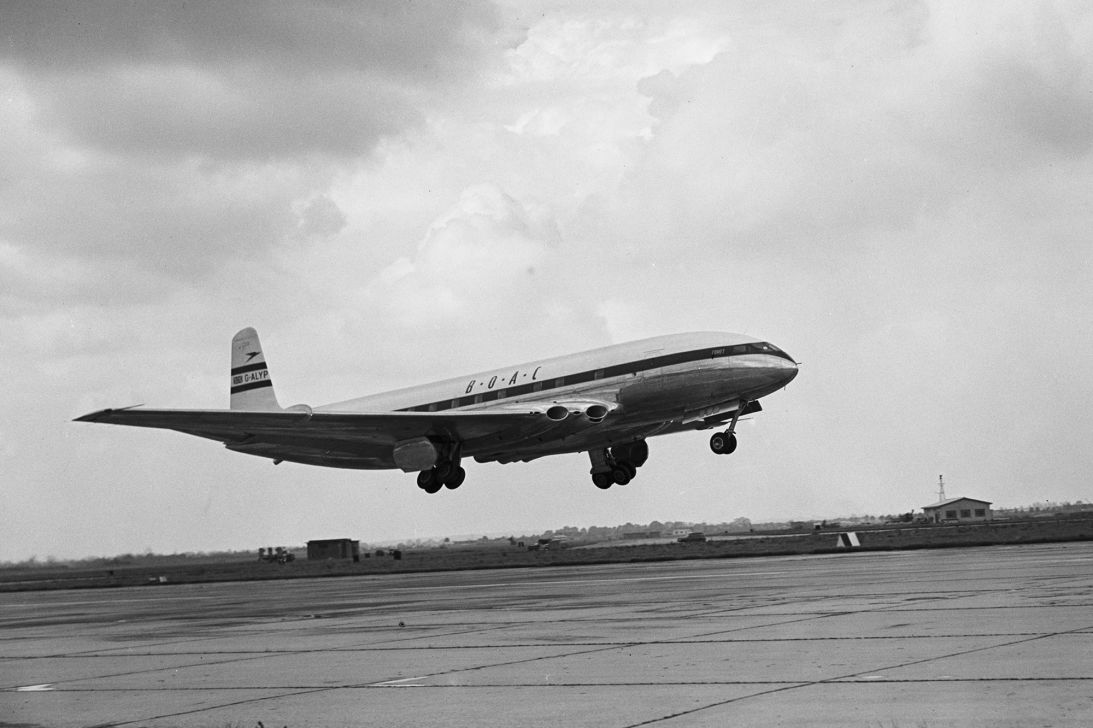
In the spring of 1952, when much of the world still moved at the steady thrum of propellers, a silver streak tore across the sky over London. It was the de Havilland Comet, the world’s first commercial passenger jet. Sleek, silent, and revolutionary, the Comet wasn’t just an aircraft—it was a promise. A promise that distance no longer mattered, that the world could shrink for ordinary people, not just kings, tycoons, or spies. But the Comet didn’t rise from nowhere. It was the child of a war-weary Britain desperate to assert its fading dominance, not through guns, but innovation. At its heart was a man named Sir Geoffrey de Havilland, a name etched into the bones of aviation history. Visionary, risk-taker, and quietly haunted, Geoffrey was a pioneer whose legacy would soar—and then, quite literally, crack under pressure.
Born in 1882, long before the skies were a domain of commerce, Geoffrey spent his life chasing the thrill of weightlessness. He designed his first aircraft in 1909, testing it himself, always aware that the next flight could be his last. In an age when men still debated whether flying was folly or fantasy, Geoffrey pushed boundaries—not for spectacle, but for the future. The de Havilland Aircraft Company became a symbol of post-war British ingenuity, and when whispers of jet propulsion turned to roars, he was already ahead.
Related article - Uphorial Podcast
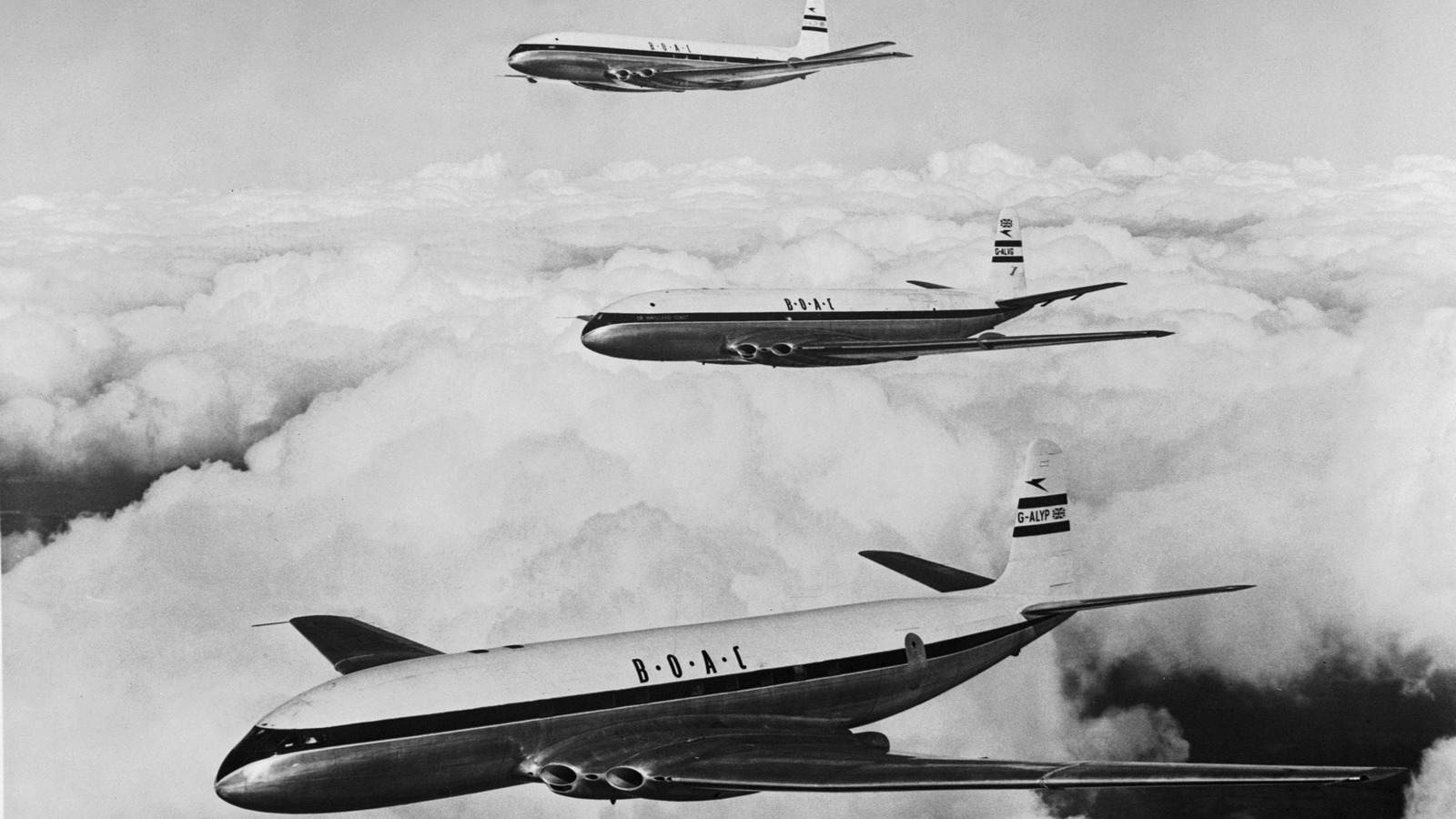
The Comet’s debut on May 2, 1952, was more than a technological triumph—it was deeply human. Passengers wore their best suits, stewardesses smiled with hopeful precision, and the takeoff at London Heathrow was broadcast like a royal wedding. The jet’s silence was uncanny, its altitude unmatched, its promise intoxicating. At 40,000 feet, everything changed—travel, diplomacy, war, peace. But not all revolutions arrive gently. In 1954, one after another, three Comets fell from the sky—ripped apart mid-flight. The world watched in horror. And so did Geoffrey. Investigations ensued, and it became one of aviation’s most defining chapters. Forensic engineering was born in the wreckage of the Comet. Engineers submerged entire aircraft in water tanks, recreated pressure cycles, and found the culprit: metal fatigue around square windows. The elegant curves of the jet could not hide its deadly weakness.
Sir Geoffrey de Havilland did not speak much during this period. Some said he aged a decade in months. His company’s reputation plummeted. Boeing, watching from across the Atlantic, took notes and lessons—and soon launched the 707, a jet with rounded windows, a more robust fuselage, and eventually, global dominance. Britain, having invented the passenger jet age, ceded it to America. But to reduce the Comet to a cautionary tale would be a mistake. Geoffrey didn’t just build aircraft—he built dreams. Every long-haul flight today, every family reunited across oceans, every overnight business deal owes something to him. His tragedy taught the world to fly more safely. His failure was fertile soil for modern aviation. Today, pieces of the Comet aircraft rest in museums—silent, cold, but powerful in their story. And if you listen closely while walking past their fuselage, you’ll hear the hum of ambition, the echo of tragedy, and the voice of a man who dared to make the sky ordinary.
In July 2025, more than 70 years later, the aviation world gathered to commemorate the Comet’s legacy. A restored cockpit went on display at the Science Museum in London, while Boeing and Airbus engineers laid wreaths—not just for the passengers lost, but for the audacity of those who tried too early, flew too high, and paid dearly. Sir Geoffrey de Havilland died in 1965, not long after watching others fulfill the vision he pioneered. But as long as humanity takes to the skies, his name—and the silver ghost of the Comet—will remain aloft in the stories we tell, and in the spaces we still dream to fill.