At the threshold of hope and heartbreak, Kenya’s fertility clinics whisper a silent calculus: the price of a woman’s eggs is undeniably higher than the cost of sperm. On one side sits the reality that women’s eggs are rare, irreplaceable, harvested through invasive procedures, screened exhaustively, and then entrusted with the possibility of life. On the other hand, sperm flows in quantities so vast and replenishable that its cost is negligible. These are facts, yes, but behind every figure lies a story, a human being.
A glance at the financial ledger reveals the imbalance vividly: basic IVF cycles in Kenya range between US $3,300 and US $3,500 using one’s own eggs, but with donor eggs, prices jump to US $5,300–$5,500. In some packages, donor eggs alone cost anywhere from US $4,500 to US $8,500. Meanwhile, donor sperm adds a mere US$400 or so to the journey. The numbers feel stark: one gamete is expensive, honored, while another is cheap, taken almost for granted.

Related article - Uphorial Radio
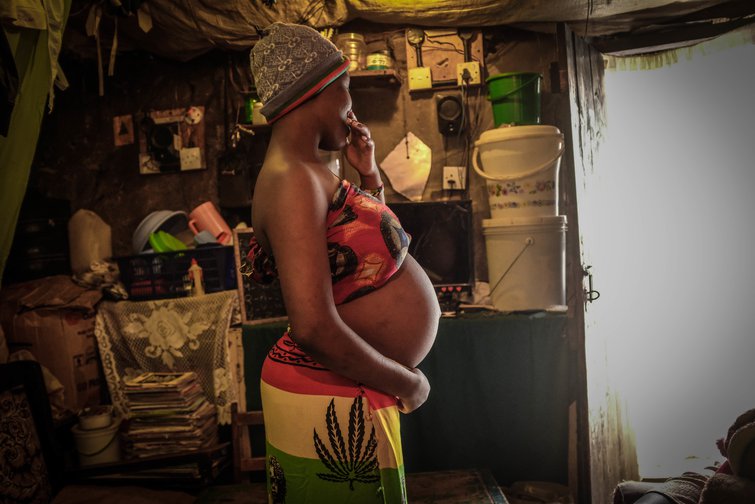
But the deeper narrative isn’t just economic. It’s a story about bodies, worth, identity, and often, sacrifice. Imagine Amina, a Nairobi woman who, after years of trying, becomes an egg donor to help someone else’s dreams come true. She endures hormone injections, frequent scans, discomfort, and the cold sterility of clinic rooms. She trusts a system that compensates her, yet maybe she’s paid less than what the clinic charges. Across town, John deposits sperm, brief, easy, perhaps even anonymous—and walks away. The contrast is not just procedural; it’s existential.
Globally, this disparity is neither unique nor new. Even in the UK, the cap for egg donation compensation has risen to less than £1,000, while clinics charge IVF patients upward of £12,000, and it sparks debates about altruism, commodification, and fairness. In Kenya, the issue is compounded by the lack of clear regulation across the fertility sector and ethical gray zones that remain uncharted. And so, the financial imbalance becomes a mirror: of whose bodies are valued, whose pain acknowledged, whose biology is monetized. The cost disparity isn’t just about scarcity or complexity; it’s about whose story gets told, whose sacrifice is visible, and whose remains invisible.
Yet, within that tension, beauty emerges. Amina’s rice-grain-sized eggs carry generations in the balance. Each is a testament to resilience, to hope uprooted by stigma, to a quiet courage that defies the whisper of “you’ll never be a mother.” Her choice, her risk, is an echo in another home where laughter and lullabies may finally take shape. And when clinics charge thousands for a donor that took dozens of painful steps, there’s a rupture between economic value and human value. It’s not just about money; it’s about empathy, equity, and attentive humility.
As Kenya grapples with infertility, a silent crisis affecting countless couples, the conversation must deepen beyond cost tables. It must include women's stories: of sacrifice, of agency, of the journey through stigma toward parenthood. And it must demand that value is not only measured in shillings, but in the courage and dignity of those who offer life’s first spark. This journey, through numbers, through bodies, through tender stories, isn’t just about why eggs cost more. It’s an invitation to feel the weight behind the cost, to reckon with disparity not as data, but as a call to honor the unseen hands and hearts bearing it.