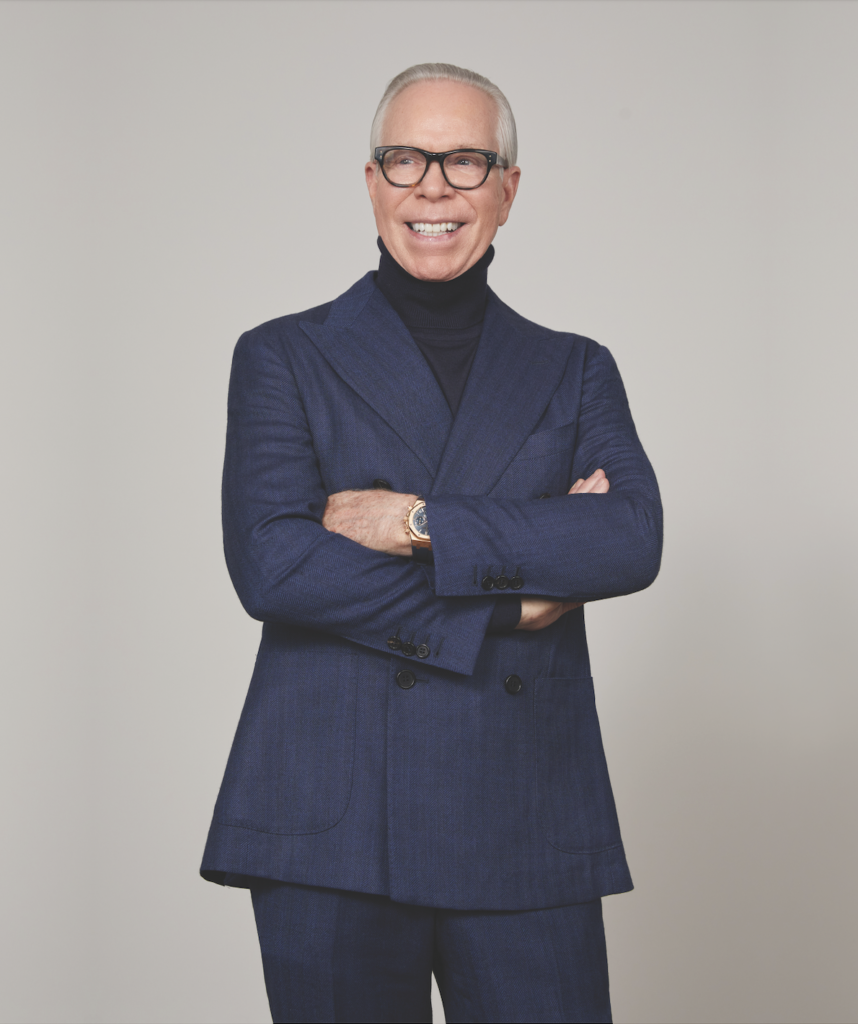
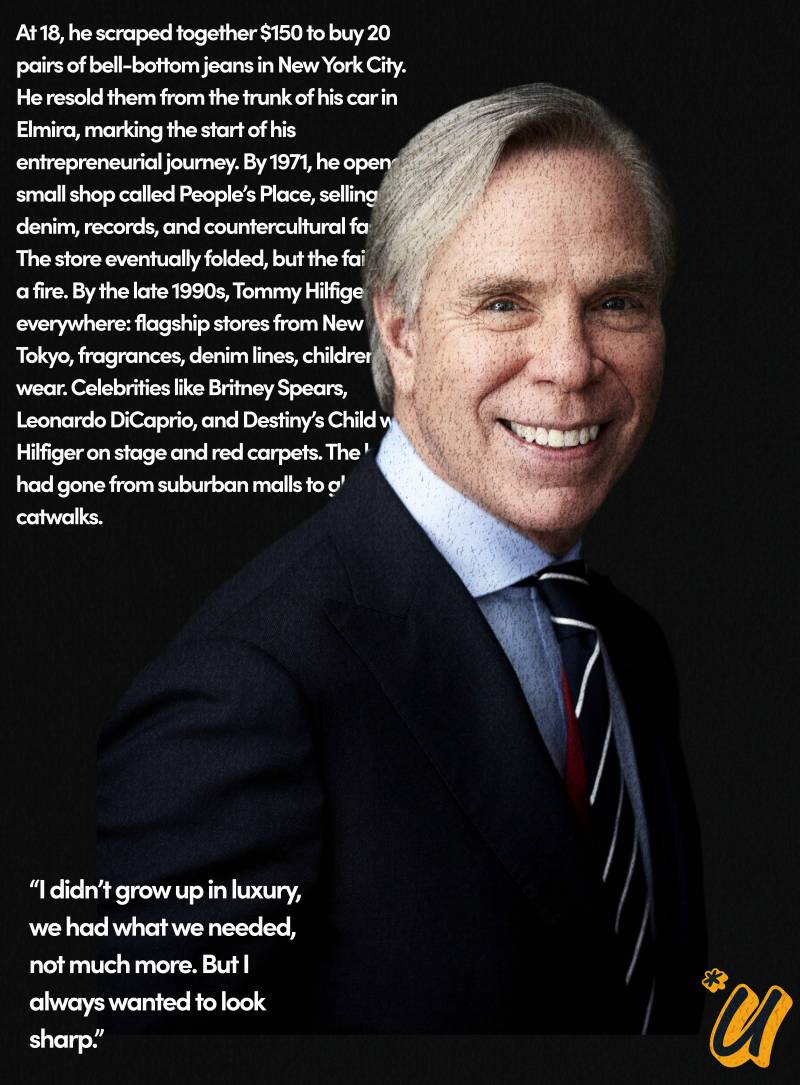
Fashion legend, entrepreneur, and cultural icon Tommy Hilfiger sat down with Phoebe Gates and Sophia Kianni on "The Burnouts" to detail his four-decade journey shaping global style, from selling bell-bottom jeans in upstate New York to building a fashion empire sold in more than 100 countries. Hilfiger traced his ambition back to his high school years, where he felt like a "loser" due to undiagnosed dyslexia, a condition he shares with host Phoebe Gates. While his father doubted him, Hilfiger daydreamed of success, creating a "north star" in his mind that would guide him. At 18, with $150 saved from working at a gas station, he bought 20 pairs of bell-bottoms in New York City and sold them to friends, soon opening his first shop, People's Place. Despite his parents' skepticism, he already pictured himself competing with Calvin Klein and Ralph Lauren. That first venture ended in bankruptcy after six years, a failure that only strengthened his resolve to prove his father wrong and learn the "business of the business".
Hilfiger’s unwavering self-belief was most famously demonstrated through a bold and disruptive advertising move that shocked the fashion establishment. Advised by advertising genius George Lois, he launched a campaign with a Times Square billboard provocatively declaring him one of the four "great American designers," alongside Ralph Lauren, Calvin Klein, and Perry Ellis. The established fashion community reacted with anger and negativity, but Hilfiger used the criticism as motivation, vowing to "roll up my sleeves" and create great clothes to prove he was worthy. This same conviction was on display when Bloomingdale's executives initially rejected his logo-centric designs. Hilfiger convinced them to feature a single oversized rugby shirt on a mannequin; the item became a viral sensation after Snoop Dogg wore it on SNL, selling millions of dollars' worth and cementing the logo's place in popular culture. His design philosophy was clear: oversized, colorful, cool preppy clothes with distinctive details, incredible quality, and an accessible price point.
Related article - Uphorial Radio
Tommy Hilfiger’s $9 Billion Fashion Empire

Navigating the complexities of the industry, Hilfiger learned the critical importance of strategic partnerships. After his first financial backer ran out of money and Wall Street banks refused to invest in a "fickle" fashion business, he brought on partners like Silas Chou and Lawrence Stroll, who had expertise in manufacturing and European markets. Believing that "one plus one plus one equals 10," he shared ownership, a gamble that proved immensely successful. This led to a pivotal IPO in 1992, which was bolstered by a highly lucrative fragrance license with Estée Lauder that promoted the Hilfiger name globally. This infusion of capital funded the brand's international expansion, which exploded as consumers from Tokyo to Paris embraced the American sportswear look. His advice to young creatives is clear: find a business partner who understands finance, because creativity alone is not enough to survive.
Throughout his career, Hilfiger demonstrated an innate ability to innovate and stay culturally connected. He was an early pioneer of influencer marketing, dressing musicians like The Rolling Stones, Britney Spears, and Aaliyah when his advertising budget ran dry in the 80s. This evolved into groundbreaking collaborations with stars like Gigi Hadid, Zendaya, and Lewis Hamilton, where the talent acted as co-designers—a revolutionary concept at the time. He even recounted how an unknown Destiny's Child, with a young Beyoncé, once performed at his Macy's fashion show in exchange for clothes after his DJ failed to show up. When the brand began to plateau around 2000, Hilfiger looked to icons like David Bowie and Madonna for inspiration, recognizing the need to constantly reinvent. He shifted the brand's aesthetic to a more sophisticated, European-influenced style, which revitalized its global appeal. Looking to the future, he sees AI as the next "game changer" for the industry and urges a fearless approach to adopting new technologies to maintain relevance. He attributes his success to manifestation—visualizing a goal and relentlessly pursuing it, viewing every roadblock as an opportunity to find a new path forward. This resilience has been a constant, not only in business but also in his personal life, where he has navigated the challenges of raising three children with autism while scaling his global brand.