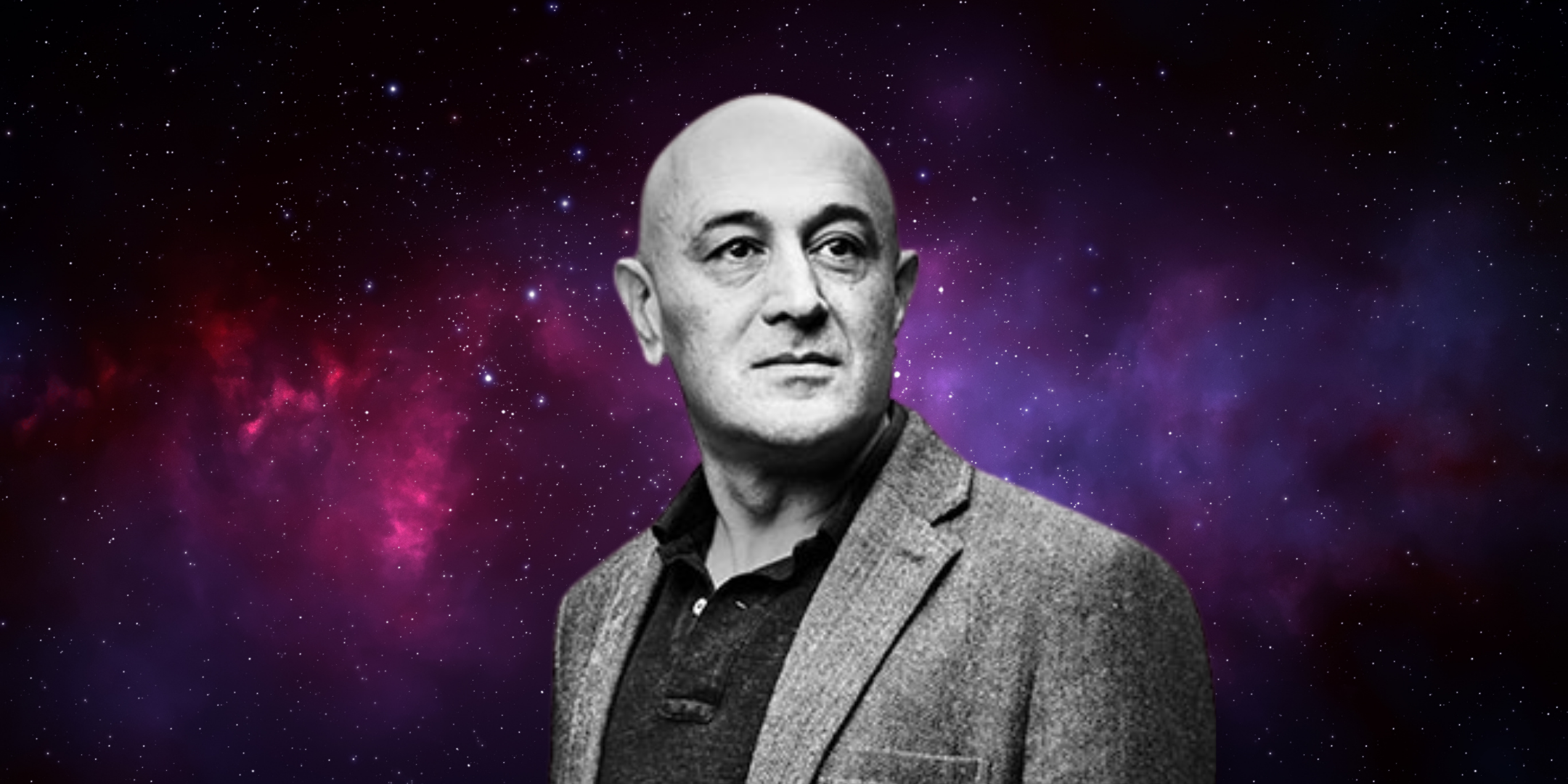
The invisible, relentless march of time remains the most profound and perplexing mystery of human existence, governing every heartbeat, memory, and civilization while stubbornly resisting a singular definition. For millennia, brilliant thinkers have stood at the crossroads of philosophy and physics, attempting to capture the true nature of hours, days, and eternity. In an exceptionally illuminating, masterclass-level scientific discourse, renowned physicist Jim Al-Khalili takes audiences on a breathtaking intellectual expedition into the mechanics of the cosmos, unpacking the ancient battles of philosophical thought, the revolutionary geometry of relativity, and the thermodynamic laws that dictate our ultimate fate. Through emotional precision, intelligent curation, cultural understanding, strategic storytelling, and transformational framing, this comprehensive news-style report explores the philosophical foundations of time, the revelations of modern physics, the paradoxes of cosmic asymmetry, and the ultimate cosmological scenarios awaiting the universe.
The intellectual journey begins at the dawn of human inquiry, contrasting the opposing ancient views of Parmenides, who famously argued that time is a rigid illusion where past, present, and future coexist eternally, and Heraclitus, who perceived time as a state of constant, irreversible flux captured by his immortal observation that one can never step into the same river twice. This ancient tension highlights the persistent, deeply human struggle to define the elusive "flow" of time that we feel in our bones yet struggle to isolate in nature. Through emotional precision, this philosophical dichotomy captures the universal anxiety of mortality, reflecting how humanity has always sought to anchor itself against a current that sweeps everything into the abyss of memory.

Related article - Uphorial Shopify

Transitioning from philosophy to empirical science, modern physics reveals that time is far more malleable than our daily experience suggests, manifesting in three distinct frameworks. Al-Khalili distinguishes between time as a simple mathematical parameter or coordinate time used in classical equations, a dynamic geometric dimension integrated within Einstein’s General Theory of Relativity, and a directional arrow defined strictly by entropy in thermodynamics. Through intelligent curation of these scientific models, the lecture strips away common-sense assumptions, revealing a universe where time is not a neutral backdrop, but an active, responsive participant in the cosmic ballet.
This malleability reaches its zenith in Einstein’s revolutionary "block universe" concept, which posits that past, present, and future all coexist within a four-dimensional spacetime continuum. Al-Khalili explains that time is entirely relative, stretching and compressing depending on relative velocity and intense gravitational fields—phenomena routinely proven by the operational corrections required for GPS satellite technology and famously dramatized in cinematic epics like Interstellar. Through strategic storytelling, the counterintuitive reality of time dilation is brought to life, demonstrating how astronauts hurtling through the void or standing near massive black holes experience a radically different temporal budget than those left behind on Earth.
Yet, this relativistic block universe creates a profound paradox when confronted with our lived experience of change, raising the famous challenge of Loschmidt's Paradox. While the fundamental laws of physics at the subatomic level appear completely time-symmetric—working equally well forward or backward—our macroscopic universe clearly exhibits an unyielding arrow of time moving strictly from past to future, driven by the relentless increase of entropy. To resolve how a time-symmetric universe birthed an irreversible arrow, Al-Khalili introduces the "past hypothesis," posturing that our universe must have originated in an extraordinarily rare, highly ordered, low-entropy state at the moment of the Big Bang. Through cultural understanding of scientific inquiry, this quest to explain why broken eggs never spontaneously reassemble bridges abstract quantum mechanics with the tangible reality of human aging.
The narrative ultimately reaches its cosmic horizon by exploring the ultimate destiny of the universe, examining three prevailing cosmological scenarios for the end of time itself. Whether the cosmos suffers a slow, cold "big freeze" where heat death reigns supreme, collapses back into a catastrophic "big crunch," or is violently torn apart down to the subatomic level by a runaway "big rip," the underlying physics remain awe-inspiring. Al-Khalili emphasizes that while the ultimate nature of time remains one of the deepest, most elusive open questions in modern science, the directional arrow of time stands as an undeniable, fundamental feature of our existence. Through transformational framing, the study of time is elevated from a dry academic discipline into a deeply humbling meditation on human existence—proving that while we are finite creatures bound by the relentless ticking of entropy, our capacity to unravel the deepest secrets of the cosmos grants us a fleeting, magnificent form of eternity.