The history of human exploration has always been written in the tools we forge to conquer our environments, yet few objects bear the dual burden of utility and status quite like the dive watch. In a comprehensive historical retrospective presented by Mark Bernardo, the evolution of the underwater timepiece is traced from its humble, life-or-death origins as a crude survival instrument to its current status as an undisputed pillar of modern luxury. It is a journey that mirrors our changing relationship with the deep ocean—transforming a piece of specialized diving equipment into a universal cultural icon of adventure, style, and engineering mastery.
The quest to conquer the water began long before the modern era of scuba gear, driven by a simple, relentless engineering challenge: keeping water out of delicate mechanical movements. Early milestones laid the essential groundwork for what would become an industry standard. Hans Wilsdorf’s revolutionary development of the Rolex Oyster case in the 1926 provided the foundational hermetic seal needed to protect a watch from moisture, a breakthrough soon followed by Omega’s innovative Marine in 1932. However, it was the crucible of World War II that truly accelerated functional innovation. Military demands for extreme legibility under adverse conditions led to developments like Panerai’s radium-based Radiomir, ensuring that combat swimmers could read their instruments in the pitch-black murk of nighttime operations.
The modern era of the dive watch, however, was born in the post-war 1950s, catalyzed by the invention of the Aqua Lung and the charismatic underwater explorations of Jacques Cousteau, which suddenly opened the ocean realm to the public imagination. This golden age of horology saw the introduction of enduring classics that defined the genre. The Blancpain Fifty Fathoms introduced the crucial unidirectional bezel—a safety feature designed to prevent accidental miscalculation of remaining oxygen time. Concurrently, the Rolex Submariner established a legendary, timeless design language while setting unprecedented standards for depth resistance, capturing the public consciousness in a way few industrial designs ever managed.

Related article - Uphorial Shopify
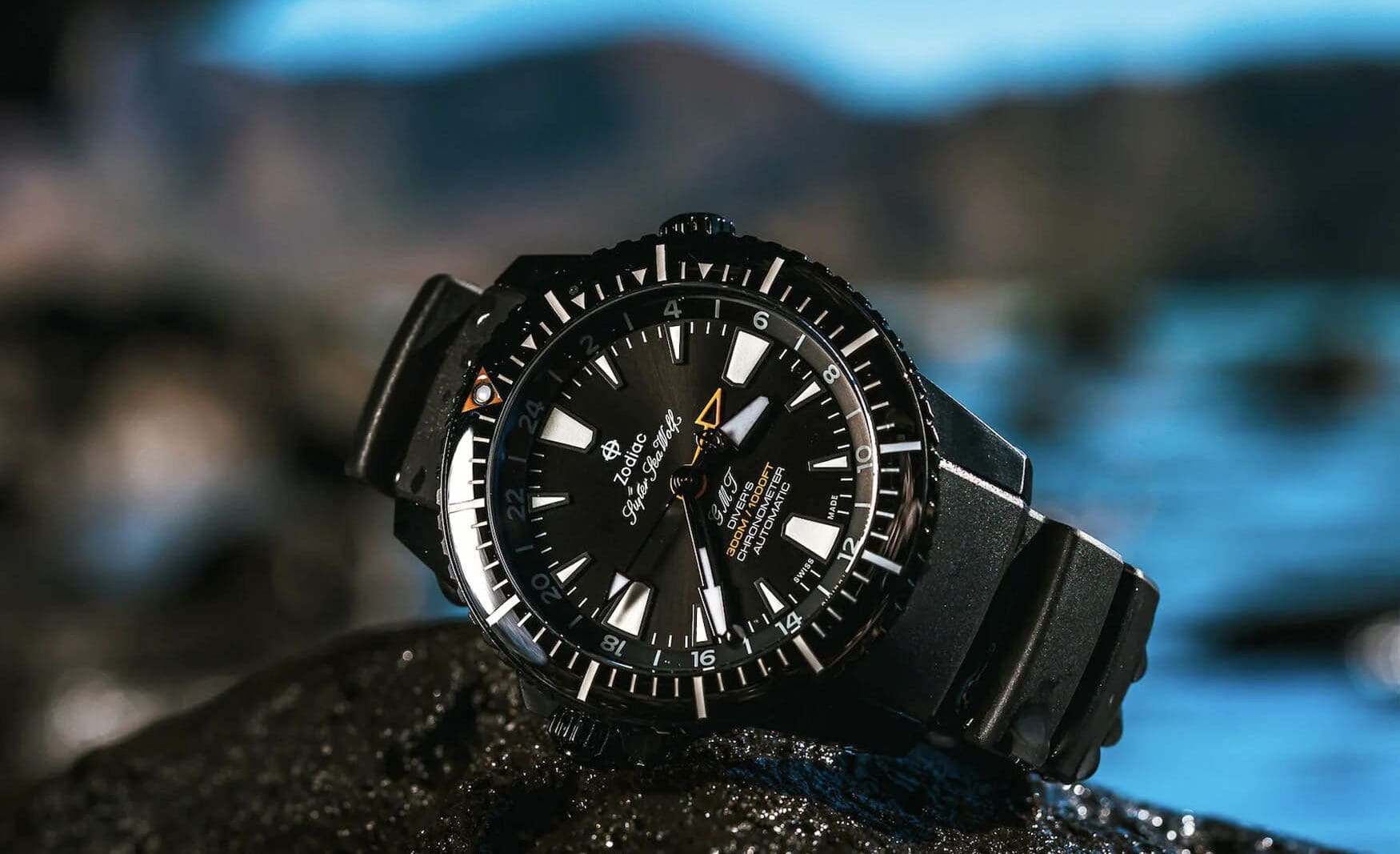
As commercial and professional diving pushed deeper into the abyss during the ensuing decades, technological frontiers expanded rapidly. The industry responded with sophisticated engineering solutions, including the compressor case and the ingenious Jaeger-LeCoultre Memovox alarm, which used acoustic signals to alert divers to their ascent times underwater. For saturation divers living in high-pressure hyperbaric chambers, the buildup of helium gas inside watch cases caused crystals to pop off during decompression. To solve this, Rolex introduced the helium escape valve on the Sea-Dweller, a mechanical marvel that allowed trapped gases to vent safely without compromising the watch's waterproof integrity.
Beyond the technical specifications, dive watches quickly transcended their industrial roots to achieve massive cultural status. Much of this mainstream popularity was forged through Hollywood and pop culture, most notably via their immortalization on the wrist of James Bond, where the watch became shorthand for dangerous, effortless sophistication. This cinematic allure was matched by the introduction of distinct, highly recognizable models that appealed to both professional divers and enthusiasts, such as the vibrant orange-dialed Doxa Sub 300, designed with the help of marine expert Claude Wesly, and Seiko’s legendary family of robust divers, affectionately nicknamed the "Turtle" and the "Tuna" for their distinct case shapes.
By the turn of the millennium, a profound paradigm shift had occurred. As electronic dive computers took over the actual work of measuring depth, decompression, and bottom time, mechanical dive watches were liberated from their utilitarian duties. They transitioned gracefully into luxury fashion items, a shift celebrated by landmark releases like the 50th-anniversary Rolex Submariner “Kermit” with its striking green bezel, and the high-end revivals of the Blancpain Fifty Fathoms. Brands like Tudor and Panerai successfully mastered this transition, bridging the gap between historical tool utility and modern luxury appeal by leaning heavily into their rich archival heritages while updating materials with modern ceramics and advanced alloys.
Today, dive watches occupy a fascinating space in the horological landscape. Whether found at accessible entry-level price points or as six-figure expressions of high-end haute horlogerie, they remain the undisputed centerpiece of the watch industry. Even though the vast majority of these timepieces will never plunge deeper than a suburban swimming pool or a corporate boardroom, their construction is still fiercely rooted in the uncompromising quest to withstand the extreme, crushing pressures of the ocean floor. In wearing a dive watch, modern society preserves a tangible connection to an era when exploration was perilous, when human survival depended on mechanical perfection, and when style was forged in the deep, silent blue.