AMAZON FOREST – Deep within the verdant embrace of the Madre de Dios region, the Peruvian Amazon continues to serve as a high-definition theater for the world’s most spectacular biodiversity. This month, renowned wildlife photographer Dani Connor Wild marked a significant professional milestone, returning to the Tambopata National Reserve after a ten-year hiatus. Her week-long expedition, centered at the renowned Posadas Amazonas eco-lodge, offers a visceral look at the current state of Amazonian wildlife in 2026. The journey, which began with a characteristic boat transit along the winding Tambopata River, serves as both a personal homecoming and a vital document of the region’s thriving ecosystems, which remain a cornerstone of global conservation efforts.
The transition from the modern world to the heart of the rainforest was immediate and cinematic. As the river boat navigated the silty currents of the Tambopata, the expedition was greeted by a quintessential Amazonian tableau: a family of capybaras lounging along the muddy banks. These "giant rodents," often a bellwether for the health of the river system, appeared undisturbed by the vessel, allowing for intimate preliminary captures. The immersion deepened upon arrival at the lodge grounds, where the canopy echoed with the movements of brown titi monkeys. The presence of these primates so close to human habitation underscores the successful integration of ecotourism and habitat preservation that defines the local land-management strategy.
Seeking a different perspective on the forest’s vertical architecture, the photographer ascended a canopy tower to engage with the rainforest’s most vocal residents. At over thirty meters above the forest floor, the tower provided rare, eye-level access to a family of howler monkeys. In the specialized field of wildlife photography, such proximity allows for a level of detail and behavioral observation that is often impossible from the ground. The resulting imagery captures the intricate social dynamics of the troop, framed against the endless expanse of the emerald canopy—a view that remains one of the most breathtaking sights in the natural world.
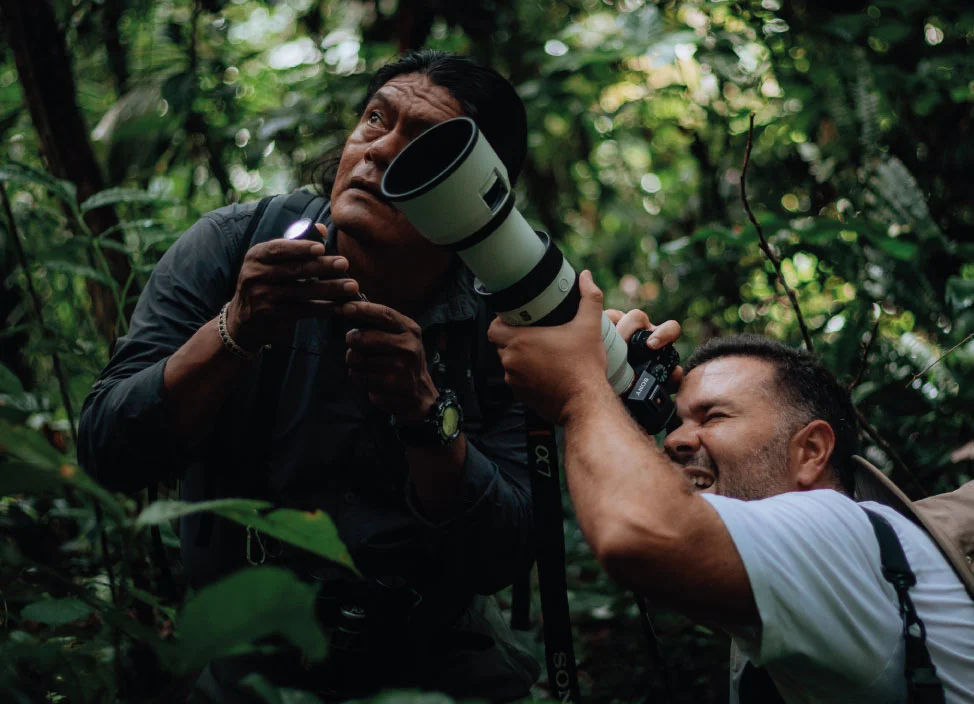
Related article - Uphorial Shopify

The undisputed centerpiece of the expedition took place at a nearby oxbow lake, a tranquil ecosystem that serves as the primary hunting ground for one of the Amazon’s most charismatic predators: the giant river otter. Often referred to as "water wolves," these endangered mammals are notoriously difficult to film in high detail. However, the week reached a crescendo as a resident family of otters emerged to hunt. The footage secured during this encounter provides a clinical look at their apex predatory skills, capturing the group as they successfully hunted and consumed piranhas. The raw, splashing energy of the hunt, combined with the otters' sophisticated vocalizations and social coordination, remains a highlight of 2026 wildlife documentation.
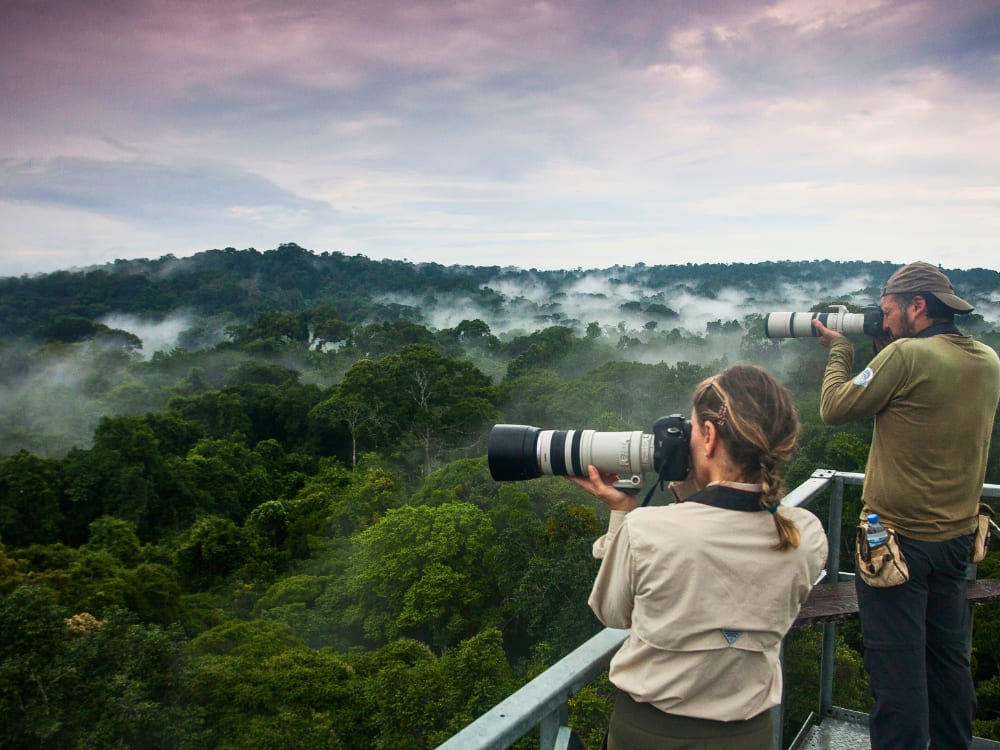
The logistical backbone of the trip was provided by Posadas Amazonas, a lodge that has become a blueprint for sustainable luxury in extreme environments. Despite its location deep within the rainforest, the accommodations offered a surprising level of comfort, featuring open-walled rooms that invite the sounds and scents of the jungle inside while maintaining the amenities necessary for professional field work. The lodge’s tour highlights the evolving nature of eco-travel, where the goal is no longer just to "survive" the jungle, but to experience it with a level of clarity and safety that allows for true artistic focus.
The diversity of sightings continued well into the twilight hours of the week. Between the marquee encounters, the photographer documented the smaller, often overlooked inhabitants of the Tambopata, including the energetic Amazon red squirrel and a young caiman lurking in the shallows. A sunset boat cruise provided a final, golden-hour perspective on the river, where additional capybaras were spotted silhouetted against the darkening treeline. These cumulative sightings paint a picture of a region that, despite the global pressures on rainforest environments, continues to host a staggering density of life.
Ultimately, the expedition was driven by more than just the pursuit of the perfect frame. Throughout the week, Dani Connor Wild expressed a profound, revitalized passion for the Amazon’s immense biodiversity, emphasizing the role of photography in modern conservation. By returning to a location she first visited a decade ago, she was able to witness firsthand the resilience of the Peruvian wilderness and the impact of sustained eco-lodging initiatives. As the journey concluded, the sentiment was clear: the Amazon is not just a place to visit, but a vital organ of the planet that requires our constant attention, respect, and protection. The images brought back from the Tambopata are not just art; they are a call to value the wild spaces that remain.