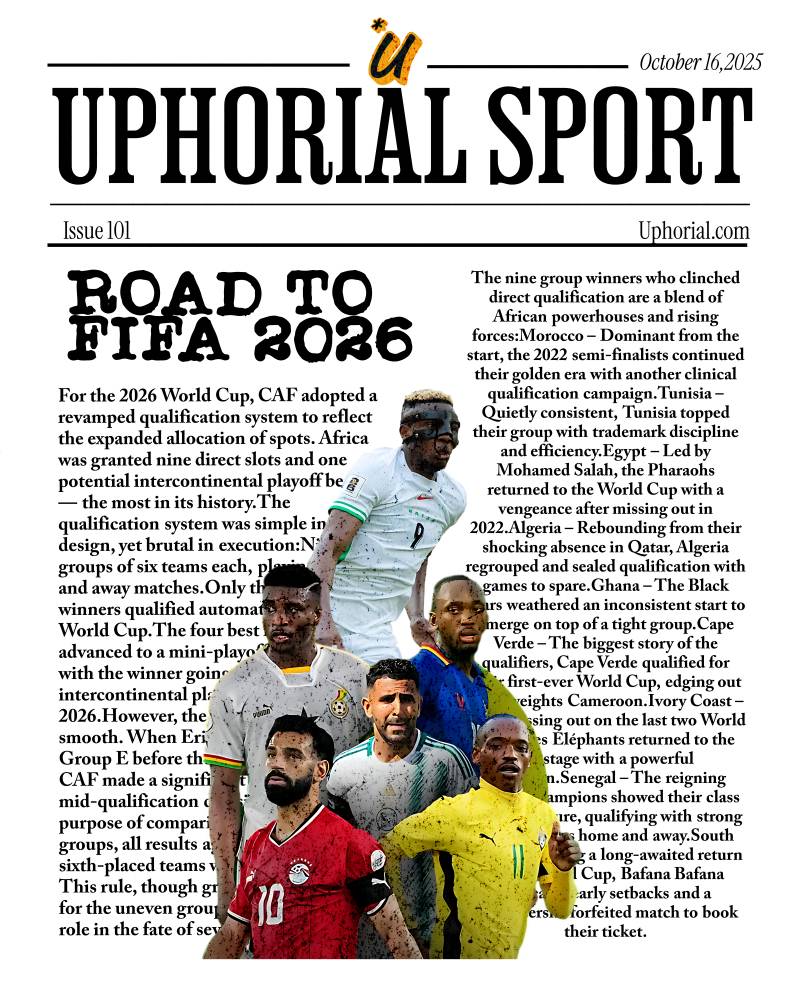
After two years of drama, surprises, and unforgettable football, Africa’s qualification path to the 2026 FIFA World Cup has finally reached its conclusion. With nine teams confirmed for direct qualification and four more heading to a final continental playoff, the continent’s representation at the expanded 48-team World Cup in North America is almost fully set. This qualifying campaign has been historic, controversial at times, and packed with emotion. Here’s how it all unfolded — and what comes next. For the 2026 World Cup, CAF adopted a revamped qualification system to reflect the expanded allocation of spots. Africa was granted nine direct slots and one potential intercontinental playoff berth — the most in its history. The qualification system was simple in design, yet brutal in execution: Nine groups of six teams each, playing home and away matches. Only the group winners qualified automatically for the World Cup. The four best runners-up advanced to a mini-playoff tournament, with the winner going on to the intercontinental playoffs in March 2026. However, the path wasn’t entirely smooth. When Eritrea withdrew from Group E before the group stage began, CAF made a significant mid-qualification decision: for the purpose of comparing runners-up across groups, all results against the sixth-placed teams would be excluded. This rule, though grounded in fairness for the uneven groups, later played a key role in the fate of several nations. The nine group winners who clinched direct qualification are a blend of African powerhouses and rising forces: Morocco – Dominant from the start, the 2022 semi-finalists continued their golden era with another clinical qualification campaign.
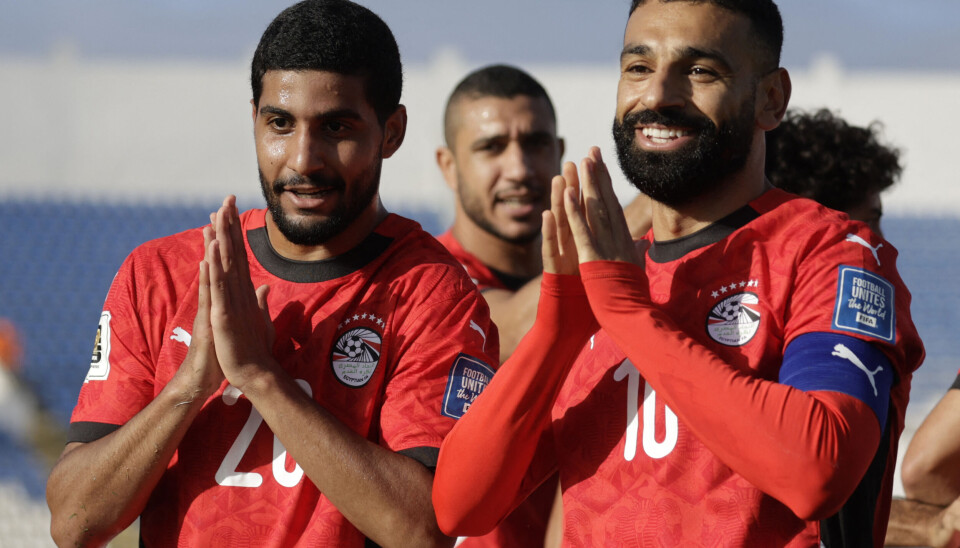
Tunisia – Quietly consistent, Tunisia topped their group with trademark discipline and efficiency. Egypt – Led by Mohamed Salah, the Pharaohs returned to the World Cup with a vengeance after missing out in 2022.Algeria – Rebounding from their shocking absence in Qatar, Algeria regrouped and sealed qualification with games to spare.Ghana – The Black Stars weathered an inconsistent start to emerge on top of a tight group. Cape Verde – The biggest story of the qualifiers, Cape Verde qualified for their first-ever World Cup, edging out heavyweights Cameroon. Ivory Coast – After missing out on the last two World Cups, Les Éléphants returned to the big stage with a powerful campaign. Senegal – The reigning African champions showed their class and composure, qualifying with strong performances home and away. South Africa – Making a long-awaited return to the World Cup, Bafana Bafana overcame early setbacks and a controversial forfeited match to book their ticket.
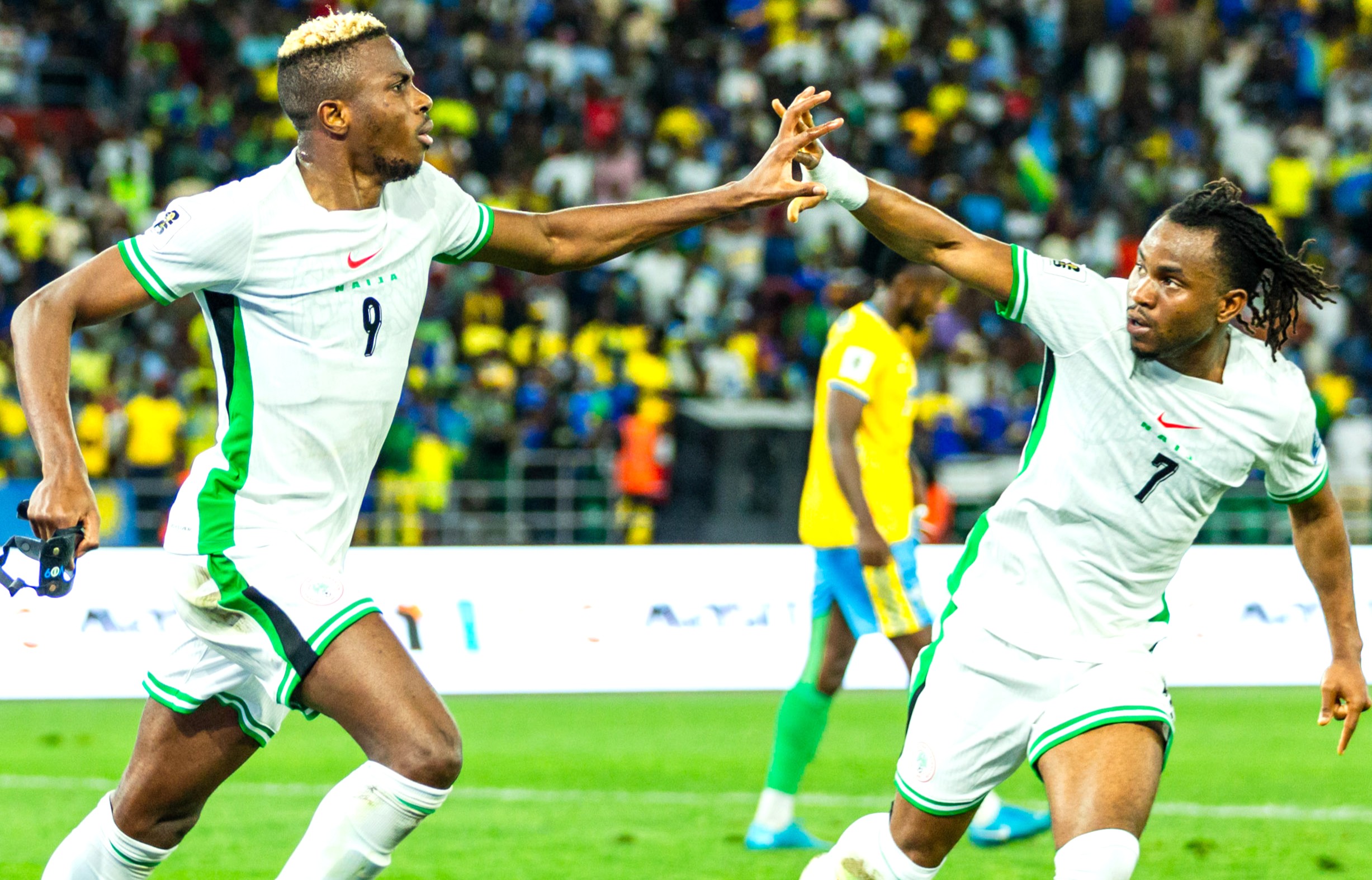
The African road to the 2026 FIFA World Cup is complete!
Related article - Uphorial Sweatshirt
While nine are in, four others still have one more hurdle to clear. The best four runners-up across the groups (after discounting results vs. bottom-placed teams) earned a place in CAF’s final qualification playoff: Gabon, DR Congo, Nigeria Cameroon. These four will head to Morocco in November 2025 to contest a three-match mini-tournament — two semi-finals and a final. The winner will represent Africa in the intercontinental playoffs scheduled for March 2026. There, they’ll face teams from other confederations for a final shot at a World Cup spot. No African qualifying campaign is complete without drama, and this one delivered it in spades. The decision to exclude results against bottom-placed teams in the runner-up comparison had significant consequences. Burkina Faso, which had racked up big wins against Djibouti, was knocked out of playoff contention after those matches were removed from the equation. Nigeria, by contrast, leapfrogged into the playoff thanks to a superior adjusted goal difference by just one goal. That technical adjustment sparked widespread debate and even official protests, with Burkina Faso’s players and government officials publicly demanding clarity from CAF. Critics claimed the rule was poorly communicated and disproportionately punished teams that had done their job against weaker opponents.
Cape Verde’s qualification marked a moment of national pride. In a group that included Cameroon and Angola, few expected the small island nation to emerge victorious. But consistent performances and key away wins helped them top the group and book their first-ever ticket to the World Cup.After more than a decade in the wilderness, South Africa is back. Despite the chaos of a forfeited match early in the campaign — a bureaucratic mess that could have derailed their hopes — the team rallied late, winning crucial games and capitalizing on a faltering Ghana to finish atop their group. The focus now shifts to Morocco, host of the CAF playoff tournament in November 2025. The matchups will be determined by draw, and the two semi-final winners will face off in a final, with the winner heading to the intercontinental playoff in March 2026.For teams like Nigeria and Cameroon, anything less than victory will be seen as failure. For Gabon and DR Congo, it’s a chance to reach a World Cup for the first time — and make history of their own. With nine teams already qualified and one more still in play, Africa is set for its largest-ever presence at a World Cup. The expanded 48-team format has opened the door for more diversity, and African teams are ready to show their strength on the global stage. The story of Africa’s road to the 2026 World Cup is not just about football. It’s about resilience, reinvention, controversy, and history in the making. The road has been long — and for one more team, it’s not over yet.The final chapter awaits.