TEMA - The ascent of Michael Owusu Addo, known globally as Sarkodie, from the bustling, salt-aired streets of Tema, Ghana, to the gilded stages of the world is not merely a trajectory of musical success; it is a profound testament to the power of cultural conviction and unwavering resilience. In a wide-ranging, reflective conversation with DJ Edu for the BBC’s This is Africa podcast, the rap icon offers a masterclass in the intersection of personal narrative and global impact. The interview paints a vivid portrait of an artist who has remained steadfastly tethered to his roots while simultaneously orchestrating a paradigm shift in how African music is consumed, valued, and staged on the international circuit.
At the heart of the discussion is Sarkodie’s recent historic achievement: selling out the Royal Albert Hall in London. For many, such a feat would be reduced to a metric of ego or commercial dominance. For Sarkodie, however, the significance was rooted in a more strategic vision. He spoke of the milestone as a deliberate act of placement, a necessity to see African music command the architecture of one of the world’s most prestigious venues. It was, in his view, an assertion of worth—a way of signaling that the sounds emanating from Tema and Accra belong in the same pantheon as the greatest performances in musical history. This mindset of elevation carries over to his future ambitions, including his highly anticipated show at the O2 Arena, where he remains focused not on the chase for superficial streaming numbers, but on the relentless pursuit of world-class production value that mirrors the sophistication of the culture he represents.

Related article - Uphorial Shopify

Yet, to understand the man on the stage, one must navigate the geography of his upbringing. Sarkodie’s recount of his childhood in Tema—marked by nine years of separation from his family and the grit of working as a hawker—provides the emotional precision necessary to contextualize his lyrics. He speaks of the "compound house" life as a formative observation deck, a space where he learned to watch, absorb, and analyze the rhythms of human existence. This early exposure to the fragility and intensity of life in a working-class Ghanaian neighborhood became the bedrock of his songwriting. It fostered a resilience that he would later translate into the 'Rapperholic' movement. What began thirteen years ago as a humble album launch has evolved into an essential, annual cultural fixture, a space where the bond between artist and audience is reaffirmed in real-time.A recurring theme of intellectual and cultural significance in the conversation is his commitment to rapping in Twi. While his early experiments were steeped in English, Sarkodie’s evolution toward his native tongue represents a conscious, transformational framing of his artistry. He describes Twi not just as a medium of communication, but as the only language that allows him to access the deepest reservoirs of his expression. By refusing to compromise his linguistic identity for broader commercial appeal, he has achieved a deeper, more intimate connection with his audience—a move that underscores his belief that authenticity is the most potent tool in a musician’s arsenal.
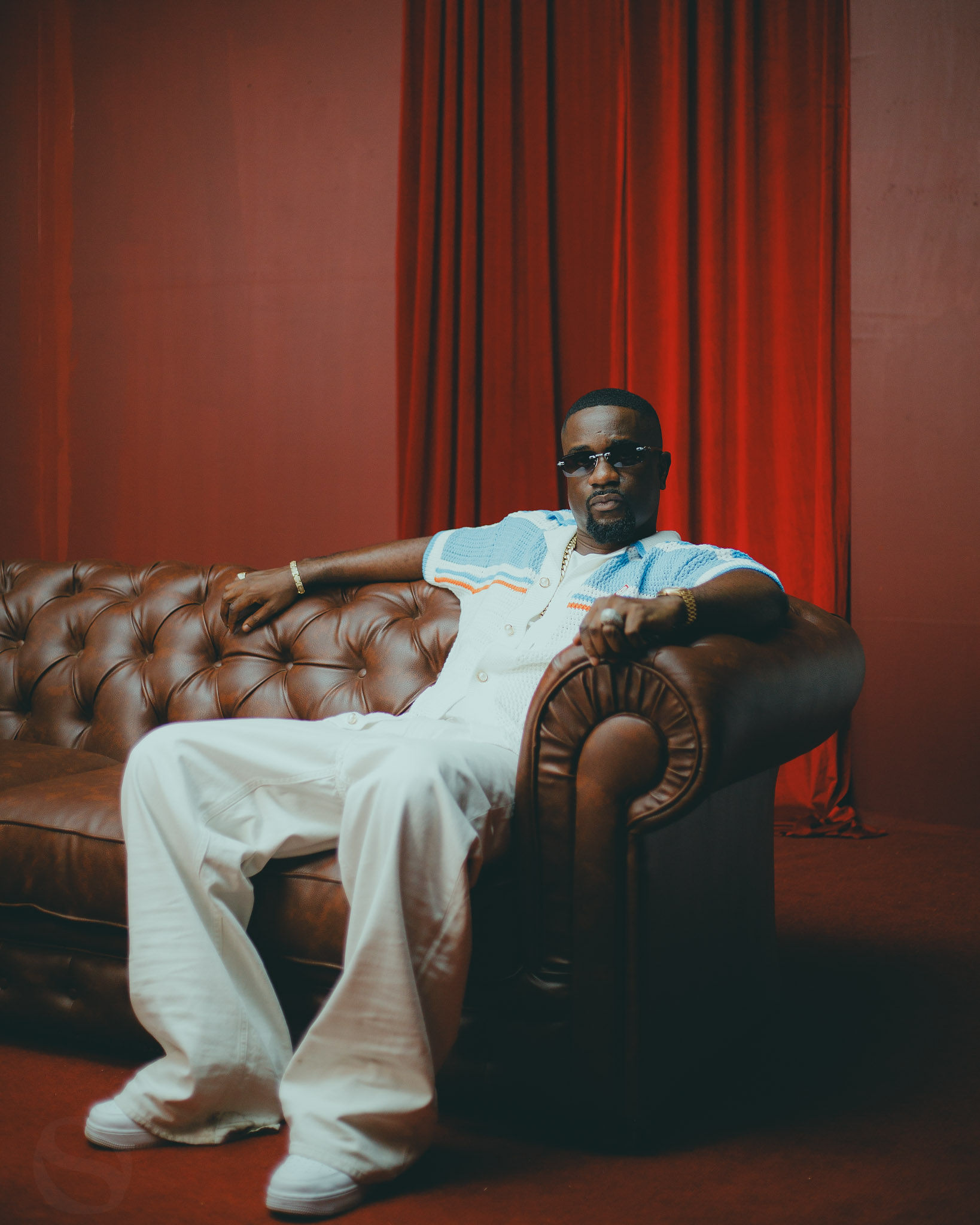
This authenticity is further mirrored in his relationship with 'Sark Nation,' a fan base that stands as a unique anomaly in the modern music industry. Sarkodie speaks of his followers with a mix of reverence and gratitude, noting that his career has been built without the conventional crutches of heavy external funding. It is a direct relationship, sustained by years of mutual loyalty and a shared understanding of his journey. This sense of responsibility extends to his personal life, where he navigates the complex duality of global superstardom and the grounded realities of hands-on fatherhood. He speaks candidly of his role as a mentor and provider, aiming to instill the same resilience in his children that allowed him to survive his own early challenges.
The interview’s conclusion—a blistering, lyrical freestyle—served as a final reminder of why he is often cited as one of the continent’s most formidable poets. In the space of a few bars, he distilled complex truths regarding global inequality, the necessity of African unity, and the indomitable spirit of progress. It was a message that transcended the rhythmic structure of the track, offering a sobering, yet hopeful commentary on the state of the continent.Sarkodie’s conversation with DJ Edu is a document of a legacy in motion. It captures an artist who has moved beyond the need to justify his status and is now occupied with the more vital work of expanding the horizons for those who will follow. By centering his narrative on the strength of his background, the power of his language, and the integrity of his relationship with his people, he has defined a path that is both culturally specific and universally resonant. As he looks toward his next milestones, Sarkodie remains an anchoring force, proving that while his music has found a global stage, his heart remains firmly planted in the soil of Tema.