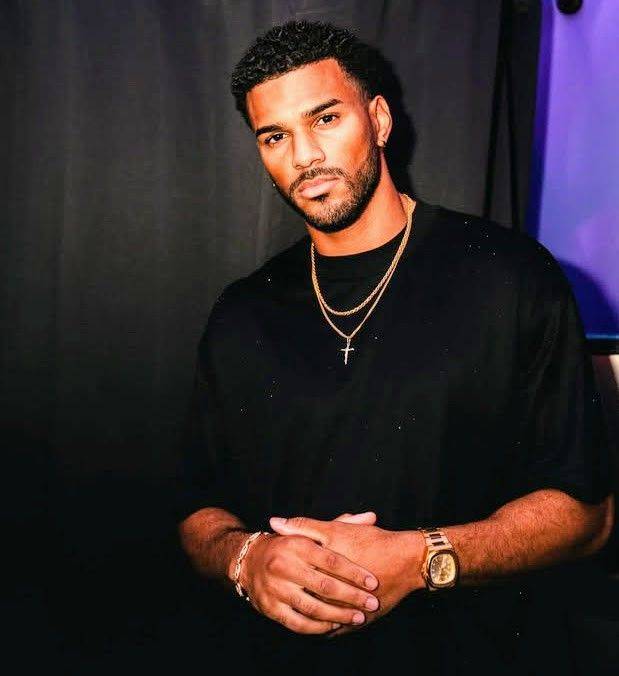
LAGOS - The modern Afrobeats landscape is often characterized by grand productions, pyrotechnics, and the sheer scale of stadium-sized ambition. Yet, there remains an undeniable power in the stripped-back, intimate setting of a live performance, where the artifice is removed and only the raw capability of the artist remains. This truth was on full display during Nigerian artist Rybeena’s recent session on the Dvpper Live Pocket Stage. In a performance that functioned as both a showcase of his technical versatility and an exploration of his narrative depth, Rybeena delivered a set that reminded listeners that the heart of Afro-fusion lies in the connection between the voice and the listener.
The set began with an intentional vulnerability. Opening with the track "Adunni," Rybeena bypassed the urge to lead with high-octane energy, choosing instead to lean into the emotional precision of his storytelling. The song served as a grounding force, stripping away the expectations of the genre to focus on melody and lyrical sincerity. It was an invitation to the audience—an act of vulnerability that established an immediate, profound resonance. By starting in such a place of quiet reflection, he created the space necessary to demonstrate that his artistry is not merely about the dancefloor, but about the articulation of human experience.

Related article - Uphorial Shopify

As the set progressed, the transformation in energy was both calculated and seamless. Transitioning from the intimacy of "Adunni" into the rhythmic pulse of "Spaghetti," Rybeena demonstrated his understanding of the Afrobeats tempo, navigating the shift with the ease of a veteran. The performance then surged forward with "Gaddem" and "New Taker," tracks that demanded a more kinetic engagement from the audience. In these moments, Rybeena shed the introspection of his opening and leaned into his role as a performer, utilizing the Pocket Stage to project an infectious, high-energy charisma that radiated through the screen. It was a masterclass in pacing, balancing the heavy, emotive weight of his ballads with the rhythmic bounce required to sustain a live set.The mid-set highlight, "World Best," served as a crystallization of his current artistic identity. Here, Rybeena’s charisma was at its most potent; the song acted as a bridge between the artist’s persona and his craft, showcasing the confidence he brings to his songwriting. This charisma carried through into "Hildabaci" and "Menu," where the intensity continued to build. One could observe the way he occupied the stage—a subtle, constant movement that matched the cadence of his flow, indicating a deep, almost intuitive connection to the music. His ability to maintain this level of engagement while switching between different sub-genres of the Afro-fusion spectrum underscored his versatility, confirming his place as one of the more adaptable voices emerging from the Nigerian scene.

The conclusion of the set arrived with "Nepo Baby," a track that effectively encapsulated the "bounce" that has become a defining characteristic of his current repertoire. It was the perfect finale, wrapping the performance in a sound that was both infectious and technically tight. As he navigated the final segments of the song, the energy in the room reached its zenith, leaving no doubt that this was a comprehensive display of his evolution.
What Rybeena achieved on the Dvpper Live Pocket Stage was a form of transformational framing. By taking songs that might typically be heard in the context of a polished studio production and presenting them in a live, organic format, he allowed the audience to hear the humanity within the rhythm. He demonstrated that his music is not just a collection of viral moments or streaming hits, but a cohesive body of work supported by genuine skill. In an industry that often prioritizes the spectacle, Rybeena chose to focus on the substance, reminding his audience that when an artist is truly connected to their craft, they do not need the distractions of a stadium to command the room.Ultimately, this performance serves as a vital portrait of an artist in his prime. Through an intelligent curation of his setlist, Rybeena moved the audience through a full spectrum of emotions—from the heartfelt resonance of his ballads to the exuberant energy of his rhythmic anthems. He did not simply play his songs; he inhabited them. For those watching, it was a confirmation that the future of Nigerian music remains anchored in the voices that can successfully bridge the gap between personal storytelling and the global, pulse-pounding rhythm of the culture. As the final notes of the set faded, it was clear that Rybeena is an artist who understands that, ultimately, the most resonant impact comes from being yourself.