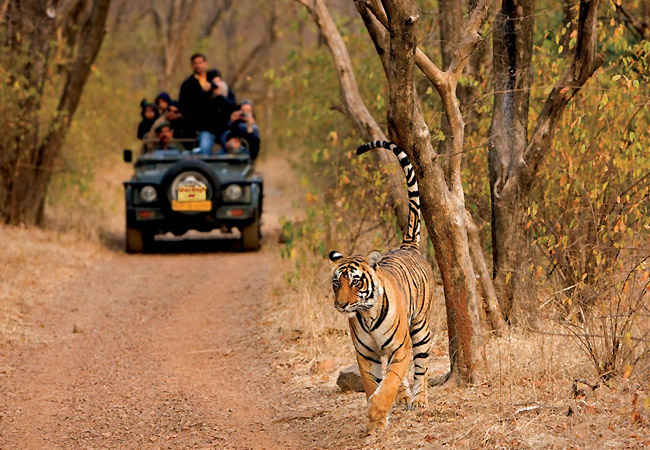
You're stepping into a hidden world, one far removed from display and spectacle. It’s a world where the sky-bound call of birds mingles with the deep rumble of elephants, not to entertain, but to heal. Vantara, the Star of the Forest, begins not with grandeur, but with a memory: a young Anant Ambani, the weight of family legacy upon him, stumbling across an injured elephant on a journey through Jaipur and Ranthambore. That moment, still vivid, planted a seed, the seed that grew into Vantara.
Here, within 3,500 acres of Jamnagar’s once-industrial expanse, lies India's most intimate gesture to a wounded world. As of early 2025, Vantara shelters well over 150,000 creatures across more than 2,000 species. Not zoo curiosities, but survivors seeking solace. Its complex is not open for public tours or entertainment; it was forged for compassion. Consider the elephant jacuzzis: hydrotherapy pools, hot-water massages, even ayurvedic treatments and manicure-pedicures. These rituals don’t just restore health, they restore dignity. The gentle acceptance in the animals’ eyes, as chains fall away for the last time, speaks volumes.
Related article - Uphorial Radio
The heart of the story, though, is complexity. Vantara’s soaring scale has drawn scrutiny. Allegations swirl, roughly 39,000 animals sourced from 32 countries, possibly from regions with trafficking concerns. Investigative pieces, legal skirmishes, and media tension followed. Vantara sued a publication for defamation, only for the Delhi High Court to dismiss the case in May 2025, recognizing there was no court order to suppress the original article.
Then there’s the elephant at the center of recent waves: Madhuri (also called Mahadevi), relocated by court order from her spiritual home in Kolhapur to Vantara. Outcry followed; religious devotees, animal lovers, and PETA petitioners all reacted. Vantara stepped forward with a bold plan: a luxurious, chain-free rehab center right in Kolhapur, facilitating Madhuri's possible return, physically whole, emotionally honored. Today, stories like these do more than inform; they invite empathy and complexity. What is a sanctuary? Is it sanctity in rescue or accountability in expansion? Vantara’s pulse lies in that tension.
Imagine walking its grounds at dusk. A leopard pads softly into dense foliage, birds whisper overhead, and in the distance, an elephant glides through shimmering hydrotherapy waters, free and safe. The air hums with the promise of healing, not just for animals, but perhaps for humanity’s sense of ethical stewardship. This is no zoo. It is a question and a refuge wrapped in a verdant canopy. Vantara asks not just how we save wildlife, but how we reckon with the blurred lines between philanthropy, power, and preservation. And perhaps, in those shadows and sunlit clearings, real wildlife, and real accountability, can both find sanctuary.