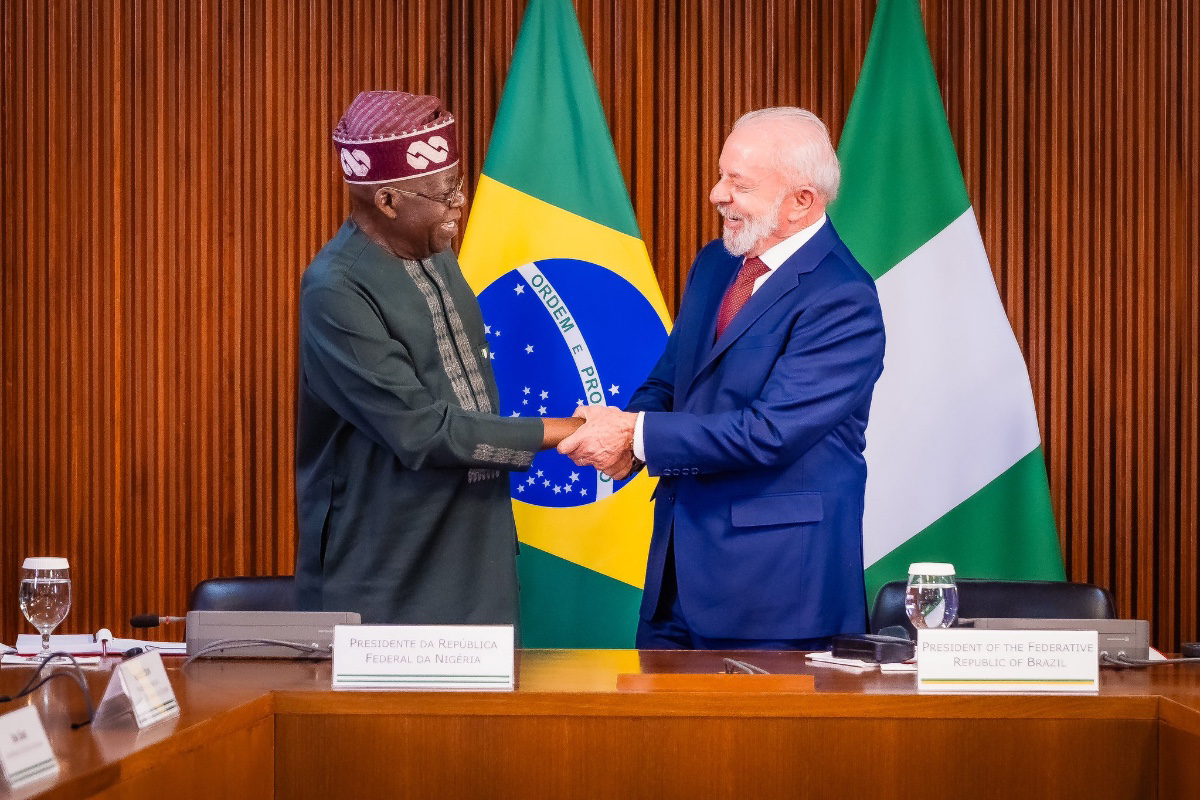
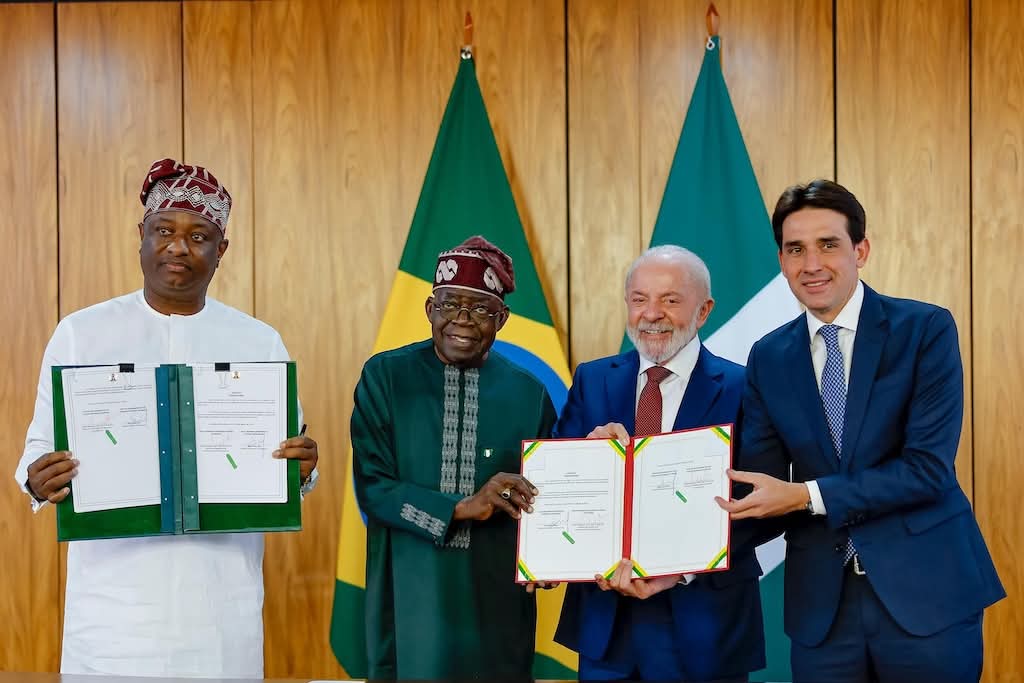
On a warm morning in Brasília, history unfolded in a way that went beyond protocol. President Bola Tinubu of Nigeria and President Luiz Inácio Lula da Silva of Brazil stood together, not just as political leaders but as visionaries of a bridge between two continents. Their handshake sealed the Bilateral Air Service Agreement (BASA), a pact that promises direct flights from Lagos to São Paulo and Rio de Janeiro. But this is not simply about airplanes or routes; it is about shortening the distance between lives, memories, and opportunities.
For years, the absence of direct air links between Nigeria and Brazil meant that journeys across the Atlantic were long, expensive, and emotionally draining. Travelers had to pass through Europe or North America, enduring detours that stretched both time and resources. Now, with Air Peace poised to pioneer the new route, the connection becomes immediate, direct, and symbolic of something larger than aviation: it is the revival of a cultural artery.
Related article - Uphorial Radio
Consider the weight of this agreement on an individual level. Amaechi, a Lagos shopkeeper, dreams of Brazilian coffee beans arriving fresher and faster, enriching both his business and the local palate. Ana, an Afro-Brazilian scholar tracing her roots to West Africa, envisions stepping onto Nigerian soil without the fatigue of multiple layovers, reclaiming the history that binds her identity. These are the stories hidden behind policy—the human experiences that transform flights into lifelines.
The economic impact is equally profound. Brazil, a global leader in agriculture and energy, can now ship products more directly into Nigeria’s bustling markets. Nigeria, in turn, can expand the reach of its booming creative industry, energy sector, and agritech innovations into Latin America. What once felt distant becomes accessible: trade corridors, tourism circuits, and business opportunities will now flow freely. Imagine Brazilian samba meeting Nigerian Afrobeats on a collaborative stage, or Nigerian film producers premiering in São Paulo’s cinemas with their teams seated comfortably on a direct flight. Yet beyond commerce lies something even more compelling: memory and heritage. Brazil has one of the largest populations of African descent outside the continent, with many tracing their ancestry to West Africa. The flight path is more than a line in the sky—it is a spiritual reconnection, a way for descendants to return, explore, and engage with the lands their forebears once knew. This sense of return adds a poetic dimension to what could otherwise be a sterile agreement.
Diplomatically, the signing of the BASA is part of a broader framework of cooperation. Alongside aviation, Nigeria and Brazil also signed accords on agriculture, science, innovation, and cultural exchange. These agreements mark a shift from symbolic friendship to concrete partnerships. The direct flights will serve as a backbone for these ventures, making collaboration less abstract and more immediate. For Nigeria, the deal underscores its growing ambition to position itself as a hub of global connectivity. For Brazil, it affirms a renewed embrace of South-South cooperation, leaning into shared histories rather than distant alliances. Together, the two nations project a vision of partnership where culture, commerce, and diplomacy rise on the same wings.
When the first Air Peace jet finally takes off from Lagos and begins its journey across the Atlantic, the passengers will carry more than luggage. They will carry hope, ambition, and stories waiting to be written. A grandmother flying to meet her grandchildren in São Paulo, a Nigerian musician heading to collaborate with Brazilian artists, a business leader sealing deals face-to-face instead of over long-distance calls—all of them embody the promise of this agreement. In that moment, the runways of Lagos and São Paulo become more than infrastructure. They transform into bridges—bridges of people, heritage, and shared futures. And as the engines roar to life, it becomes clear: this is more than a flight. It is a chapter in the ongoing story of two continents learning to move closer, one journey at a time.