The continental theatre of African women's football is an unforgiving crucible of speed, tactical discipline, and unrelenting national pride, where decades of athletic evolution collide under the blazing stadium lights. At the TotalEnergies Women’s Africa Cup of Nations 2026, the Group C fixture between the formidable Super Falcons of Nigeria and the surging Copper Queens of Zambia brought together two of the most electrifying football cultures on the continent. In a match defined by fierce tactical chess moves and sudden bursts of lethal execution, the atmosphere inside the arena crackled with historical expectation as both sides stepped onto the turf to battle for early tournament supremacy and vital group points.
From the opening whistle, the match unfolded with an enthralling intensity that immediately set a blistering pace across the pitch. Both Nigeria and Zambia understood the immense psychological weight of a tournament opener, treating the initial exchanges not as a cautious feeling-out process, but as an aggressive assertion of will. The tactical setups were clear: Zambia sought to disrupt the rhythm of the game with high-energy pressing and quick defensive transitions, while Nigeria anchored their play in composure, spatial awareness, and a relentless desire to dictate the tempo from the backline through intelligent curation of possession.

Related article - Uphorial Shopify

The defining turning point of the fixture arrived with shocking swiftness in the early stages of the contest, proving that at this elite level of international competition, the smallest margin of error can prove fatal. Pressuring the Zambian defensive third with sharp intensity, the Nigerian attack forced a rare, unforced defensive error from the backline. Capitalizing instantly on the hesitation, the Nigerian forward line exploited the sudden gap with clinical precision. With a swift, decisive strike past the stranded goalkeeper, the ball bulged the back of the net, handing Nigeria a crucial 1-0 lead and sending their bench and traveling supporters into wild celebrations.
With the deadlock broken, the remainder of the game transformed into a grueling, high-stakes tactical battle characterized by intense midfield collisions, fierce physical contests, and ambitious long-range efforts from both sides. Zambia, refusing to crumble under the early setback, roared back into the match by tightening their defensive shape and launching waves of fast, probing counter-attacks that tested the defensive resolve of the Super Falcons. The Nigerian midfield engines worked tirelessly to absorb the pressure, orchestrating counter-measures and carving out several additional attacking attempts that kept the Zambian defense on high alert throughout the middle stanzas of the match.
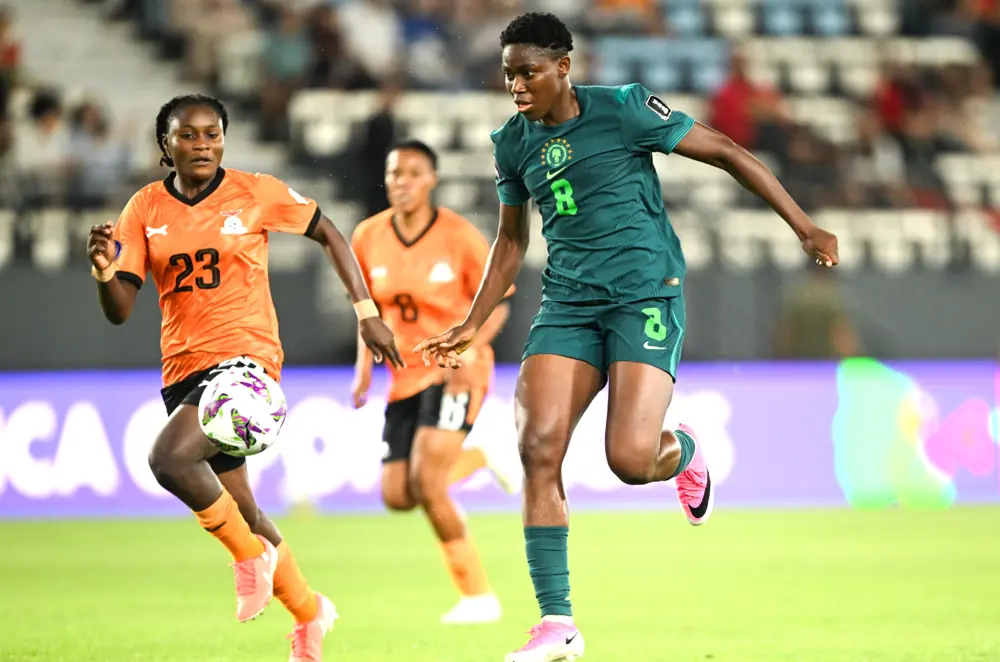
As the second half wore on, the emotional tension on the pitch mounted exponentially. Every tackle was met with fierce determination, and every transition carried the potential to alter the complexion of the group standings. Zambia threw caution to the wind in the dying minutes, committing numbers forward in desperate search of an equalizer, while Nigeria deployed their veteran game-management experience to frustrate the opposition, blocking shooting lanes and neutralizing aerial threats with cultural poise and tactical maturity.
The drama reached its ultimate crescendo as the match officials monitored the stadium clock, bringing a breathless, adrenaline-soaked encounter to its inevitable conclusion. With a sharp, decisive blast of the referee’s whistle, the match was officially brought to an immediate close, freezing the scoreline permanently at a hard-fought 1-0 victory in favor of Nigeria. As the final whistle echoed across the stadium, marking another chapter in the storied rivalry between these two African powerhouses, the fixture stood as a transformational framing of modern women's football—showcasing strategic storytelling, emotional resilience, and the relentless pursuit of continental excellence.