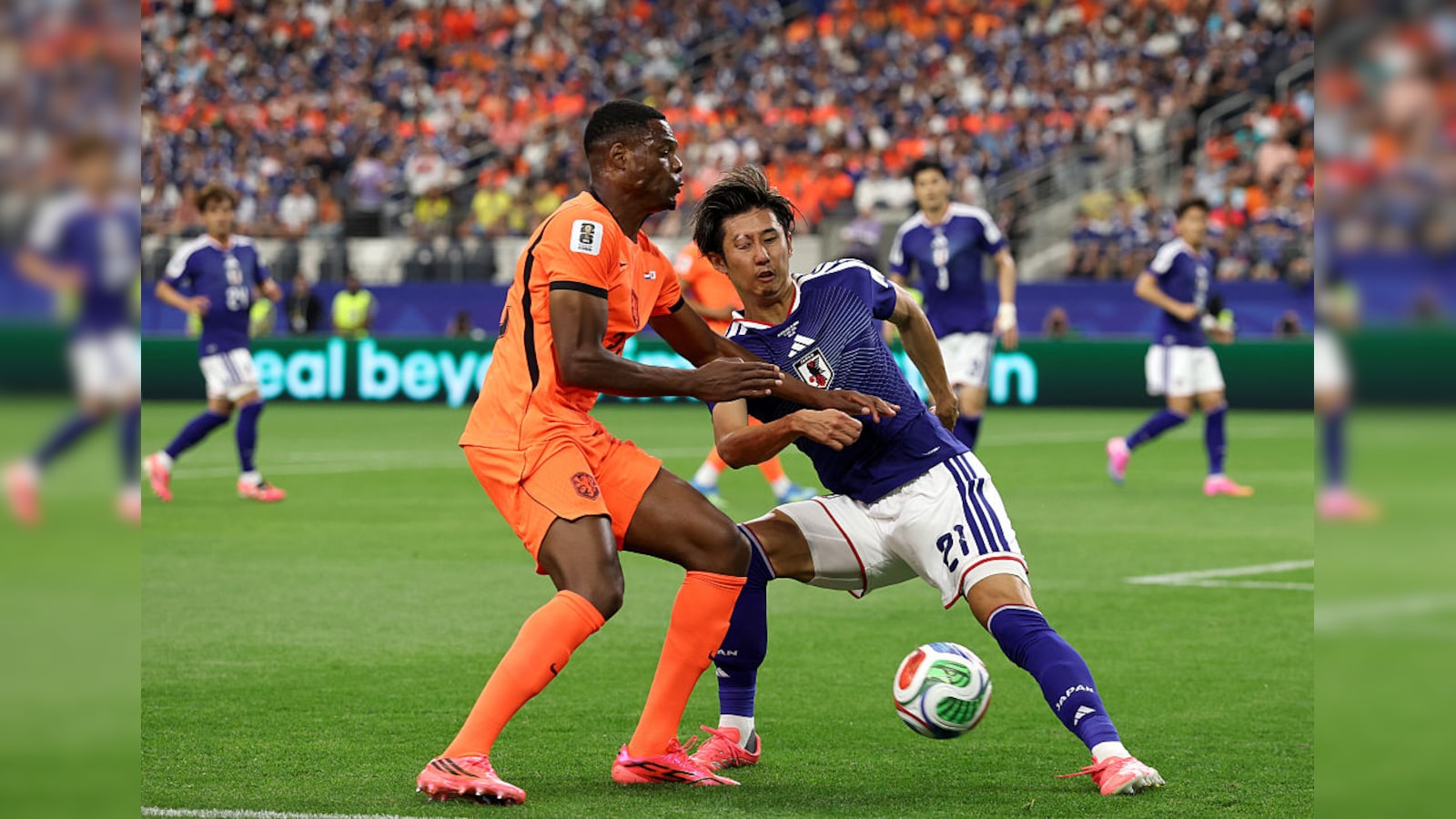
DALLAS – The air inside AT&T Stadium in Dallas was electric on that mid-June afternoon in 2026, vibrating with the collective anticipation of two footballing cultures defined by grace, precision, and an unwavering commitment to the beautiful game. When the Netherlands and Japan stepped onto the pitch, the match was immediately framed as a clash between European tactical powerhouse and the relentless, disciplined evolution of Asian football. For the Dutch, this was a statement game, a chance to solidify their status as a genuine tournament contender. For Japan, it was an opportunity to dismantle the hierarchies of the past and prove that their technical prowess could stand toe-to-toe with the global elite. The resulting 2-2 draw was not merely a stalemate; it was a sprawling, emotional narrative of ambition, resilience, and a stubborn refusal to submit.
From the opening whistle, the Netherlands asserted their presence with the calm, methodical authority of a side accustomed to the grandest stages. The Dutch blueprint was clear: utilize the width provided by Denzel Dumfries and orchestrate the rhythm through a midfield anchored by the composure of Ryan Gravenberch. The breakthrough arrived in the 22nd minute, a goal that felt born of the Dutch identity. Dumfries, finding space deep on the right flank, delivered a cross with the surgical accuracy of a compass. Rising above the scramble in the penalty area, captain Virgil van Dijk connected with the delivery, his header finding the back of the net with a power that left the Japanese goalkeeper helpless. It was a captain’s goal—a moment of individual clarity that sent a clear message to the tournament that the Netherlands had come to Dallas with purpose.
Related article - Uphorial Shopify

Yet, to understand Japan is to understand a team that treats adversity not as an obstacle, but as a catalyst. Trailing by a goal, the Samurai Blue did not retreat; they intensified. Led by the mercurial creativity of Takefusa Kubo, Japan began to dismantle the Dutch defensive block with a series of intricate, one-touch passing sequences that exploited the smallest gaps in the Oranje structure. In the 38th minute, the pressure bore fruit. Kubo, operating with the vision of a seasoned playmaker, embarked on an electrifying run that dissected the Dutch midfield, slipping a perfect ball through the line to Keito Nakamura. With the poise that has become his hallmark, Nakamura slotted home, silencing the Dutch contingent and leveling the score. It was a goal born of intelligence and cultural synchronicity, proving that Japan’s rise in the footballing world is rooted in a collective brilliance that transcends individual talent.

As the second half unfolded, the match descended into a breathtaking display of tactical chess played at an unrelenting pace. Both managers shifted their pieces, looking to unlock the stalemate, but it was the Dutch who found the next spark of brilliance. In the 64th minute, the build-up play reached a crescendo as Gravenberch and Dumfries orchestrated a series of fluid passes that forced the Japanese defense to collapse inward. Crysencio Summerville, finding himself in a pocket of space at a near-impossible angle, unleashed a strike that defied the geometry of the pitch. The ball whipped into the net, marking his first-ever international goal in the most significant of moments. It was a transformative frame for the young forward, a moment where the pressure of the World Cup melted away to reveal raw, unadulterated talent.
With the Netherlands ahead for the second time, the narrative appeared to be moving toward a Dutch victory. Yet, the resilience of the Japanese side was a force that simply could not be contained. As the clock wound down into the final ten minutes, the Samurai Blue surged forward in a display of collective desperation. The equalizer arrived in the 88th minute—a sequence of chaos and intent that perfectly encapsulated the unpredictability of this 2026 tournament. A high, looping ball found the head of Agawa, whose contact was true and decisive. A final, crucial deflection off Daichi Kamada ensured the ball found the target, sending the Japanese players and their supporters into a state of pure, unbridled euphoria.
When the final whistle blew, the 2-2 draw left both nations standing in the center of a complex, evolving Group B landscape. The Netherlands had shown their pedigree, their ability to strike with surgical efficiency and navigate the heavy expectations of a nation’s pride. Japan, meanwhile, had done something perhaps even more significant: they had forced a titan of the game to work for every inch of ground, proving that they are not merely participants in this World Cup, but legitimate protagonists of its most challenging chapters. The match ended without a definitive winner, but as the players traded jerseys under the Texas lights, it was clear that both sides had emerged from the fire of competition fundamentally altered. They had played a game that asked everything of them, and in return, they had provided the world with a masterclass in the resilience, technical depth, and strategic storytelling that makes the FIFA World Cup the greatest spectacle on the planet.