BHUTAN - The rugged, emerald peaks of Bhutan offer more than just a sanctuary of breathtaking topography; they serve as the backdrop for a profound exploration into the architecture of human contentment. In a recent immersive journey, host Sonny Side stepped beyond the familiar boundaries of the global food scene to undertake a daring social and spiritual experiment: to trade the chaotic, sensory-rich life of a traveling journalist for the disciplined, ascetic rhythm of a Buddhist monk. Set at the Kathok Yoesel Samtenling Monastery in the serene valley of Punakha, the experience became a poignant meditation on the dichotomy between our modern, uninhibited desires and the quiet, structured pursuit of enlightenment.
Before surrendering to the monastery's vow of simplicity, Side engaged in an act of deliberate transition, indulging in what he termed a "death row meal." This feast of Chicken Paa—a fiery, traditional stew—and Pork Bayzum, accompanied by the potent, localized warmth of Ara, was not merely about sustenance. It was a conscious farewell to the material, sensory-driven world he occupies. Each bite and sip represented an acknowledgment of his own appetite for the world’s offerings, a sharp contrast to the life of intentional deprivation and focused awareness he was about to enter. It was a sensory closing statement, grounding his impending spiritual transition in the visceral reality of the culture he was leaving behind.

Related article - Uphorial Shopify
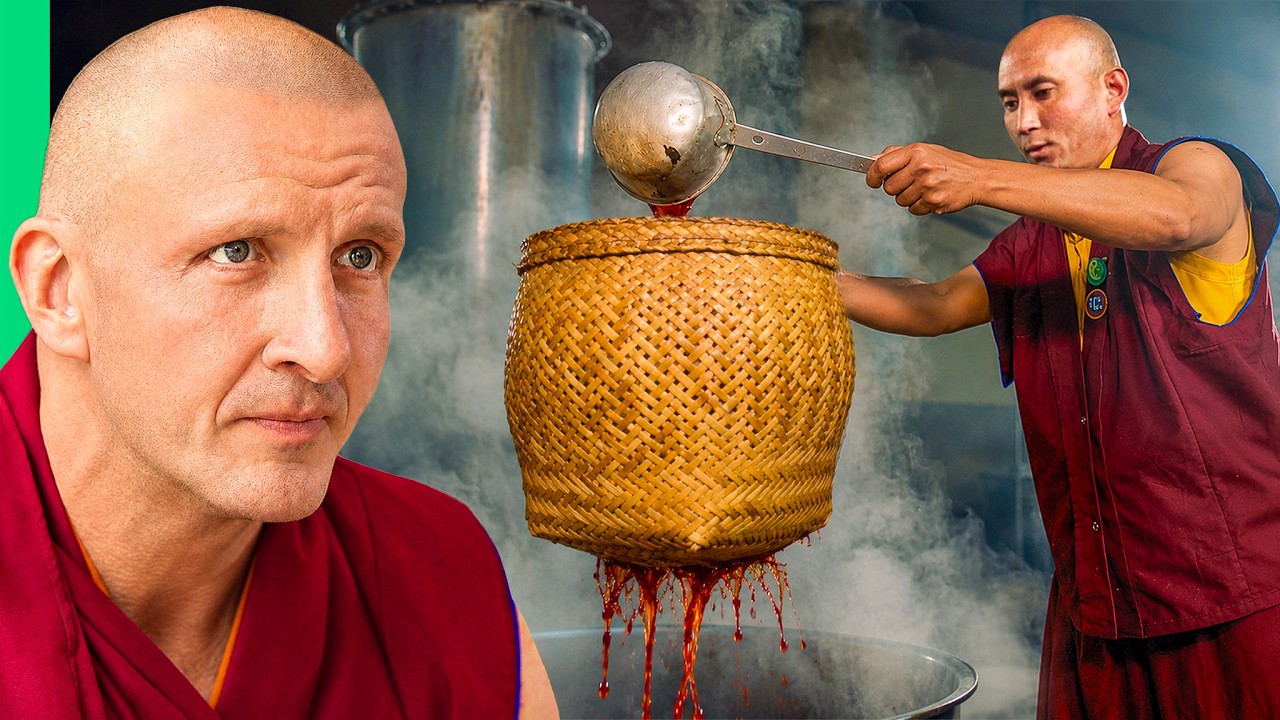
The induction into the Kathok Yoesel Samtenling Monastery was marked by a moment of stripping away. As Side submitted to the ritual of having his head shaved, the physical transformation mirrored the internal shedding of identity. Clad in the traditional maroon robes, he ceased to be a traveler and became a student, entering a space where the ego is subordinated to the collective consciousness of the order. This symbolic act of renunciation functioned as a powerful, transformational frame, effectively removing the markers of his past—his profession, his fame, his external indicators of status—and forcing him to exist solely as a participant in the monastic order’s ancient, daily liturgy.
Life within the monastery walls is governed not by the urgency of the clock, but by the rhythm of the ritual. Side’s immersion began before dawn in the monastery kitchen, where the work of sustenance is treated as a foundational practice. He navigated the nuances of a diet that, while deeply rooted in the harsh requirements of the Himalayan climate, eschews the complexity of his previous indulgence. Here, the staples of life are refined to their most essential forms: the restorative, creamy warmth of Suja—the traditional butter tea—paired with the sharp, persistent heat of ezay chili paste, the crunchy texture of gayzasip, and the light, airy presence of zao. It is a diet designed to support a life of contemplation, where every caloric intake is a deliberate action rather than an impulsive reaction to hunger.
Throughout the day, the veil between the guest and the monastic community thinned, opening the way for discussions that touched upon the most universal human struggles: jealousy, the relentless ache of desire, and the elusive nature of happiness. The monks spoke with a quiet, disarming wisdom, utilizing metaphors that transformed abstract philosophy into tangible truth. One particularly resonant teaching likened the human mind to a vessel of muddy water; if one continues to agitate it, the sediment remains suspended, obscuring the vision. Only through stillness—the radical, often uncomfortable practice of non-action—can the water clarify, allowing the observer to see through the murkiness of their own anxieties. This perspective offered a radical counter-narrative to the Western cultural mandate for constant striving, revealing that for many Bhutanese families, the commitment of a son to the monastery is not viewed as a loss, but as an profound, enduring honor.
As the sun dipped behind the jagged horizon of the Himalayas, Side reflected on the duality of his own journey. He acknowledged the friction between the chaotic, often exhausting chase of his professional dreams and the austere, tranquil peace he had witnessed within the monastery. His conclusion was one of sophisticated balance: he did not suggest that one path was superior to the other, but rather that each offers its own unique, internal landscape of satisfaction. Whether in the high-stakes world of media or the quiet, meditative stillness of the temple, the quest for happiness remains the common, persistent denominator of the human experience. Side departed not with the intent to convert, but with a deeper, more refined understanding of the discipline required to settle one’s own inner waters—a lesson that followed him back into the vibrant, messy, and beautiful world he had briefly left behind.