There are moments when music stops being sound and becomes something more—an archive of struggle, triumph, and raw truth. M.I. Abaga has always been more than just a rapper. For over a decade, he’s been Nigeria’s north star in hip-hop, the artist who dared to raise the bar and redefine what it meant to be African and lyrical at the same time. But in his latest chapter, as he sat with Kemi Smallzz to break down “Mr. Fantastic,” the opening track of The Guy and The Wolf, what unfolded wasn’t simply a track-by-track explanation. It was a reckoning.
“Mr. Fantastic” is no ordinary intro. It is a prologue, a call to arms, a mirror held up to the soul of an artist who has been celebrated, vilified, and misunderstood all at once. When M.I. Abaga speaks of the Wolf, he is not just describing a character. He is confessing. The Wolf is the part of him that has always been cast aside by the industry—the misunderstood genius, the risk-taker, the man who chose to walk alone when the crowd chose comfort. It is a metaphor for every creative who has ever been labeled too much or not enough.
Related article - Uphorial Podcast
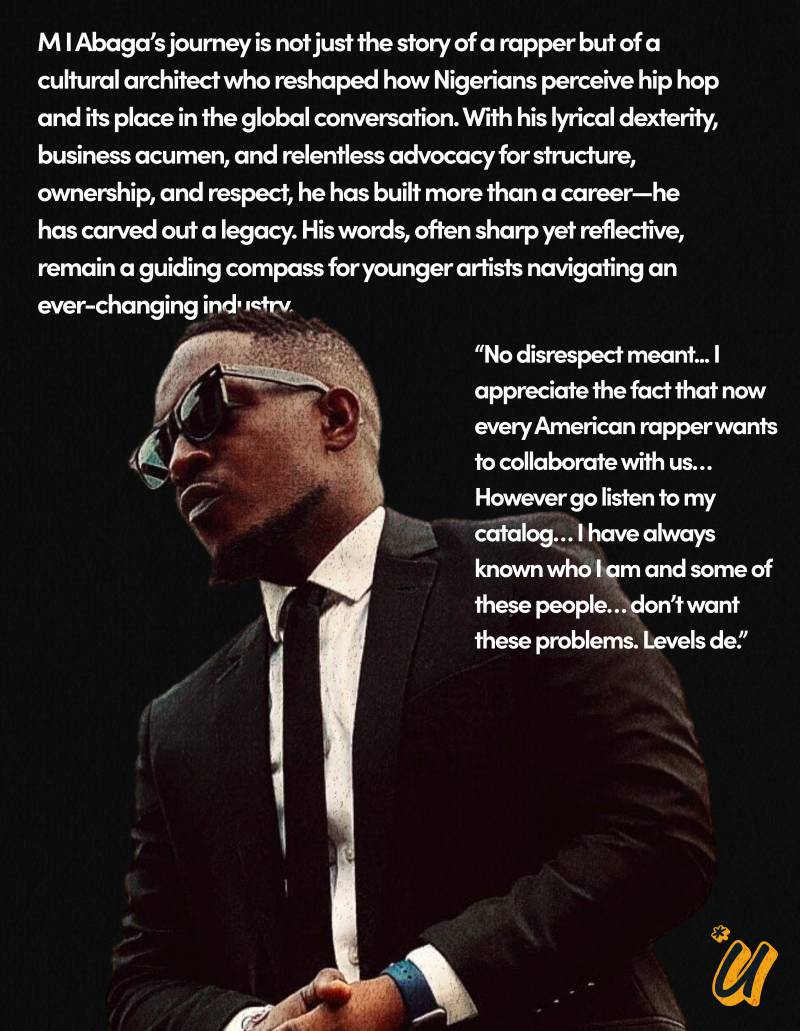
M.I Abaga Breaks Down “Mr. Fantastic”
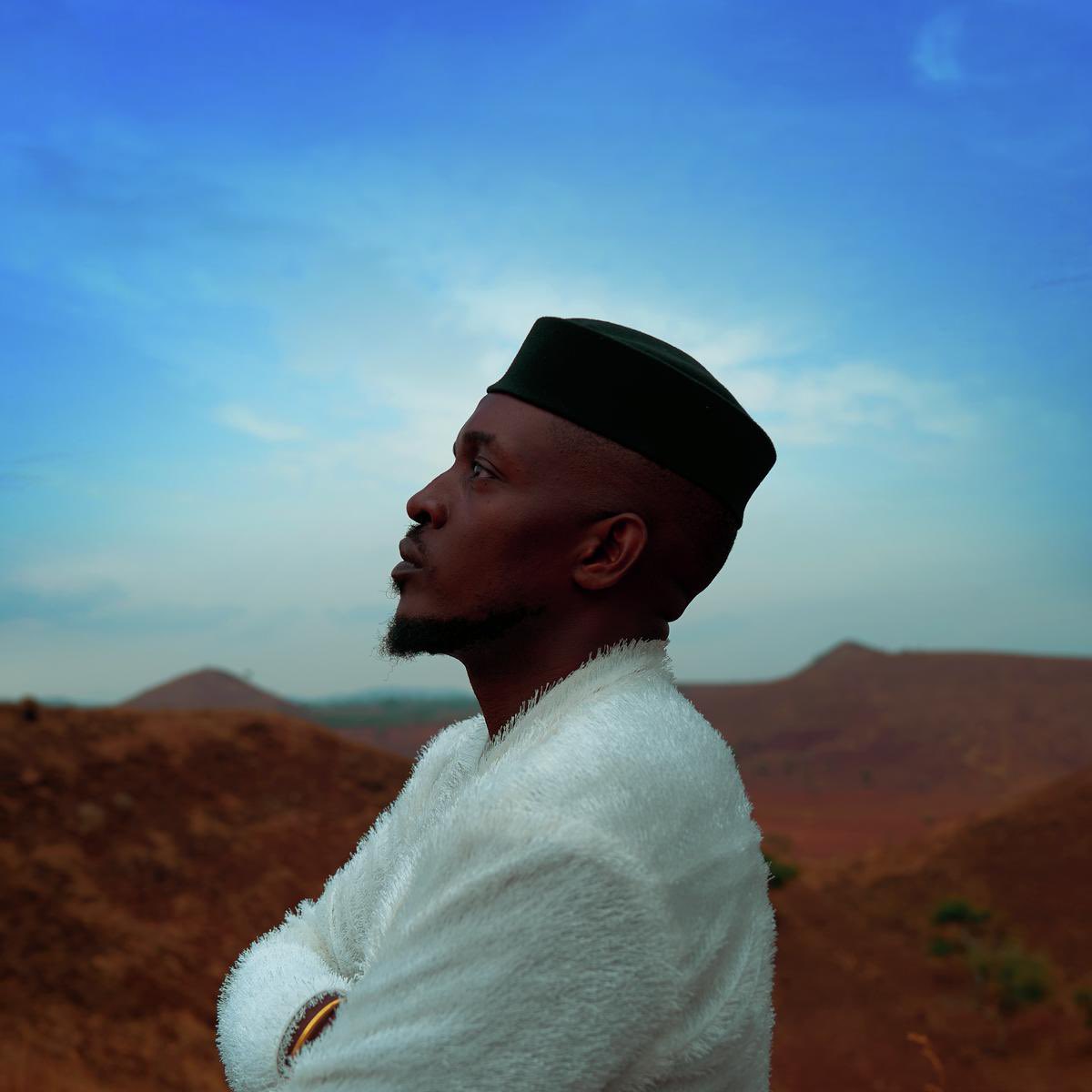
This is where the story deepens. Because M.I. is no longer simply creating records for radio play or streaming numbers. He has stepped into the raw and uncertain terrain of independence, choosing the direct-to-consumer path for his first fully independent release. It’s not just business—it’s philosophy. For M.I., control is no longer negotiable. Ownership is no longer optional. He has seen what happens when distribution claws into your spirit, when record deals strip you of autonomy, when fame becomes a leash. And so, he chose to unshackle himself, even if the cost was higher, even if it meant fighting wolves with his bare hands.
There is a certain poetry in how he ties wolves to full moons, to silences, to the hidden stories we never get to hear. It is as though he’s reminding us that beyond the bright lights of Lagos, beyond the champagne nights and Instagram reels, there are shadows—stories of betrayal, of resilience, of starting again when the world thought you were finished. The Wolf, then, is not just M.I.’s alter ego. It is every artist’s burden, every outsider’s badge of honor. Yet what makes this moment more profound is not just what M.I. says, but how he says it. In his conversation with Kemi Smallzz, there is no ego, no posturing. Instead, there is a quiet conviction, the kind that only comes from someone who has wrestled with his myths and survived. For an artist who once carried the weight of being “Chairman” of Nigerian rap, he now seems more intent on being free than being crowned.
And perhaps this is where the heart of “Mr. Fantastic” lies. Not in its bars alone, but in the courage to speak them. In the willingness to redefine success—not as acceptance by the industry, but as the ability to create and own without compromise. It’s a manifesto for misfits, for the creators who have been branded villains, for the ones who are still here, still standing, even when the world moved on. In the end, M.I. Abaga doesn’t just break down “Mr. Fantastic.” He breaks himself down. He unpacks the story of The Wolf, but also gives us the man who has lived to tell it. And in doing so, he leaves us with more than a song. He leaves us with a map, a reminder that sometimes the misunderstood are the ones who see the clearest.