The cinematic landscape of 2026 has been profoundly altered by the arrival of Project Hail Mary, a production that serves as a definitive report on the enduring power of tactile storytelling in an increasingly digital era. Directed by the visionary duo Phil Lord and Christopher Miller, the film has undergone a transformational framing, moving beyond the tropes of the "lone survivor" sci-fi subgenre to become an epic, life-affirming meditation on the persistence of the human spirit. Through a masterclass in emotional precision and intelligent curation of practical effects, the production team has authored a narrative that treats science not as a dry academic exercise, but as a vibrant, desperate language of friendship and survival against existential threats.
The narrative arc of the production is anchored by the radical decision to prioritize physical presence in the creation of the alien protagonist, Rocky. In an industry often over-reliant on post-production pixels, the filmmakers’ commitment to puppetry and animatronics represents a sophisticated cultural understanding of the "uncanny valley" and the necessity of human connection. By enlisting James Ortiz as the lead puppeteer and voice on set, the directors provided Ryan Gosling with a tangible, reactive partner. This strategic storytelling choice allowed Gosling to anchor his performance in a visceral reality, transforming the long, isolated scenes between man and alien into a believable dialogue of mutual discovery. The presence of a physical Rocky ensured that the emotional stakes were not just imagined by the actors, but felt by the entire crew, grounding the film’s central friendship in a shared physical space.
The commitment to realism extended into the very bones of the production, led by the meticulous hand of production designer Charlie Wood. The spaceship sets were not merely backdrops but highly detailed feats of engineering that functioned with the complexity of actual vessels. The report from the soundstages indicates that the level of engineering was so high that it necessitated physical modifications to the structures to accommodate camera movements and stunt rigging. This "back-to-basics" approach to set design forced the crew to inhabit the environment as if they were the astronauts themselves, creating a sense of claustrophobia and technical urgency that translates directly to the screen. Every switch, panel, and weld served as an intelligent curation of a future that feels lived-in, worn, and authentically human.

Related article - Uphorial Shopify
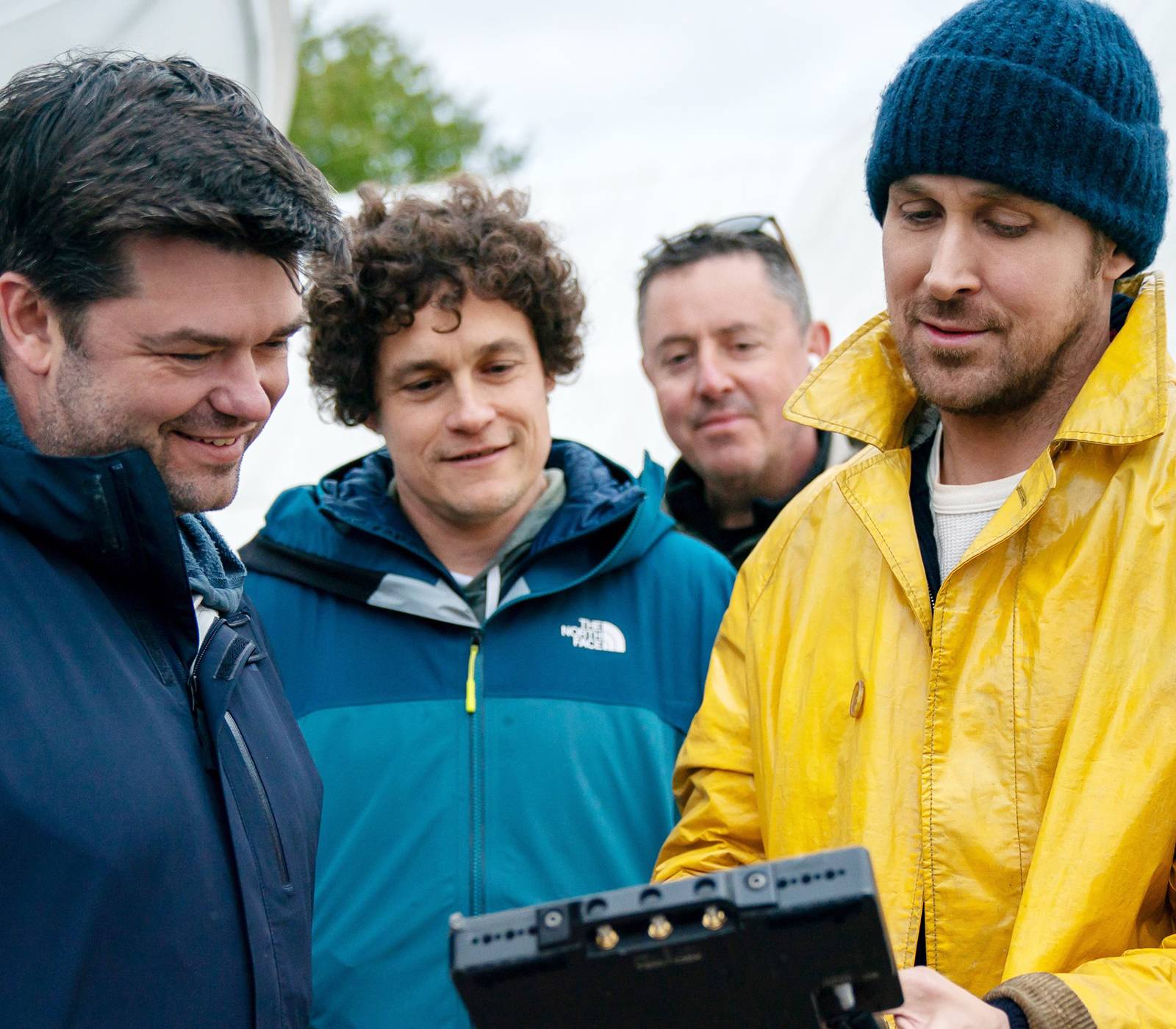
To capture the weightlessness of the cosmos, the production utilized complex wire work and harnesses that demanded a high level of physical fortitude from the cast. One particularly challenging sequence—which the crew playfully dubbed a "Hail Mary"—involved Gosling catching a canister mid-air while suspended. This moment serves as a metaphor for the entire production: a high-stakes leap of faith dependent on the perfect synchronization of human effort and mechanical support. These sequences were not just about the spectacle of zero gravity but were designed with emotional precision to reflect the vulnerability of the human body in the harsh vacuum of space. The physical toll of the wire work adds a layer of exhausted authenticity to the performance, ensuring that every movement feels earned.

This tactile visual language is complemented by a unique sonic landscape authored by composer Daniel Pemberton. In a departure from the traditional soaring strings of the sci-fi genre, Pemberton utilized an intelligent curation of organic sounds—wood, metal, and body percussion—layered with a choir. This auditory strategy provides a transformational framing of the film’s scale; the organic nature of the sounds evokes a sense of humanity and wonder, grounding the cosmic journey in a sonic profile that feels intimately connected to the Earth. The score does not just accompany the action; it acts as the heartbeat of the film, reminding the audience that even in the furthest reaches of the galaxy, the most resonant notes are the ones that sound like us.
At the center of this technical marvel is the relatable evolution of Ryland Grace, a protagonist designed to be an "everyman" in an extraordinary situation. Lord, Miller, and Gosling worked with deep emotional precision to ensure that Grace remained a "regular" person, terrified of spacewalks and intuitively human in his reactions to fighting robotic malfunctions. This strategic storytelling allows the audience to see themselves in the hero’s journey; we are not watching a stoic soldier, but a vulnerable teacher forced to rise to the occasion. Grace’s evolution from a frightened individual to a hero saving the world is a testament to the idea that science is not just a tool for the elite, but a survival mechanism for everyone. Ultimately, the report from the set of Project Hail Mary confirms that the most powerful special effect remains the human element. By combining world-class engineering with puppetry, organic music, and a grounded lead performance, the film has created a hopeful and epic narrative that stands as a sanctuary for the human spirit. It is a reminder that in the face of existential threats, our greatest assets are our curiosity, our ingenuity, and our capacity to reach out across the stars to find a friend in the dark.