The brazen, daylight theft of the French crown jewels from the world’s largest and most famous museum, the Louvre, remains a subject of intense scrutiny, with Discovery and Science Channel dedicating a full episode to the "inside minute-by-minute story" of how the "job of a century" was pulled off. The stolen goods, valued at over $100 million in gold and diamonds, represent a "real slap in the face" to authorities. The perpetrators, later described as "amateurish" and "small thieves", exploited multiple critical vulnerabilities to execute the crime in just eight minutes.
The Louvre, a former royal palace covering over 750,000 square feet, houses artworks worth billions across 403 galleries monitored by 1,300 security cameras. The target was the Apollo Gallery, a room originally built by Louis XIV and described as the "most beautiful jewelry box in the world". This "overlooked exhibit" held France's remaining crown jewels, which are incredibly important artifacts tied to the nation's identity, culture, and monarchy.
The heist began around 9:32 a.m. on a quiet, overcast Sunday. Four men, disguised as construction workers, set up cones and pulled up to the gallery window in a truck. Since construction is common, the men could "blend into the construction that was taking place at the Louv at the time". Using the truck's mechanical ladder, two men extended it to the second-story balcony completely "unseen by anyone inside". A critical security failure was that the only CCTV camera available was pointed in another direction. This location itself, overlooking a busy road without a fence or distance from the street, was a known "vulnerability".
At 9:33 a.m., tourists heard "loud, distinct bangs" as a metal circular blade began cutting through the reinforced glass of the second-floor window. The moment the blade touched the glass, an alarm was triggered, prompting the attendant to yell for everyone to run. Inside the gallery, panic broke out, with tourists fearing an "active shooter situation" and running for their lives. Unarmed Louvre security agents, who are not police officers and are untrained to confront "gangsters", were powerless to intervene.

Related article - Uphorial Sweatshirt
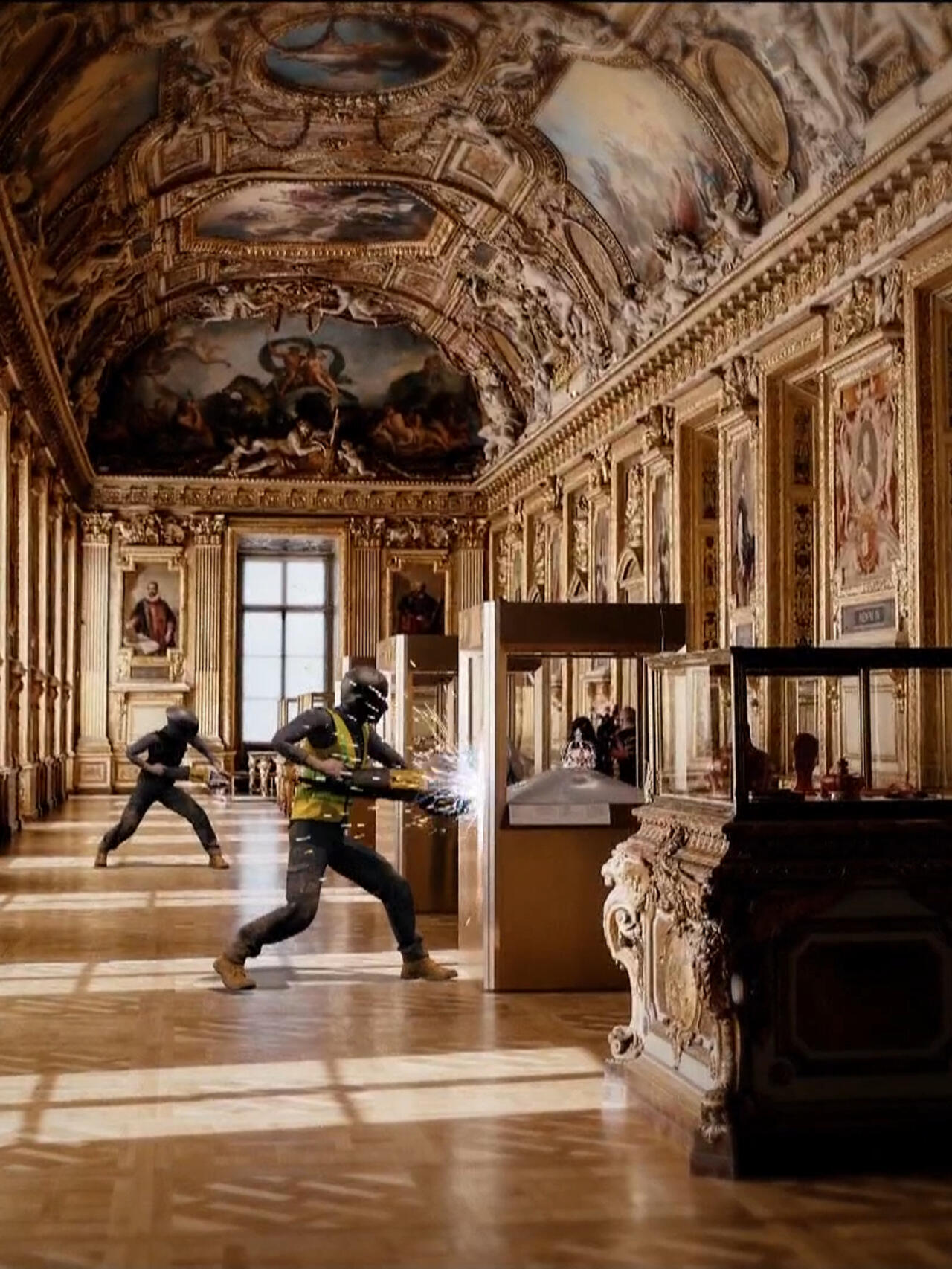
The thieves, captured on dramatic phone footage by fleeing tourists, turned their high-powered disc cutters on the display cases holding two diamond necklaces, a pearl tiara, and a crown encrusted with over a thousand diamonds. Discovery and Science Channel analysis highlights that the thieves "definitely done their homework", targeting specific showcases and knowing the glass—designed to be bulletproof—had "one deliberate weakness". An internal manual indicated that the only emergency opening method required a disc cutter, suggesting "some type of insider influence". The investigation later focused on a potential crew member rumored to have had "insider knowledge from working at a nearby museum".
After more than two frantic minutes of cutting, the thieves realized they were "in there for too long" and rushed into a "hurry up mode". With the police station only a half mile away, they were racing against the clock. After brute force paid off, they were "just chucking it in there," risking damage because "diamonds can cut other diamonds".
The getaway, described as the "riskiest part of the whole operation" and where they "made their mistake", occurred just three minutes after entering the cases. The thieves jumped down onto the street where two accomplices were waiting on high-powered scooters, tearing away through traffic. In just eight minutes, they stole eight pieces of jewelry, "basically emptied out the two showcases that they could get into".
In their hasty retreat, they left behind evidence, including a truck, chainsaws, helmets, and a carpet soaked in gasoline, having planned but failed to "burn the evidence in time". Crucially, investigators found the Crown of Empress Eugenie shining just under the balcony. Furthermore, French investigators found 150 samples of DNA connected with the crime.
Within six days, an "amateurish mistake"—a suspect attempting to board a plane at an airport—led investigators to two suspects. Four days later, police arrested four more suspects, two of whom were charged with criminal conspiracy and theft. Discovery and Science Channel noted that the elite BRB investigators, described as "blood hounds", knew that once they had the DNA, it was "just a matter of time".
Despite arrests of three of the four alleged main perpetrators, the $102 million question remains: "Where’s the jewel". The primary fear is that the criminals, if skilled, will break the stones up—such as the nearly 3,000 diamonds in the salon blue sapphires—and sell them in places like Tel Aviv or Antwerp to "monetize the theft as quickly as possible". The stolen artifacts, defined by their cultural and symbolic significance, represent the last remaining pieces of the French monarchy's memory. The Discovery and Science Channel documentary concludes that the heist should be a "wakeup call to museums everywhere" regarding their security.