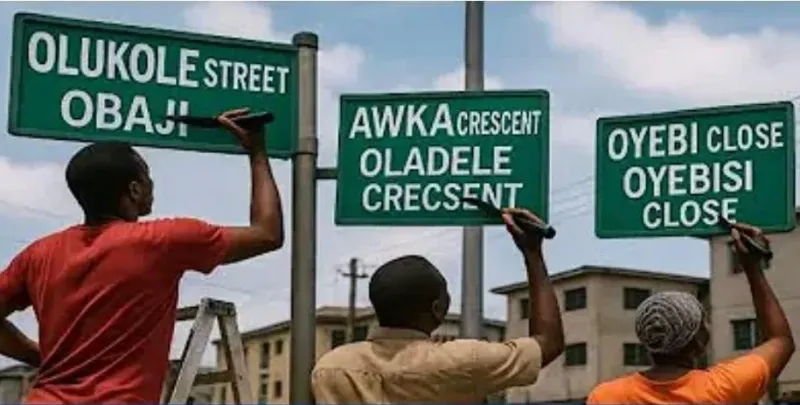
In Lagos, a city known for its dynamic heartbeat, Google Maps recently reflected a seismic shift: 24 streets in the Ajeromi-Ifelodun Local Government Area received new names. This update, seemingly innocuous to the untrained eye, ignited fierce controversy, one that goes far beyond navigation apps and GPS pins. It’s a story about community, cultural rebirth, and the fragile dance between heritage and progress.
When a leaked memo from 2024 surfaced on social media in July 2025, revealing the sweeping changes, many Lagos residents were blindsided. Streets that once honoured Igbo heritage, Imo Eze, Uzoh, Queen Street- were relaunched as Layiwola Oluwa, Kalejaiye Adeboye, Kola Balogun. Main thoroughfares like George Street now pay homage to Daddy Showkey, the famed Ajegunle musician. Google Maps’ swift compliance only amplified the surprise, leaving navigation apps broadcasting a controversial statement before residents could digest it.
Related article - Uphorial Podcast

But beneath the controversy lies something deeper than routing errors. Lagos is a mosaic of identities; ethnic, linguistic, historical, and street names are its cultural brush strokes. Renaming them isn’t just administration; it’s re-authoring the narrative. For many Igbo residents, this is more than inconvenience; it’s erasure. One elderly resident on former Uzoh Street, living there for over four decades, lamented, “We were not consulted… this feels like an erasure of our presence”. Her words echo a wider sentiment among people who feel displaced in the very communities they’ve helped build.
Yet there’s another side. Advocates argue these renames are overdue moves to restore indigenous identity and decolonize public spaces. The Lagos State House of Assembly called for this in 2020, urging removal of colonial-era names and slave trade vestiges. Olukoya Ogungbeje, a Lagos lawyer, praised the initiative as a patriotic reclamation of history. Meanwhile, Ajeromi-Ifelodun officials argue the renaming is administrative housekeeping, ensuring street names reflect individuals whose legacies are validated through documentation. Feedback on social media reveals a tapestry of opinions. Many laugh off the uproar: “Google effecting change faster than the Nigerian government,” joked one user. Others see the rebranding as politically or ethnically motivated, planting seeds of tribal bias into state soils. More measured voices insist that while symbolic change has its value, priorities like road maintenance and drainage shouldn’t be overshadowed.
What captivates me most in this unfolding saga is the tug-of-war between preservation and progress. Every street tells a story, of people, of migrations, of cultural intersections. Altering a street name doesn't just reroute wayfinding, it recalibrates memory. When Daddy Showkey is immortalized as a street name, it says Jin-b-base: “This is who we celebrate.” But when Imo Eze or Uzoh is scrubbed, it whispers: “This is what we let fade.”
This is not merely about updating digital maps. It’s about who we choose to remember, and why. It’s about whose faces are inscribed into our collective streetside heritage. Google may have been the messenger, but the deeper conversation lies with residents, lawmakers, and local governments. As Lagos continues its renaissance, questions emerge: Will new street names foster inclusivity, or deepen divisions? How much community consultation is enough before renaming becomes erasure? Most importantly, can the city thread the needle, honouring the past while embracing its evolving identity?
Behind the map pins lie human history, Stories of neighbourhoods evolving from cultural melting pots into commercial powerhouses. Ghost names of colonial masters may need retirement, but space must remain for migrant identities woven into Lagos’ urban fabric. If new names honour local heroes, they must also honour shared histories and present realities. Google Maps may default to the new names tomorrow, but the true resolution lies in community halls and negotiation tables, where residents can voice their legacy, and where leaders balance cultural pride with inclusive remembrance. So, whether Layiwola Oluwa or Uzoh appears on your next route, remember: behind every street corner is a story, sometimes fading, emerging, but always worth hearing.