LONDON - The cathedral of tennis that is Centre Court has witnessed many a lopsided affair, but seldom one as aesthetically fascinating as the fourth-round encounter between world No. 1 Jannik Sinner and the Japanese qualifier Shintaro Mochizuki. In a display of tactical sophistication that spanned two hours and 25 minutes on Sunday, the defending champion cemented his status as the man to beat at the 2026 Wimbledon Championships, securing a 6-3, 7-6(0), 6-3 victory. While the scoreline reflects a decisive straight-sets win, the narrative of the match was far more nuanced, serving as a testament to both Sinner’s clinical evolution and the sheer, unbridled spirit of an underdog who refused to be overawed by the occasion.
Sinner, arriving at this stage of the tournament with the measured confidence of a four-time Grand Slam winner, sought to impose his will early. The 24-year-old Italian, having opted for a training-heavy lead-up rather than the traditional grass-court warm-ups, initially appeared to be finding his sea legs earlier in the week. However, against Mochizuki, the uncertainty of the opening rounds had vanished. Sinner’s service games were largely impenetrable, and his ability to dictate baseline exchanges with a blend of brute force and refined accuracy stifled any potential rhythm his challenger sought to build. Yet, the true intrigue lay in the man across the net.
Mochizuki, ranked 151st in the world and having battled through qualifying just to stand on these hallowed lawns, brought a brand of tennis that felt like an artifact from a different era. Lacking the explosive, modern-day power that defines the top of the ATP rankings, the 23-year-old instead relied on a symphony of variety: slicing, dicing, and constantly encroaching on the net. By the time the second set rolled around, the crowd on Centre Court had fully embraced the Japanese underdog. Each time Mochizuki successfully closed down the net or launched his compact, two-handed backhand with pinpoint accuracy, the atmosphere crackled. He was the quintessential disruptor, a player whose low center of gravity and instinctive positioning turned the match into a high-stakes chess game played on grass.

Related article - Uphorial Shopify

The tension reached its zenith in the second set, which became a marathon of survival for both men. As the Centre Court roof was drawn shut, shifting the acoustic and environmental variables, the momentum momentarily wobbled. Sinner, visibly frustrated by his inability to convert break points against a man who seemed to retrieve everything, faced a flurry of creative volleys that defied conventional tennis logic. It was a rare, vulnerable moment for the world No. 1, yet his response in the ensuing tie-break provided the definitive answer to any questions regarding his mettle.In a display of championship-grade focus, Sinner dismantled the tie-break with ruthless efficiency. Scoring a perfect 7-0, he erased the preceding chaos with a sequence of returns that left little room for argument. It was a masterclass in psychological recalibration; rather than succumbing to the annoyance of a scrappy opponent, he elevated his own floor to match the demands of the moment. From that point forward, the outcome felt inevitable. Sinner broke early in the third set, his movement seamless and his groundstrokes finding their mark with a relentless, metronomic cadence that eventually exhausted the ingenuity of his challenger.
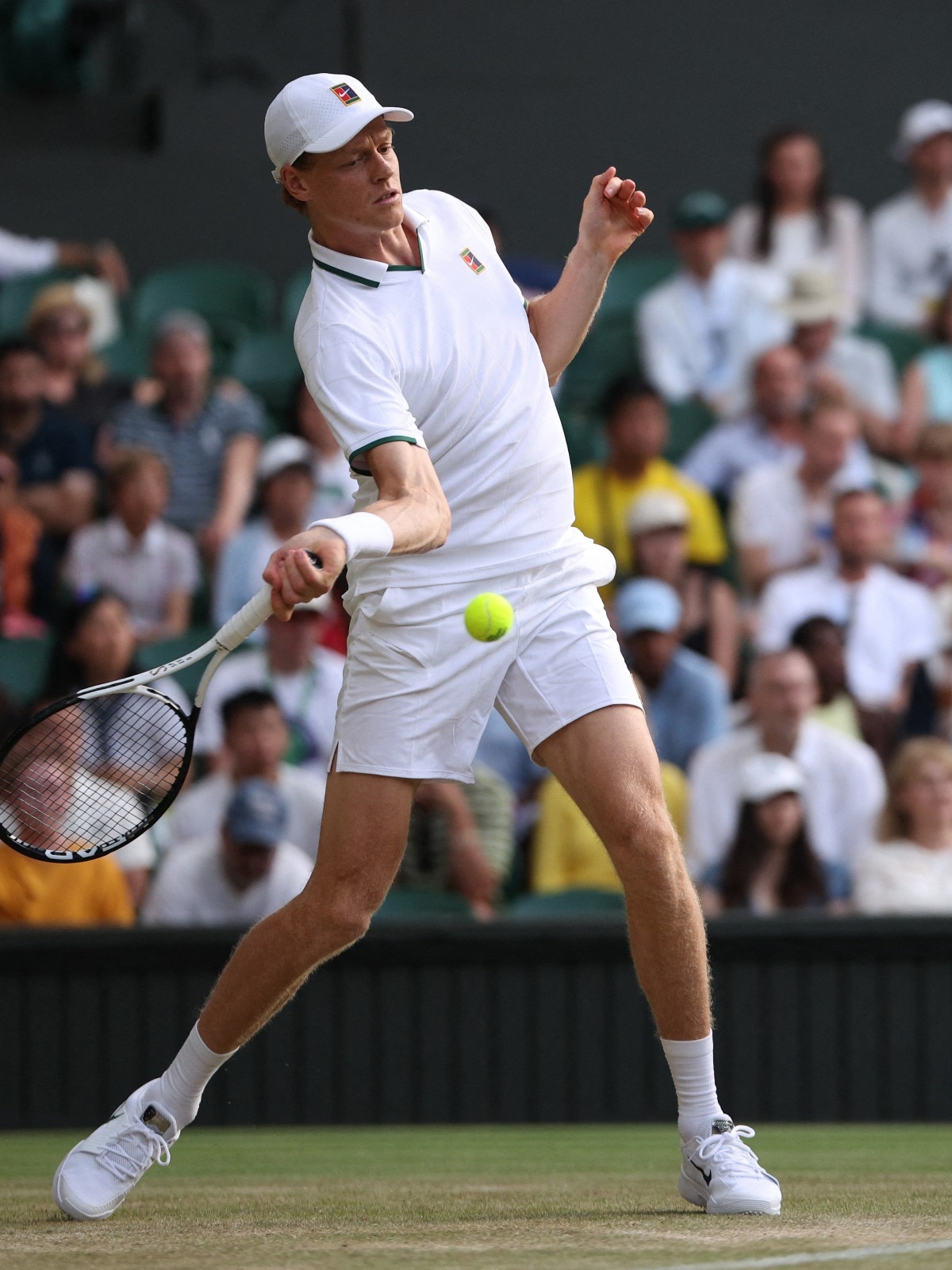
For Sinner, the win was a milestone of significant proportion—his fifth consecutive quarter-final appearance at Wimbledon. To achieve such consistency at the All England Club is to place oneself in the company of the sport’s most enduring icons, a list that includes the likes of Pete Sampras and Novak Djokovic. It is an achievement that speaks not just to his talent, but to his capacity for growth. He arrived at this tournament as the hunted, yet he leaves each match looking more like the hunter. As he now turns his gaze toward a quarter-final clash with the veteran German Jan-Lennard Struff, Sinner does so with the momentum of eleven straight match wins at the Championships, carrying the weight of his title defense with the composure of a seasoned professional.
As for Mochizuki, he departed Centre Court not in defeat, but to a standing ovation that acknowledged the courage of his performance. His run from the qualifying rounds to the second week of a Grand Slam will surely remain one of the most endearing subplots of the 2026 season. He proved that even in an era of technological and physical escalation, there remains a place for resourcefulness, craft, and the sheer audacity of a player willing to throw everything they have at the world’s best. It was a day where the heavy favorite showcased his dominance, but in doing so, he also highlighted the very reason the sport continues to capture the global imagination: the fragile, fleeting, and entirely human struggle for greatness on grass.