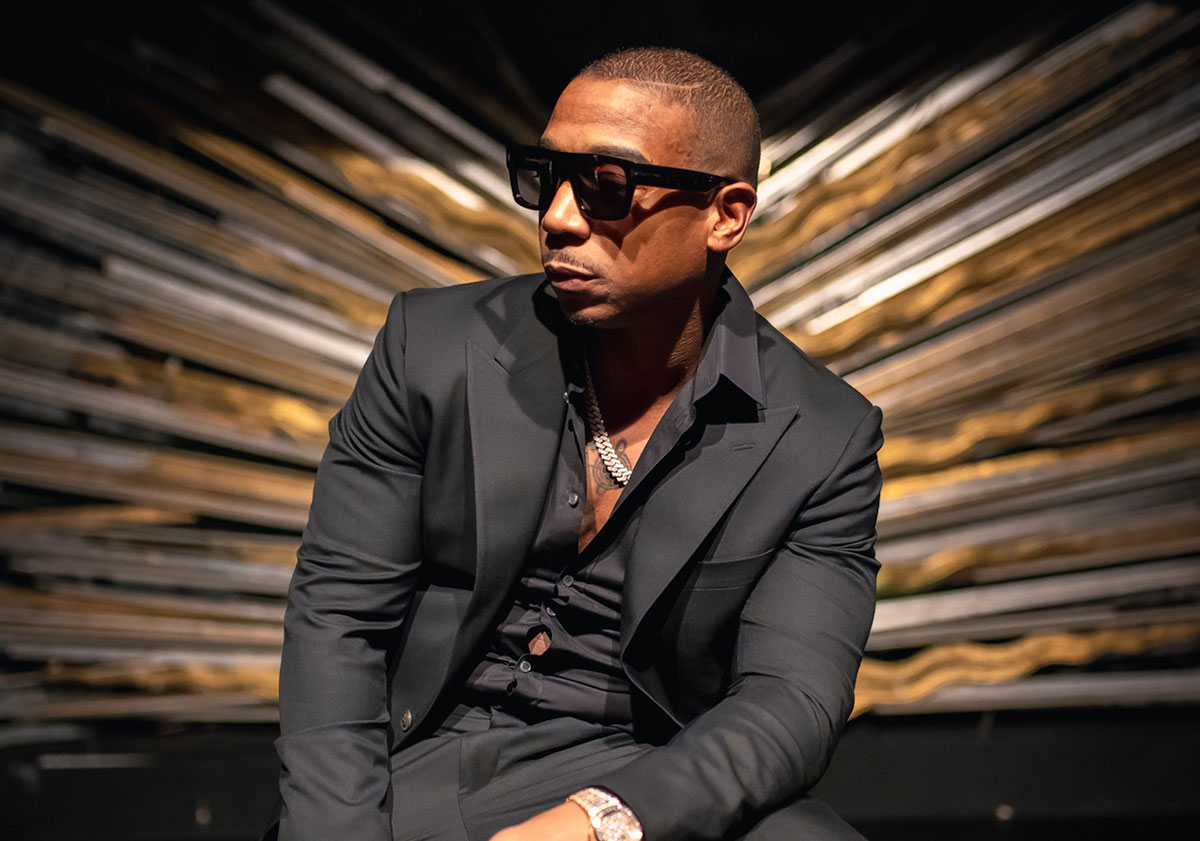
Legendary hip-hop artist Ja Rule recently pulled up to the set of 7PM in Brooklyn with Carmelo Anthony to discuss his "historic run," the "sound that shifted the culture," and the intense battles that have defined his career. Co-host Kazim Famuyide, or Cass, welcomed the "hip-hop legend in the building" whose multi-platinum albums delivered "global anthems" like "Always on Time," "Living It Up," and "Mesmerized," music that "still hits to this day". The episode, a Wave original presented by FanDuel, aimed to tap into Ja Rule's legacy and influence, particularly how he leveled up through "errors and narratives" during a time when the NBA and rap were "building a movement side by side".
The conversation quickly addressed the artist's iconic stage name. Ja Rule explained that the "JA" is his initials for Jeff Atkins. The "Rule" concept stuck after his friend Kamal, whom he shouted out, would refer to him as "Mesmerized," music that "still hits to this day". The episode, a Wave original presented by FanDuel, aimed to tap into Ja Rule's legacy and influence, particularly how he leveled up through "errors and narratives" during a time when the NBA and rap were "building a movement side by side".
The conversation quickly addressed the artist's iconic stage name. Ja Rule explained that the "JA" is his initials for Jeff Atkins. The "Rule" concept stuck after his friend Kamal, whom he shouted out, would refer to him as "the J Rule" when he executed a "fly shit" move while playing basketball. Ja Rule later admitted he "just about to make some shit up" for an acronym, such as "recognizing unconditional love's existence". His sound was unique, blending the "aggression of like a DMX" with "melodies and stuff". He believes being from Queens, which he called a "perfect blend" of the "grimy niggas" from Brooklyn and the "fly fashionable niggas" of Harlem, positioned him perfectly to carve out his lane between two "juggernauts," DMX and Jay-Z.
Ja Rule asserted that he pioneered the modern hip-hop/R&B duet format. Before his records, the standard collaboration involved a rapper contributing "16 bars on the singer's record" or an R&B singer providing the hook on a rapper's track. He revolutionized this with records like "I'm Real," where the artists were "intertwining on the verses," sharing hook duties, and participating equally. He achieved this because he wrote the entirety of the records, allowing him to "write myself into these records" as much as possible. This signature melodic style, which he believes was influenced by hip-hop pioneer Curtis Blow, quickly became his signature.

Related article - Uphorial Shopify
This stylistic shift came with substantial risk. Ja Rule recounted that his second album, which featured a new sound reflecting his changed life in Los Angeles—living in a beautiful mansion and seeing life differently—was initially rejected by Def Jam. They told him to "Go make a new album," but he insisted, "this is the album that you know I made and man we know we going we going to run with it". That album went on to sell three million records, affirming his belief that he had to "trust my instincts" and "my vision". His decision to change his look, growing his hair to push back against claims he was trying to emulate Tupac or DMX, was also a "conscious decision" to solidify his unique identity.

The "singing rapper" label led to intense criticism, which his rival, 50 Cent, successfully used to tell the world that the style was "soft" and "whack". However, Ja Rule noted that right after the denouncement, 50 Cent began singing on his own hooks and doing records with pop artists. Ja Rule argued that his true influence was making it "cool for niggas to do it" and still be considered a "street nigga," citing an encounter in prison where a tatted-up inmate was singing a melodic song he had influenced, proving, "I made a big difference".
On the topic of feuds, Ja Rule holds a "very different take" than the public, arguing that hip-hop beefs are destructive. He believes his rivalry with 50 Cent "fucked up hip New York hip hop" by separating people who could have been making money together. Ja Rule stressed that "Nothing good is coming out of any of these things," listing the feuds between Biggie and Tupac, Jay-Z and Nas, and the recent battle between Kendrick Lamar and Drake. He lamented missed opportunities, wondering what could have been if "two queens juggernauts came together and made some money together" or if the proposed "Murder project" with himself, Jay-Z, and DMX had materialized.
Carmelo Anthony and Cass discussed how the beef created a divide where fans felt "you had to be a 50 guy or a J guy". Ja Rule countered, stating, "you don't get to love both you got to respect both". Ja Rule feels he was the "better rapper" and made the "better records" that have "aged better".
Ja Rule concluded with a call for unity, asserting that Black people need to "come together as one" and drop beefs, recognizing each other not as competition but as fellow men. He drew a parallel to the NBA, calling it a "structured environment" where players have a union, something he believes hip-hop desperately needs to fight for artists' rights and stabilize the industry. He maintains that the only thing driving him now is "creativity" and building his Icon Media network and Icon whiskey. He also announced his upcoming "Pain is Love tour 25-year anniversary tour".
Ultimately, Ja Rule emphasized the power of betting on oneself: "there's no greater feeling than creating something or doing something that you thought of in your small little world... and the world received it as you did".