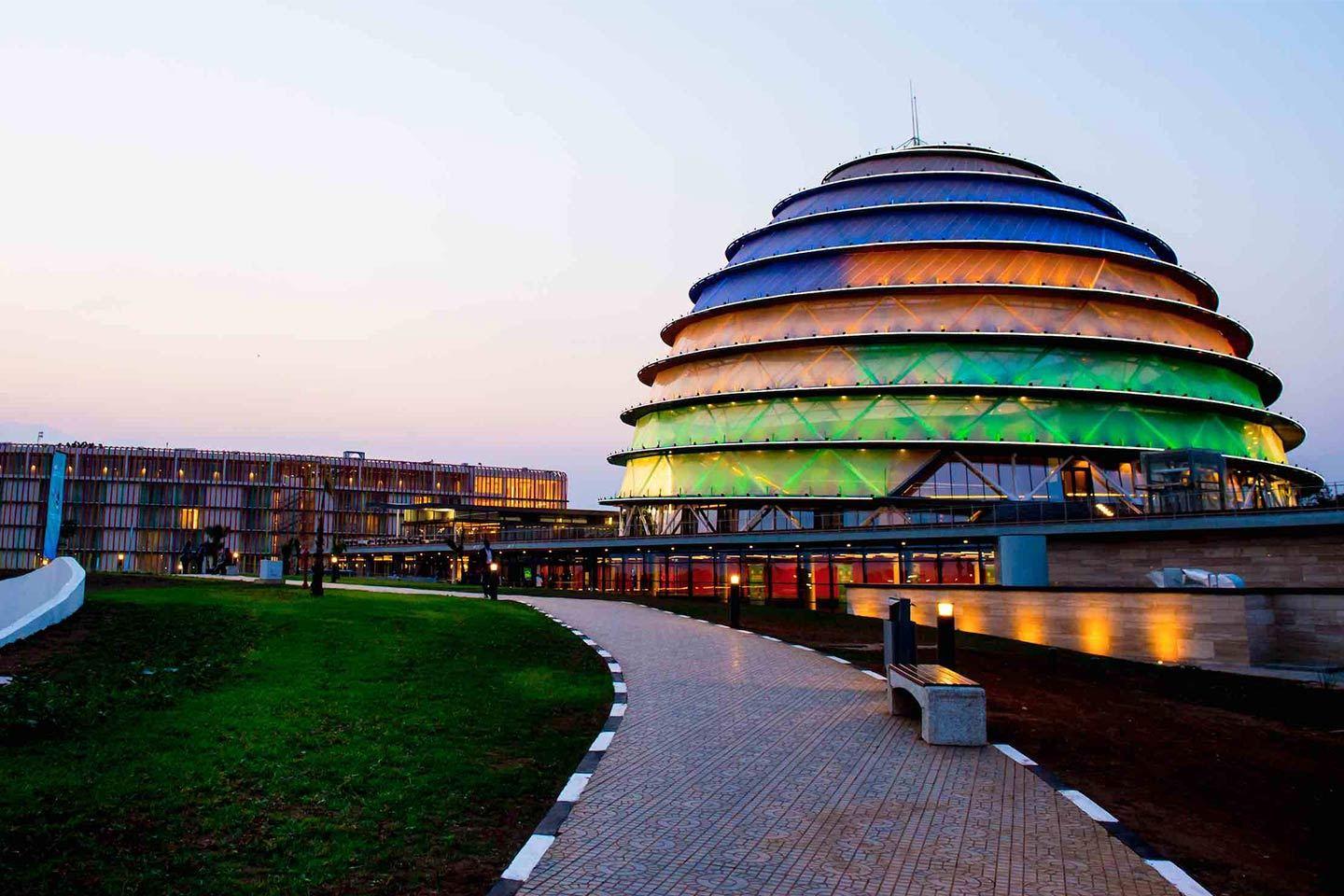
KIGALI - Returning to Rwanda after an absence of seven years is an exercise in recalibrating one’s understanding of what is possible within the African context. When filmmaker Tayo Aina first encountered Kigali, his memories were etched with the remnants of dusty roads and the nascent stirrings of a recovery still in its relative infancy. Stepping back onto Rwandan soil today, however, one is confronted with a different reality entirely. It is a nation that has not merely recovered from the devastating shadows of the 1994 genocide, but has fundamentally reimagined its own identity, emerging as one of the safest, cleanest, and most rapidly accelerating economies on the continent. This is not the Rwanda of the past; it is a meticulously crafted vision of the future.
The transformation begins in the capital itself. Kigali is a city of startling order, where the chaos often associated with urban expansion has been replaced by a quiet, deliberate efficiency. Tayo’s exploration of the city’s car-free zones and the omnipresent sense of security—underpinned by extensive camera surveillance and strict, uniformly enforced traffic regulations—reveals a society that prioritizes collective discipline. At the heart of this civic pride is Umuganda, the monthly mandatory community cleanup day that binds the citizenry together in a shared responsibility for the environment. It is a striking cultural understanding: the cleanliness of the streets is not the job of a distant government, but the duty of the neighbor, a physical manifestation of a national pact that places the health of the public sphere above the convenience of the individual.
Beyond the urban polish, Rwanda remains deeply anchored in its history. A visit to the King’s Palace Museum offers a window into the pre-colonial splendor of the Rwandan monarchy, where the preservation of the Inyambo, or sacred longhorn cattle, serves as a poignant reminder of traditional identity. These animals, with their majestic, sweeping horns, are more than livestock; they are cultural icons, representing the enduring legacy of a people who have bridged the gap between ancestral tradition and modern governance. This ability to honor the past while forcefully driving toward the future is the central tension—and the greatest triumph—of the Rwandan project.
Related article - Uphorial Shopify

The economic engine of this transformation is equally ambitious. Rwanda has successfully positioned itself as a premier destination for high-value tourism and international commerce. The success of gorilla trekking in Volcanoes National Park is perhaps the most visible example of this strategic storytelling. By placing a premium price of $1,500 on trekking permits, the country has successfully shifted the narrative of conservation from a charitable endeavor to a lucrative, self-sustaining industry. These funds are not just disappearing into a state coffer; they are directly reinvested into local communities, creating a feedback loop where the protection of the environment becomes the primary mechanism for rural poverty alleviation. It is an intelligent curation of national resources, ensuring that the country’s natural beauty serves as the bedrock of its long-term development.
This same strategic ambition is evident in Rwanda’s aggressive pursuit of global relevance. By investing heavily in infrastructure capable of hosting international events like the Basketball Africa League, Kigali has signaled its intent to serve as a global hub for business and entertainment. This is matched by a pragmatic approach to the "ease of doing business," which has made Rwanda one of the most attractive destinations for foreign investment in Africa. The linguistic shift from French to English in 2008 was perhaps the most overt sign of this global-facing strategy, a bold decision that reflected a leadership willing to make seismic changes to ensure that the nation remained competitive in a rapidly evolving, English-dominated global market.

Yet, this rapid ascent is not without its complexities. The nation’s progress is a deliberate, top-down vision—a high-stakes project driven by a leadership that demands excellence, discipline, and absolute alignment with the national agenda. Tayo Aina’s documentation of this process acknowledges that no country is a utopia; every transformation of this magnitude requires sacrifice and carries the weight of a singular, uncompromising ambition. However, the efficacy of the model cannot be denied. Rwanda has successfully moved the goalposts for what is expected of an African nation, proving that with enough political will, a commitment to civic duty, and a strategic eye toward the global economy, a country can rewrite its own story in the span of a single generation.
The final impression of Rwanda is one of profound, focused energy. Whether one is watching the quiet efficiency of the traffic in Kigali, observing the careful conservation efforts in the forests of the northwest, or experiencing the rising real estate market in the capital’s commercial districts, the message is the same: this is a country that has decided where it wants to be, and it is moving toward that horizon with remarkable, unrelenting speed. Rwanda stands today not just as a model for African development, but as a challenge to the world, demonstrating that the future of the continent is not something to be waited for, but something to be built—one community cleanup, one high-profile partnership, and one sacred horn at a time. It is a transformational framing that invites the world to look at Rwanda not for what it lost, but for what it has, with staggering resolve, created.