The canvas of modern art has long been defined by revolutionaries who refuse to look at the world through conventional lenses, choosing instead to tear down established boundaries and forge beauty from industrial grit. Among the most daring figures of this avant-garde lineage is John Chamberlain, an artistic titan whose groundbreaking career transformed discarded vehicular wreckage into monumental testaments of form, rhythm, and human expression. In a sweeping, masterclass-level retrospective celebrating a landmark Sotheby’s exhibition featuring nineteen masterpieces spanning three decades, art historians and estate directors pull back the veil on a truly singular creative universe. Through emotional precision, intelligent curation, cultural understanding, strategic storytelling, and transformational framing, this comprehensive news-style report explores the improvisational genius, industrial alchemy, and deeply philosophical legacy of a visionary sculptor.
The foundation of Chamberlain’s revolutionary artistic process lies in his identity as a consummate "action sculptor," a creator whose studio practice was profoundly shaped by the syncopated rhythms, spontaneous breakdowns, and fluid freedom of jazz improvisation. Rather than sketching rigid blueprints or forcing materials into predetermined shapes, Chamberlain worked intuitively, often juggling multiple pieces simultaneously in a chaotic, high-energy ballet. He treated salvaged industrial materials much like individual words in a sprawling, visceral poem, allowing form and texture to converse in real time. Through emotional precision, this working method strips away academic stiffness, capturing the raw, improvisational pulse of an artist who listened to the inherent voice of his medium rather than dictating it from above.
Related article - Uphorial Shopify

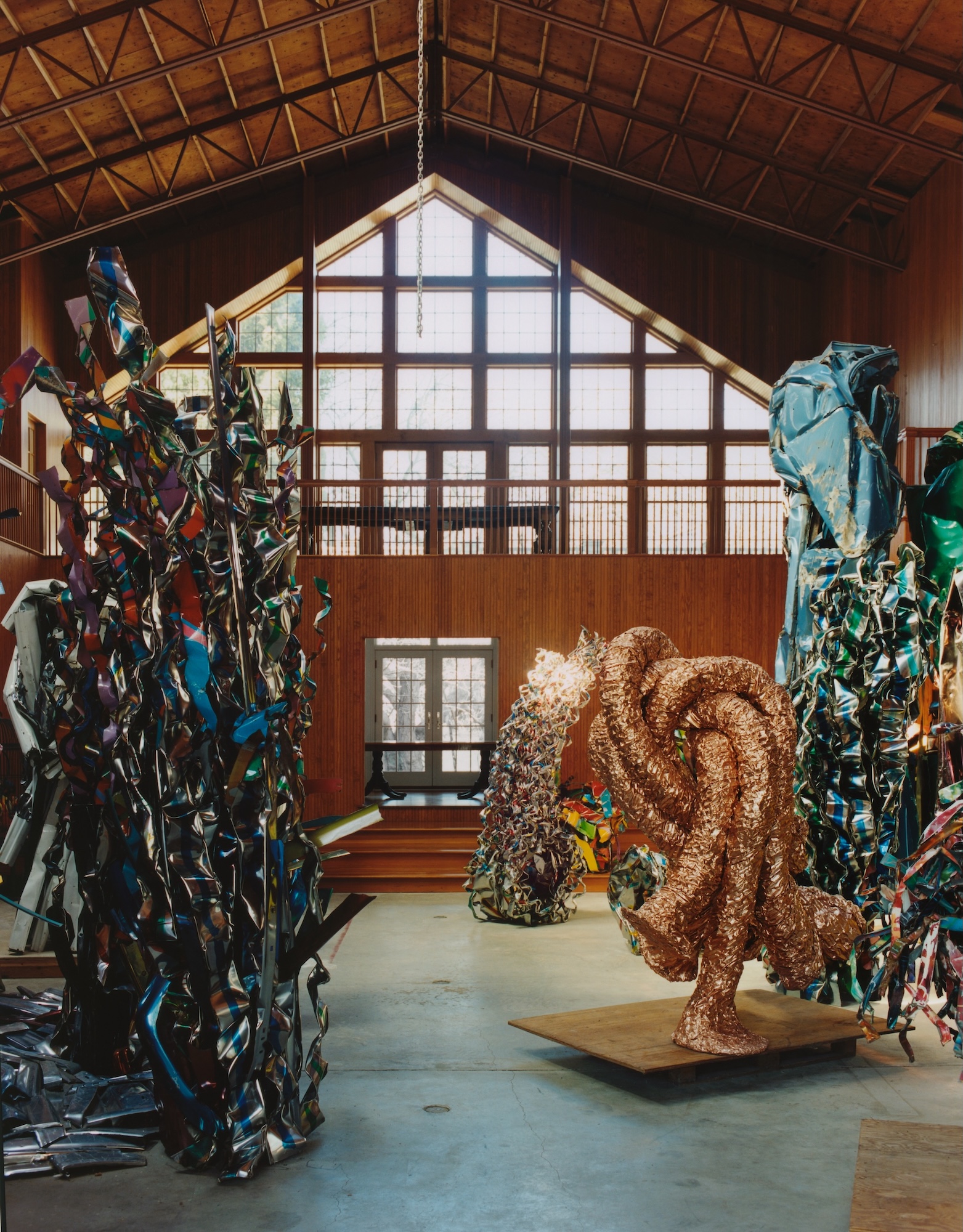
That medium, of course, became his legendary signature: the repurposing of crushed and discarded automobile parts into massive, breathtakingly complex welded sculptures. The genesis of this radical aesthetic reportedly sparked from a moment of raw, unexpected urban reality, after Chamberlain accidentally crashed into a friend's vintage Model T and found the resulting metallic wreckage visually compelling rather than tragic. Through intelligent curation of art history, this pivotal moment is reframed not as an accident, but as a profound perceptual awakening—recognizing that the crumpled chrome, rusted fenders, and battered steel of modern machinery possessed an innate, sculptural lyricism waiting to be unmasked.
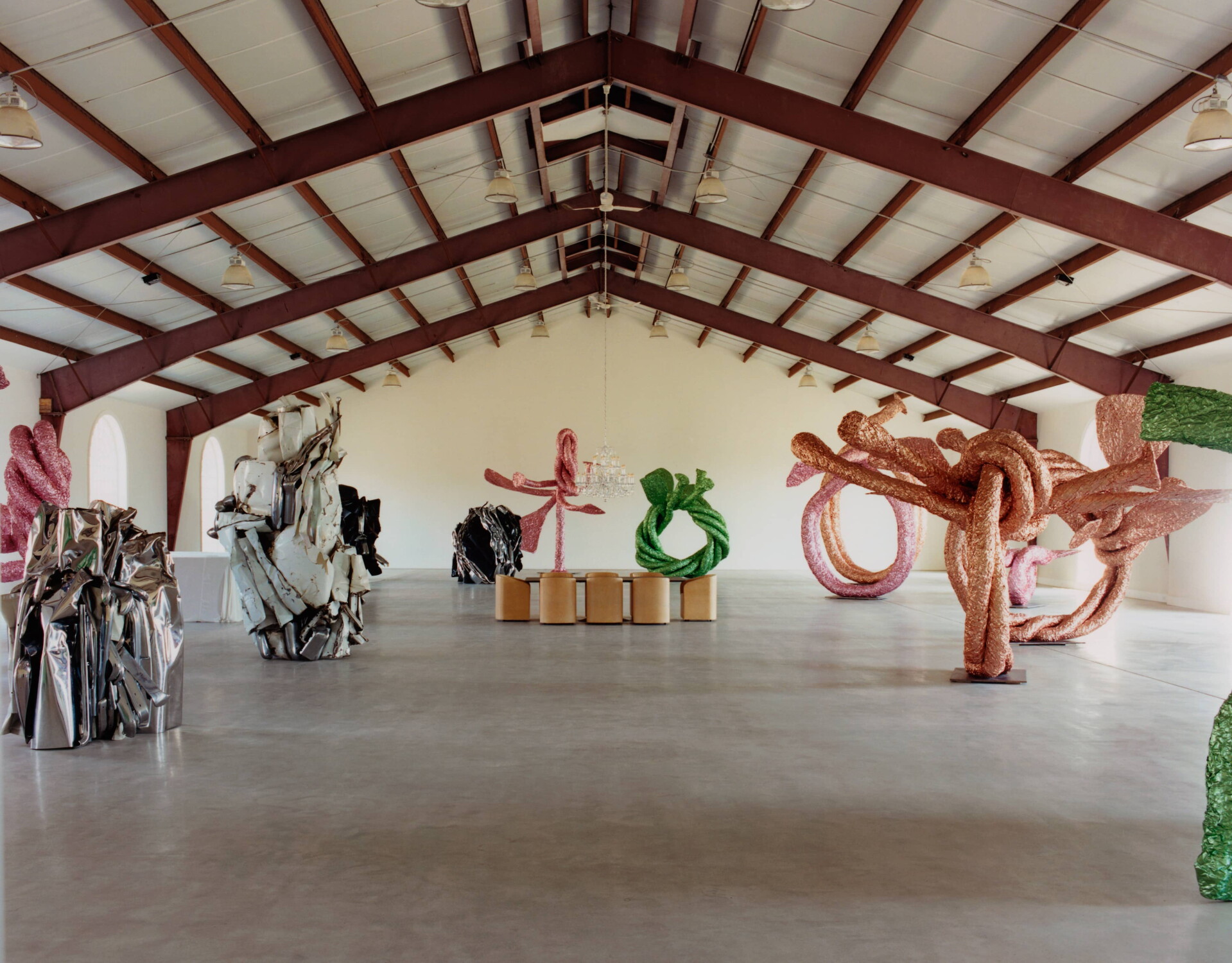
The current Sotheby’s showcase brings this industrial poetry to vivid life, gathering nineteen extraordinary works that span three decades of tireless experimentation and tactile mastery. Among the rare and arresting pieces on display are enigmatic masks that reveal the sculptor's fascination with facial structure and material tension, abstract Widelux photographs that capture space through a uniquely fractured lens, and the striking monochromatic sculpture Cupcake Cutie, which demonstrates Chamberlain’s uncanny ability to make cold, heavy steel appear as soft, pleated fabric. Through strategic storytelling, the exhibition is elevated from a simple display of objects into a chronological journey through a restless, endlessly inventive mind.
Yet, the true emotional core of the exhibition and its enduring legacy is illuminated through intimate personal reflection, courtesy of Alexandra Fairweather, director of the John Chamberlain Estate. Fairweather shares deeply moving anecdotes from growing up with the artist—whom she affectionately knew simply as "Pops"—offering a rare glimpse into the gentle humanity behind the intimidating, industrial scale of his sculptures. She recalls Chamberlain’s core philosophical belief that true art should never be locked behind rigid academic definitions or narrow artist intent; instead, art must remain wide open to the viewer's own intimate journey of self-discovery and emotional projection. Through cultural understanding of how audiences connect with abstract expression, this philosophy positions Chamberlain’s work not as a puzzle to be solved, but as a mirror reflecting the viewer's inner psyche.Ultimately, this monumental exhibition transcends a traditional retrospective of mid-century sculpture. Through transformational framing, John Chamberlain’s life and work are elevated into a timeless meditation on resilience—proving that when an artist possesses the vision to look at the discarded wreckage of modern industrial life and see infinite grace, even scrap metal can be reborn as immortal art.