Celebrating the 200th anniversary of the Brooklyn Museum, the expansive exhibition "Breaking the Mold" honors two centuries of the institution’s history, collections, and deep connection to the borough. This milestone showcase is structured into three chapters: "Brooklyn Made," which explores the borough's creativity and industries; "Building the Museum and its Collections," focusing on the architecture and collection development; and "Gifts of Art in Honor of the 200th Anniversary," highlighting recent transformative donations. Catherine Futter, in collaboration with all curatorial departments, libraries, and archives, helped orchestrate this sweeping exhibition. The goal of the exhibition, drawing on the Greek word philanthropia, meaning "the love of humankind," is to celebrate the spirit of generosity that underlies the many gifts that continue to shape the museum’s collection.
The exhibition's first chapter, "Brooklyn Made," immediately immerses visitors in local history, featuring two iconic objects related to the Brooklyn Bridge. One is a magnificent silver tray commissioned by the bridge’s engineers and project managers, Emily Warren Robling and Washington Augustus Robling, celebrating their 25th wedding anniversary and their "enormous creative achievement". Another highlight is Georgia O’Keeffe’s painting of the bridge, regarded as one of her most unique and famous works in American art. O’Keeffe, who lived in New York from 1907 to 1949 and was a frequent visitor to Brooklyn, painted this work in 1949, likely her last before permanently moving to New Mexico, serving as a "capstone" and "love letter" to the city.

Related article - Uphorial Shopify
Inside Breaking the Mold: Brooklyn Museum at 200
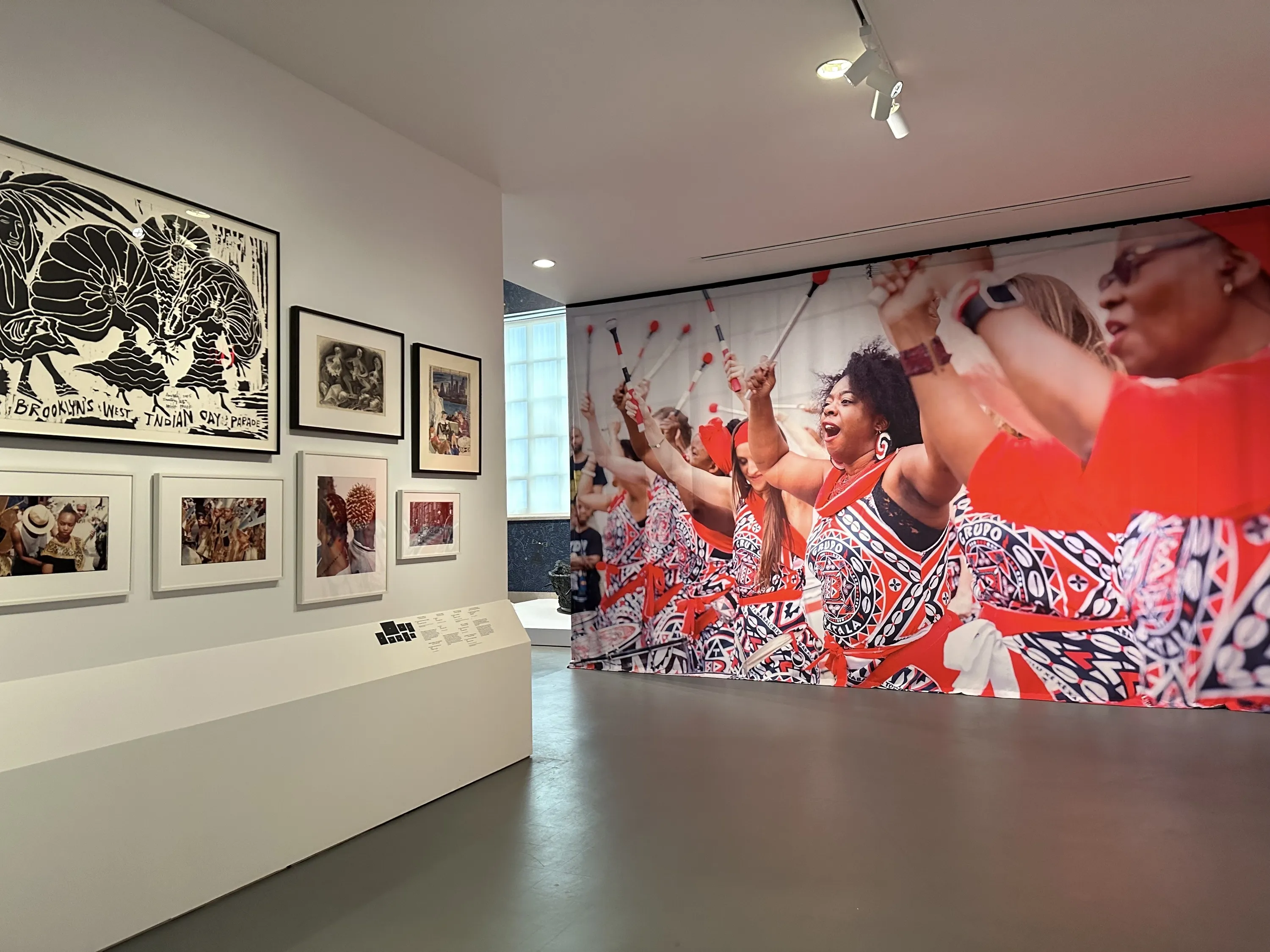
Also, within this chapter, the Brooklyn Museum showcases the evolution of the borough through its extensive photography collections, specifically the Coney Island archive. This collection spans 150 years and includes images by well-known photographers like Robert Frank and lesser-known figures, offering a timeless view of the area. A specific photo by Tony, noted for its "beautiful pure composition," captures the photographer’s daughter running on the boardwalk, creating an energy that pulls the viewer into the moment.
Crucially, the exhibition features Nona Faustine’s series White Shoes, which confronts the history of slavery in Brooklyn, which was literally "built off of enslaved labor". Faustine, a Brooklyn native, created over 40 self-portraits mapping sites historically significant to slavery across all five boroughs, starting with the Dutch West India Company in 1626. One photograph, taken at the Prospect Lefferts House—built in 1783 by a prominent slaveholding family—is significant because it features the only other pair of white shoes in the series: children’s shoes. The white pumps Faustine wears symbolize the constraints and assimilation resulting from colonialism and slavery for Black women, while the children’s shoes bring into question the painful relationship between mothers and children separated by child slavery. The second chapter delves into the formation of the Brooklyn Museum’s global holdings, exemplified by the Tesyama Kanya, a Chokwe snuff container from Central Africa. This rare piece depicts a royal female ancestor nurturing the chiefdom and showcases both characteristic Chokwe style and European design influence in the chair the figure is seated. This container was part of a major acquisition in 1922—roughly 900 works primarily from Central Africa—by curator Stuart Culin, forming the "backbone" of the museum’s renowned African art collection.
Further reflecting the collection's breadth is a French costume doll designed by Elsa Schiaparelli, one of 49 received in 1949 as a gift from the French government in gratitude for American aid following World War II. The doll, noted for details like the feathers on its hat and jewelry, was initially displayed in Two Centuries of French Fashion in the museum's innovative Design Lab, where designers used workstations and collections for research and inspiration. The exhibition also highlights ancient rarities, such as the "wine legs," a very rare and playful vessel from the 1st century BCE, made in what is now northwestern Iran. This distinctive Brooklyn icon, of which fewer than 50 are known to have survived, is unusual because wine was poured in the top but consumed from holes in the bottom of the boot-like feet. A compelling new acquisition is a Portrait of an African Man, probably painted around 1600 in northern Italy, who is portrayed in fine clothing with "a real presence," expanding the stories the museum can tell about the presence of Africans in Europe during that era.
The final chapter features potent contemporary works, including Lauren Halsey’s multi-dimensional Untitled sculpture, which acts as a historical deep dive into untold histories of African Americans in the Watts community of Los Angeles. Halsey mines local legacies, such as a little-known school that trained Black professional photographers in the 1950s, connecting these histories to broader social impacts. Similarly, moving is Coco Fusco’s installation, which recounts her journey taking her mother's ashes from New York to Cuba, interspersed with narratives of anonymous Cubans attempting to escape the country on makeshift rafts. Visitors are invited to sit in tire tubes—mimicking the angle and danger of being on the raft—to convey the harsh realities involved in escaping a beloved country for an unknown future.