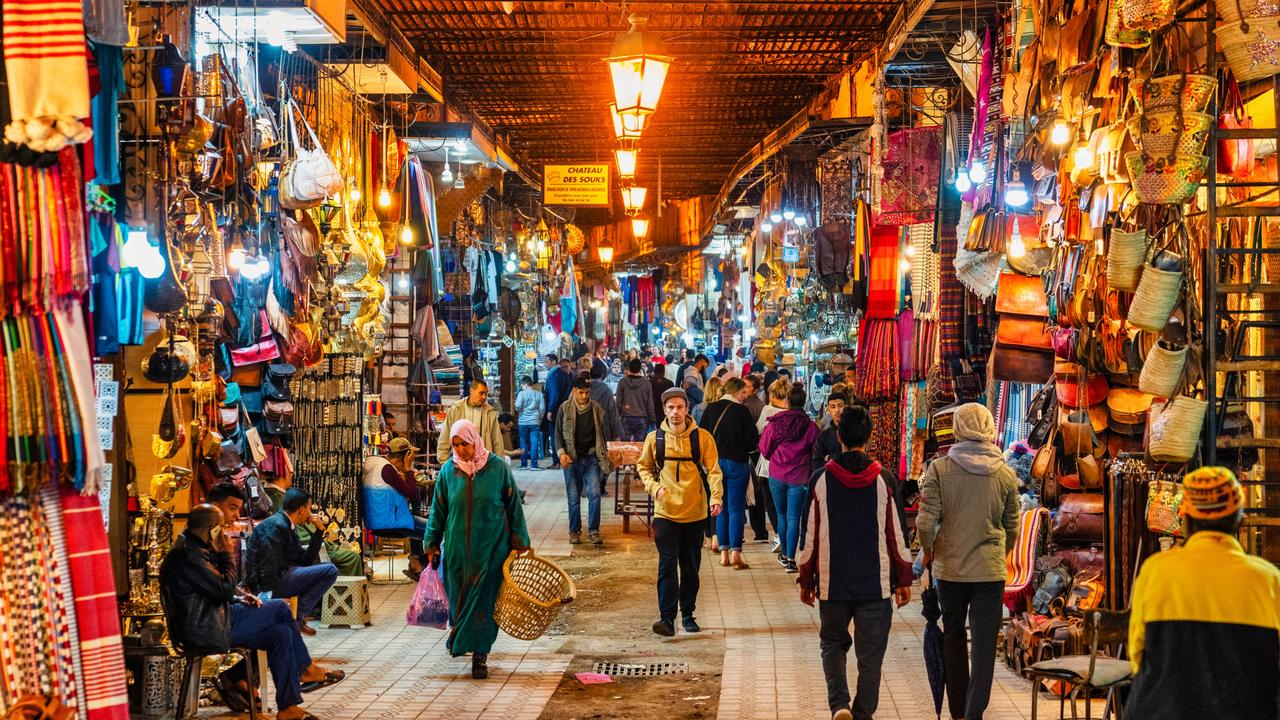
You arrive by dusk, when the first call to prayer drifts across ochre walls and the air shifts from dust to lantern-lit invitation. The city lives in that boundary between heat and coolness, chaos and stillness. To write about Marrakesh, you cannot start at the Koutoubia tower or the souks; you must begin at your own heartbeat syncing with the city’s.
I spent several days weaving through the modern pulse and the ancient medina, letting the city tell me its contradictions. On one side, gleaming hotels, international business summits, and digital ambition; on the other, narrow alleys where time is measured in shared glances, mint tea offerings, and the genealogy of a family’s shop.
This is what Marrakesh feels like: the surreal overlap of technology conferences with drones ferrying exhibits, and grandchildren chasing pigeons through centuries-old courtyards, where the past is not frozen, but breathing.
Related article - Uphorial Radio

Pharouk Damilola
Marrakesh has lately been pulsing with fresh momentum. Tourism is surging, and overnight stays rose significantly in the first half of 2025, with occupancy rates climbing past 70 percent. Millions of visitors have walked its streets this year, proof that the city’s allure is both global and deeply local.
You turn a corner and meet the future again, gazebos filled with leaders at GITEX Africa, where Africa’s digital architects gather to shape tomorrow under Marrakesh’s azure sky. Here, wireframes hum beside the perfume of spices; connectivity and culture dance.
Beneath the humming ambition, though, are stories you can’t schedule. The MACAAL museum reopened earlier this year, straining toward tomorrow while honoring art born of yesterday and today. Inside, works by Moroccan and African artists remind you that creativity here is not a trend, it’s a lifeline. Each brushstroke and photograph is a whispered prayer for belonging, for recognition.
There is a tension you’ll breathe in on any street in the medina: the thrill of commerce next to the weight of inequity. Recently, a shocking story emerged of a teenage boy assaulted at a crowded festival in Marrakesh, an incident that shook the city and its sense of safety. It’s a reminder that wonder can exist alongside wakefulness, and that to know Marrakesh is to accept its dualities, both light and shadow.
And yet, the future is relentless. Morocco has launched a massive high-speed rail expansion plan that will soon whisk travelers from Tangier to Marrakesh in barely two hours, shrinking distances and weaving the city tighter into the nation’s fast-evolving web. Progress here is not whispered, it roars forward on rails and in data cables, but still bows before tradition in the rhythm of prayer calls and the colors of the souk.
These developments, tourism rising, art reconnecting with roots, connectivity stretching across rails and data, are the currents that shift how Marrakesh lives inside you. But above all, what lingers is the narrative of being there. The street vendor who offered mint tea without words, the child who mimed a story, the call to prayer echoing off pinkish ramparts, the odors of cumin, meat, and citrus weaving through every inhale. These are the elements that make Marrakesh not just a destination, but an intimate brush with humanity.
When you leave, you carry fragments. A pattern of light on a rust-colored wall. A phrase half-known, half-coined. A heart still beating with the heartbeat of a city that doesn’t let you just pass through, it invites you to belong, if only for a moment.
Marrakesh is not a postcard. It’s a whisper, a beat, a collision of time that reshapes you. And when you write about it, let that resonance carry the words, not just the landmarks.