The fierce competition among global travel hubs, particularly in the Middle East and Asia, has transformed airports from mere transit points into sprawling, luxurious destinations where travelers actively want to spend time. Business Insider reports on this massive transformation, highlighting that cities in the Middle East and Asia are investing billions in building these hubs, which have become showcases of national identity and ambition.
At the forefront of this trend are Hamad International Airport in Doha, Qatar, and Singapore’s Changi Airport. Hamad International has been rated the world’s best airport three times, while Changi has claimed the title more than any other, securing the top spot 13 times, and most recently reclaiming the Skyrax title in 2025. Both airports exemplify how luxury brands are now tapping into a unique market: the captive, in-person customer with time to kill.
Qatar, leveraging its central global location, transformed from having a small, 1960s-era airport to spending more than $16 billion on Hamad International. The final phase of construction was completed in 2024. Similarly, Singapore, a tiny island nation, has invested heavily, creating a $1.3 billion lifestyle hub known as the Jewel at Changi. This immense investment is driven by high stakes: air transport contributes over a tenth of Singapore's GDP, and the airport hosts between 30 and 70 million travelers in a typical year.
Related article - Uphorial Shopify
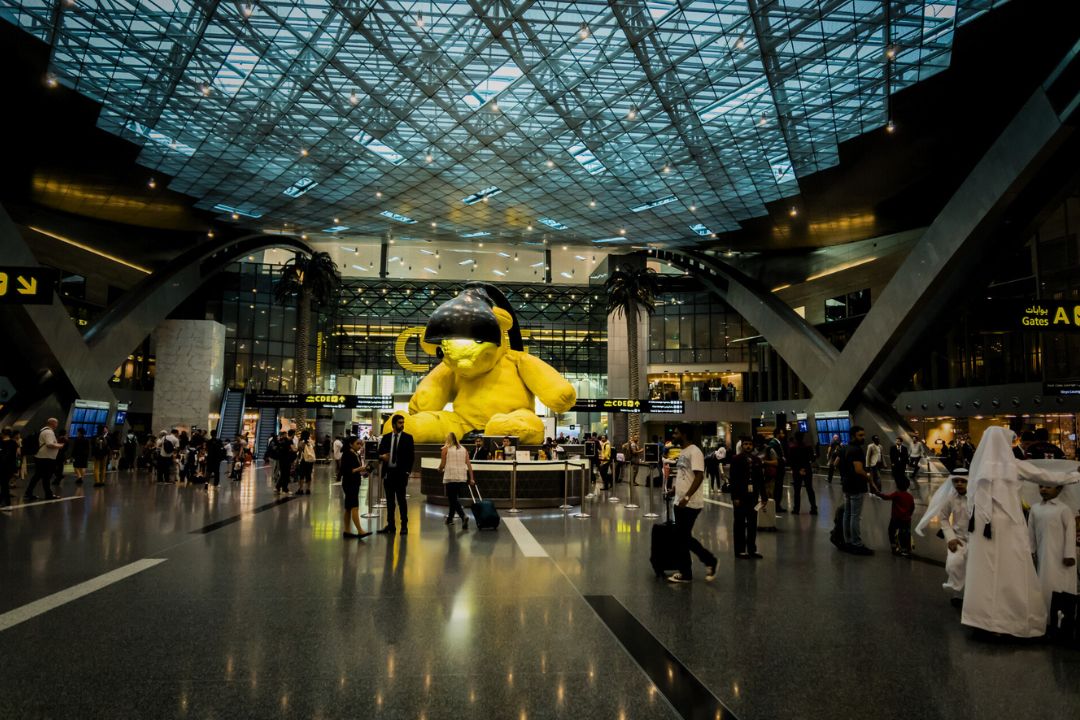
Doha, Qatar Airport

A key feature of this new generation of airports is the integration of high-end experiences. At Hamad International, this includes the world's first Louis Vuitton lounge. This exclusive, branded space, where even the floor and chopsticks bear the Louis Vuitton logo, features a menu designed by three-star Michelin chef Yanik Eleno. The wine is provided by the LVMH group, and dishes like vanilla entremets and caviar sushi with gold flakes are served. Beyond dining, Hamad offers extreme indulgence, such as the Dior Spa, where the most affordable treatment is a $70 manicure, and the most premium is a two-hour spa treatment for $550. The spa features unique amenities like a hot quad sand bed ritual, or heat therapy, and rooms equipped with massage beds, a jacuzzi, and a hot sauna.
The airports also incorporate stunning natural elements to suspend reality. Hamad International features a massive indoor tropical garden called The Orchard, boasting 300 trees and 25,000 plants and shrubs from around the world. This design seems inspired by Changi’s celebrated indoor jungle, The Jewel, which opened in 2019. Changi’s Jewel is more elaborate, featuring the world’s tallest indoor waterfall, the Rain Vortex, which falls over 130 feet and uses mainly recycled rainwater. Visitors can enjoy Canopy Park at the dome's top, complete with hedge mazes and a glass-bottomed bridge hanging 75 feet above the ground.
The luxury focus extends to accommodating premium passengers, who are far more profitable than economy class travelers and spend more within the airports. Hamad International’s First-Class Lounge, Al Safwa, offers 12 proper bedrooms that can be booked for six hours at a time, complimentary for those who paid $8,000 for their ticket, alongside a spa, a game room, and even a room for nannies. For those missing a flight, Hamad also has an airport hotel, with an executive suite costing $480 a night, complete with a pool.
Despite the focus on luxury, both airports cater to all travelers. Hamad has over 200 dining and retail outlets, and offers unique local experiences, such as Souq Al Matar, a traditional market where travelers can experience Qatari life without leaving the airport, displaying items like spices, camel toys, and traditional incense burners. Changi, meanwhile, offers more affordable options like the Singapore Food Street, emulating a traditional 1960s hawker market with classic Singaporean dishes for under $10 a plate. Other amenities at Changi include a free butterfly garden, a 24/7 free movie theater, and a public 24-hour gym and pool.
Ultimately, these investments are about attracting the best customers—the rich ones—and creating travel escapes, effectively locking more utilitarian North American airports out of the top rankings. The Skyrax Airport Awards, which are based on customer satisfaction surveys covering everything from Wi-Fi speed to the price of coffee, are highly valuable because the recognition attracts more customers and revenue. The dedication to creating a destination within the airport ensures that even without a flight, spending ten hours at Changi or exploring Hamad International is an experience worth adding to one's bucket list.