Attending the Givenchy Ready-to-Wear Spring/Summer 2026 presentation, fashion journalist Loïc Prigent observed a spectacle rooted in the storied history of the house yet boldly charting a new course under Creative Director Sarah Burton. The show, Burton’s second ready-to-wear effort and first summer collection for Givenchy, unfolded at the Invalides within a huge tent, hosting an intimate audience of just 520 numbered guests. Prigent noted the specific scenography, which included a wide, circular stage with a rough, white finish, reflecting a trend of circular shows this season. Guests were seated on blocks fashioned from stacks of technical envelopes, a deliberate artistic choice intended to reference the discovery of old Hubert de Givenchy patterns found in former office archives.
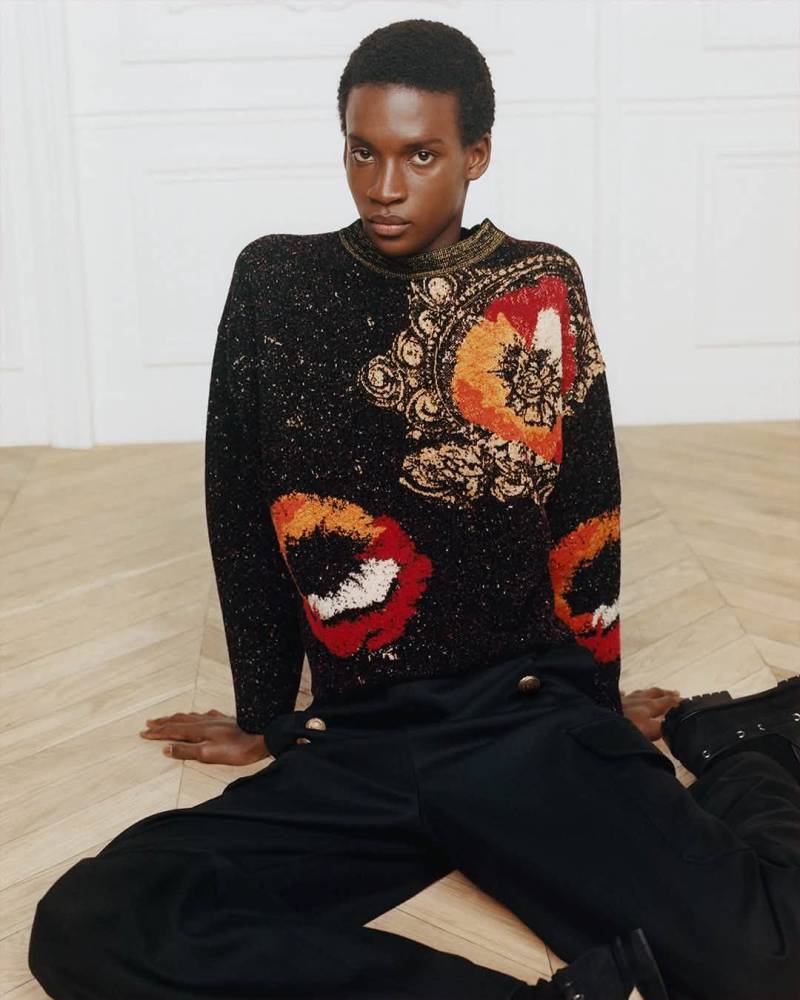
Burton's contribution was immediately evident in the collection’s title and philosophy: "Powerful Femininity". She explained her intent to explore the strength of women through feminine archetypes, beginning with "peeling back the structure of tailoring to reveal skin, and a sense of lightness and ease," ultimately exploring the "female vocabulary of dress and undress". Prigent highlighted the physical manifestation of this concept in garments like jackets "sliced down the back," which Burton described as the clothes "peeling off" or the woman "opening like a flower," revealing sensuality, beauty, sexuality, and power. Suiting was a major focus, with Prigent noting they offered some of the "bestest suits of the market," such as the single-breasted jacket and skinny pinstripe trousers modeled by Charlie Jones. The designer's work was lauded by attendees, including Broadway legend Cynthia Erivo, who emphasized the importance of women designers like Burton bringing a "different sensibility" to the industry.

Related article - Uphorial Shopify
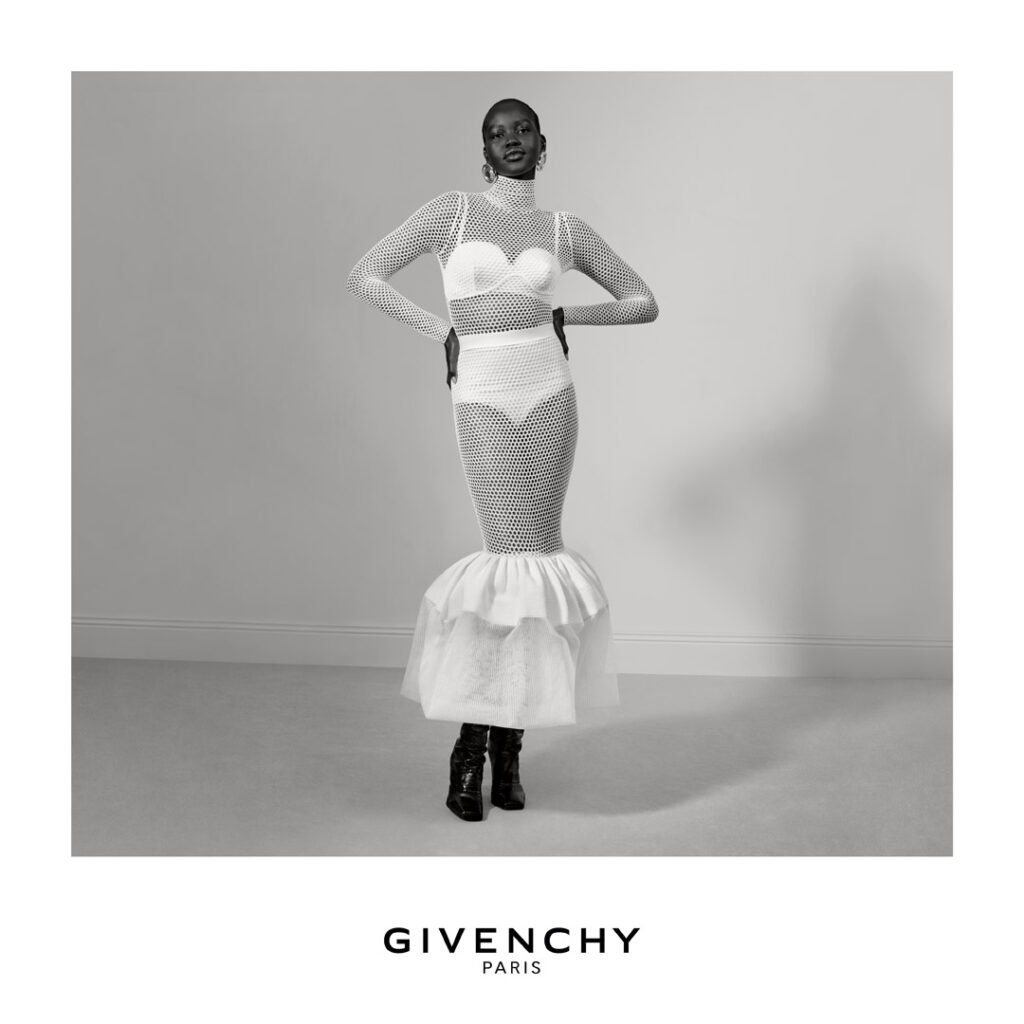
The collection seamlessly integrated Givenchy’s historical codes. The definitive silhouette—a white leather shirt paired with a wrapped skirt, modeled by Liu Wen—was deemed to mean "business, charm, Givenchyism". Burton incorporated bows, a "major code" established by Hubert de Givenchy, appearing prominently on bow bustier dresses. Accessories, observed by Prigent, included the "boudoir thongs" and "boudoir bow" sandals, often featuring a signature puffy effect. Handbags like "The Pout" were noted for their lipstick-style closure and jewel straps, while jewelry included the "Deconstructed Crystals" soft tube necklaces.
Prigent meticulously reported on the technical virtuosity of the collection, particularly the three final silhouettes considered haute couture. The closing look, worn by supermodel Kaia Gerber, demanded exceptional dedication: a cutaway bra and an immense skirt crafted from over five meters of calico satin Duchesse. Burton revealed the emotional concept behind the garment, saying she wanted it to feel like the model had "taken the sheet of the bed and wrapped it around her". The craftsmanship was staggering, requiring a total of 2,720 hours of work on that one look, with the un-embroidered bra alone taking one week. Model Alex Consani, wearing a sunflower-embroidered cutaway bra and wrapped skirt, explained to Prigent backstage that the look symbolized a metaphor for things unraveling and a sense of hope and optimism, much like flowers pointing toward the sun.
Prigent's experience captured the celebratory, social atmosphere of the event, which he called a "kiss and hug festival," where celebrities like Charlize Theron and Eddie Redmayne mingled. He also pointed out a significant shift in show dynamics: the dramatic decrease in the number of show photographers since Covid, noting that the photographers' wall had become "tiny," lamenting the near disappearance of this "folklore". The high regard for Burton was summarized by Cynthia Erivo, who praised Sarah's contribution to fashion as "tantamount to no one else". Prigent himself concluded, reflecting on the difficulty of choosing favorites from a show he found "very chic, very cool," and "amazing".